Category Archives: Uncategorized

12 Houses of Suffering—Revised Edition!

Intro by Author—

I am happy to present to you the new edition of my “10 Houses of Suffering” collection, which is now the “12 Houses of Suffering.” This revision includes two extra houses! 

I originally wrote these stories, some 20 years ago, as a way of introducing Buddhism to my college students. These short stories illustrate the many ways that ordinary people, living seemingly ordinary lives, make themselves suffer. 

The kind of suffering illustrated here may be called mental angst—which is exactly the kind of suffering Buddha was interested in. He called it Duhkha, and it forms the foundation for the Four Noble Truths, which starts by simply saying that Life Is Suffering. Indeed. 

As you will quickly see in these stories, the angst arises because of our unwillingness to come to acceptance with the inevitable twists and turns and changes of life. These people are all of us. We are them. Although we have our own unique versions of these stories… we all create our own hell within, often with just a single thought. like, “I’m not good enough.” This is the madness of the human situation, namely, the inability to accept the inevitable. And so, the pain we cause ourselves comes from persisting to look everywhere else but within, for our peace of mind. 

In other words, we are waiting for the world to be the way we want it to be and for others to be the way we want them to be.

To put it differently, we get “hooked” on our own agenda. And when life doesn’t go that way, it’s hard to accept. We ache for things to be as we think they should.

The good news is, though, is that there is a way out! That’s where Buddha’s Four Noble Truths direct us. If our attachment to all the “should be’s” is at the root of the problem, then letting go… or, accepting, is our ticket to freedom. 

Lead-in: Imagine a row of ten houses facing a creek. Each one is big and beautiful, except the last one – the tenth one, which is smaller and needs some fixing up.

1st House—

Inside the first house is a man who suspects his wife is sleeping with somebody else. He spends every minute of every day, in a state of paranoid suspicion. Right now, as he tries to listen to her phone conversation, he’s tiptoeing along in the corridor, hoping the floor doesn’t creek with his sneaky footsteps, giving him him away, and revealing his jealousy.

2nd House—

Inside the second house is a 25-year-old woman with an eating disorder. At least five days of every week are spent alternately binging and purging, and taking no pleasure from the compulsive acts. Her throat, her teeth, and her stomach are destroyed, and she lives with the fact that she is killing herself, and can’t stop. The other two days are spent in isolation, hunger, and vile self hatred.

3rd House—

Inside the third house is a mother too afraid to answer the phone, yet simultaneously too afraid to stray too far from the house because her son has received death threats while serving as a frontline journalist in the middle east, and news of her only son’s status might be delivered at any moment.

4th House—

Inside the fourth house is a 33-year-old aging cover model, losing jobs to 18-year-olds. She curses at her face in the mirror, and has lost her will to get out of bed in the morning. She is now 50,000 dollars in debt from lost pay, yet just accepted one more credit card offer to schedule plastic surgery on her neck and eyes, in the hope that it will restore her youthful appearance, and make her love herself again.

5th House—

Inside the fifth house is a meth addict. He is missing out on his children’s young years, but he can’t stop. Making it worse, is his wife, who calls him a loser, taunting him daily for his weakness. Every time he tries to give it up for good, he ends up giving in to the urge to light up again, even though he knows it is only a temporary thrill. It’s gotten to the point where he stands to lose his job, his wife, and the house. He no longer enjoys being straight because of the agonizing shame that eats him alive.

6th House—

Inside the sixth house is a 60-year-old woman who has just been diagnosed with incurable cancer. She knows her body will soon start to break down, and that she will have to face her death. She will have to come to grips with the fact that she will never see her grandchildren, or her husband, or her dogs, again.

7th House—

Inside the seventh house is an 85-year-old woman who lost her husband five years ago. Having lost her will to live, she lies in bed all day long, surrounded by the dusty antique knick-knacks she spent her life collecting. Her social security checks go entirely to the caretakers, who are paid to help her with housekeeping and other daily chores. She refuses to leave her home and she also refuses go to an elderly home, where she might take part in various activities, like swimming, painting or Tai Chi.

8th House—

Inside the eighth house is a 19-year-old boy with agoraphobia. Stepping outside the house is like hanging off a bridge, with sweaty fingers slipping, and no one there to catch you. So, instead of venturing outside, he takes his Xanax, and sits in front of his computer, wearing the mask of his artificial identity… chatting in forums, acting witty and sarcastic on screen, but hating himself all the while because he’s lonely and bored, and it never goes away.

9th House—

Inside the ninth house is a 30-year-old ambitious office worker, who just missed out on a promotion due to the fact that his scheming, and overly ambitious female colleague in the next cubicle, claimed his idea as her own, taking all the credit and accolades. He takes his seething hatred out on other women, in the form of abusive relationships that leave him feeling more empty and worthless, rather than potent, and valued.

10th House—

Inside the tenth house – the smallest house on the block – is a newlywed couple who bought this fixer-upper because it was the only house they could afford, given their loan qualifications. Because their house is at the end of the street, they are forced to drive past the other more glorious houses every day, as they go about their business. He imagines his neighbors’ luxurious lives, and all the pricey tools he must have; and she is filled with increasing bitterness toward him, for promising a new kitchen, a jacuzzi, and renovated bathrooms that she can decorate in coordinated colors, like in the magazines. Yet the months go by, and still her husband has done nothing to improve their house. Their relationship is quickly turning bitter.

11th House—

Inside the eleventh house is a thirty-something actress who won the academy award for best supporting actress two years ago. Despite the attention that followed that movie, she hasn’t gotten any exemplary roles since then and feels angry and rejected. The worst part of it is that her jealousy toward other upcoming actors and actresses is all-consuming, to the point where she is incapable of feeling happy for anyone else. She feels insecure and inferior to others, who she imagines must be much better than she is. Because of this bitterness, and because she talks bad about her peers, no one can stand being around her.

12th House—

Inside the twelfth house is a man whose son is gay. He had hopes that his son would follow in his own footsteps and become a football star. He also envisioned his boy as a ladies’ man, who would eventually settle down with a gorgeous wife, and kids, as he had done. He used to tell him to “play the field” and now feels disgusted when he sees his son with his boyfriend. He also can’t stand that his son is an interior designer, a profession he says is a “woman’s job.” He refuses to sit with them when they come to visit, and quickly disappears into the other room to watch sports when they come… leaving his wife, who is more tolerant, to do the hosting. 

I would love to know how you are using this article as an introduction to Buddhism!
Yours Truly,
~Donna Quesada

What Makes Art… Art?

Aesthetics has always asked, What does all good art have in common? Is there some common denominator? What is art, anyway? What is beauty? There may be more than one answer to those questions. Sometimes art does different things and serves different purposes. Andy Warhol’s Brillo Boxes stood as art (and not Brillo Boxes) because of what they were “saying” about consumer culture. I spoke of that here.

As Immanuel Kant said, art invokes within us, a sense of awe and deep pleasure. Like nature, it takes us where words cannot. 

This helps us understand what art does, but still feels inconclusive, as far as what art has. Or is.

Yet, after taking great interest in aesthetics as a philosophy student, through my 20s, I still couldn’t answer, at least to my own satisfaction, the question, What does all good art have in common? Even if there are multiple answers…or none at all. (Maybe it’s like asking what religions is… there is no common denominator. Only what scholars have termed “family resemblances.”) 

Nonetheless, it is only now, through direct experience, after 30 years of painting in watercolor, and writing poetry… writing in general, have I started to get a glimpse of what I feel to be a truthful response.

But first, indulge a memory with me… I promise, it’ll bring us back to the question of art!

The Storm Rolling In—

I remember running to the classroom window, pushing aside those heavy beige, vinyl drapes, to see the sky turning dark… and the sudden burst of light that illuminated the asphalt outside. Then the rumble. And the anticipation it brought on… how loud will it get? How close will it come?

It wasn’t merely because we rarely get ferocious storms in Southern California. My excitement, which I still feel when storms approach, reveals more than that. Alluding to Kant again, who recognized that nature most powerfully elicits that sense of awe, that all art is but a kind of exemplar of the sublimity we find in nature. And so, we can find the clue here as to what that thing is, that makes both art and nature riveting. And, the storms outside of LA were all the more so. 

It was in the Midwest somewhere… we heard it coming. Like a high speed train roaring. Getting closer. As we ran to open the door, the wind pushed it against the wall. Yet, we couldn’t resist and so we charged into the flurry and out into the middle of the street and it felt like the world was coming to an end. We stood and watched with wild hair and our arms outstretched against the electric jet stream of warm air. We were buzzing. Suddenly turned the heavens poured out a river and in 20 minutes, it was gone. 

Jason Bonham’s Led Zeppelin Experience—

I felt that frenzied excitement when I saw John Bonham’s son and his Led Zeppelin Experience last year. My own reaction was totally unexpected. But that’s the whole point, as I’ll explain below. A genuine reaction to art is, and has to be, totally uncontrived. And to do that, the art will possess some element that is wild, like the storms above. More on that in a moment. When those first notes of Immigrant Song exploded, I was at that moment, like a teenager… I remember jumping up out of my seat, straining on my tiptoes to see… at any cost and discomfort… perhaps managing to blurt out Oh My God a few times because I couldn’t say anything else. Because I couldn’t believe what I was seeing… hearing. Because teenagers do crazy things. Because teenagers have energy (except for when they can’t get out of bed). 

Presence (The location of Beginner’s Mind)—

More to the point, their sense of physical presence exceeds their mental ruminations. And since thinking is draining, the result is vitality… and there has always been an inverse relationship between presence and the degree to which you are in your head. Meaning, the more you are in your head, in the world of thoughts, the less present you are. It starts when we become adults. When we become rational. Teenagers haven’t gotten there yet… So, they are still a little bit wild.

That’s why we adults have so much fun at events like that, we don’t just act like teenagers for that moment in time. We become as kids again. Because we are in our bodies… not in our heads. The music (and all art… and nature) is a conduit for feeling. We are feeling the music, and leaving the world of thought behind for that moment. And thus, we have no sense of “should be’s.” We act naturally, in all our exuberance. In Zen, this is what it means to have a “Beginner’s Mind.” To be blissfully ignorant of the world’s ideas and judgments. And so, free to express oneself authentically.

Crazy… It’s The Same Criterion for Both The Artist and The “Feeler”—

It’s… not holding back. When a singer moves us it’s because she’s not holding back. She’s willing to sing at the edge, right at the place where her voice might crack. But she’s not concerned with that. She’s not playing it safe. She’s not tightened or constricted or self conscious. It’s what good writers do. It’s what good actors do. She’s doing in her art form, what we wish we could do in life. She’s purging emotions as we wish we could. And thus, there is a purification process in the art exchange, for both artist and viewer, through the feeling of release. 

And so, we’ve come around to what I feel answers the question… What does all good art have in common?

It could be said this way: It’s the element of crazy. Something wild and crazy has to happen in that painting, in the dance, in the routine, in the song, in the performance.

Why? Because art unleashes something that has been laid to rest in the depths of our soul… Ultimately, it’s fear. At the very least, it reveals what we wouldn’t do in “real life.” In that sense, it is therapeutic. It is revelatory. It reveals the capacity to let go and to abandon ourselves. It reveals possibilities we thought weren’t for us… to be whimsical, carefree and unguarded. To be fearless.

Which Ultimately means… To be FREE.

When asked, “what does freedom mean to you?“ the iconic singer Nina Simone simply said, “to be fearless.”

But we don’t dare, in our everyday lives. We were taught to be rational. We’re careful. We’re measured. We’re prudent. We’re tight. We don’t dare take a chance!

The Wild Stuff Makes it Special—

It’s the big, bold tree stroke in the foreground of a painting. The stroke that makes you think, as an artist, or someone watching from behind as you’re about to do it, “Oh no!… You’re going to ruin it!“ because the background was done so carefully. Reason will dictate… Leave well enough alone.

That’s where art steps in. Art messes it all up, like crazy hair. Like that sky that turned black before it opened up and flooded the streets for those 20 minutes.

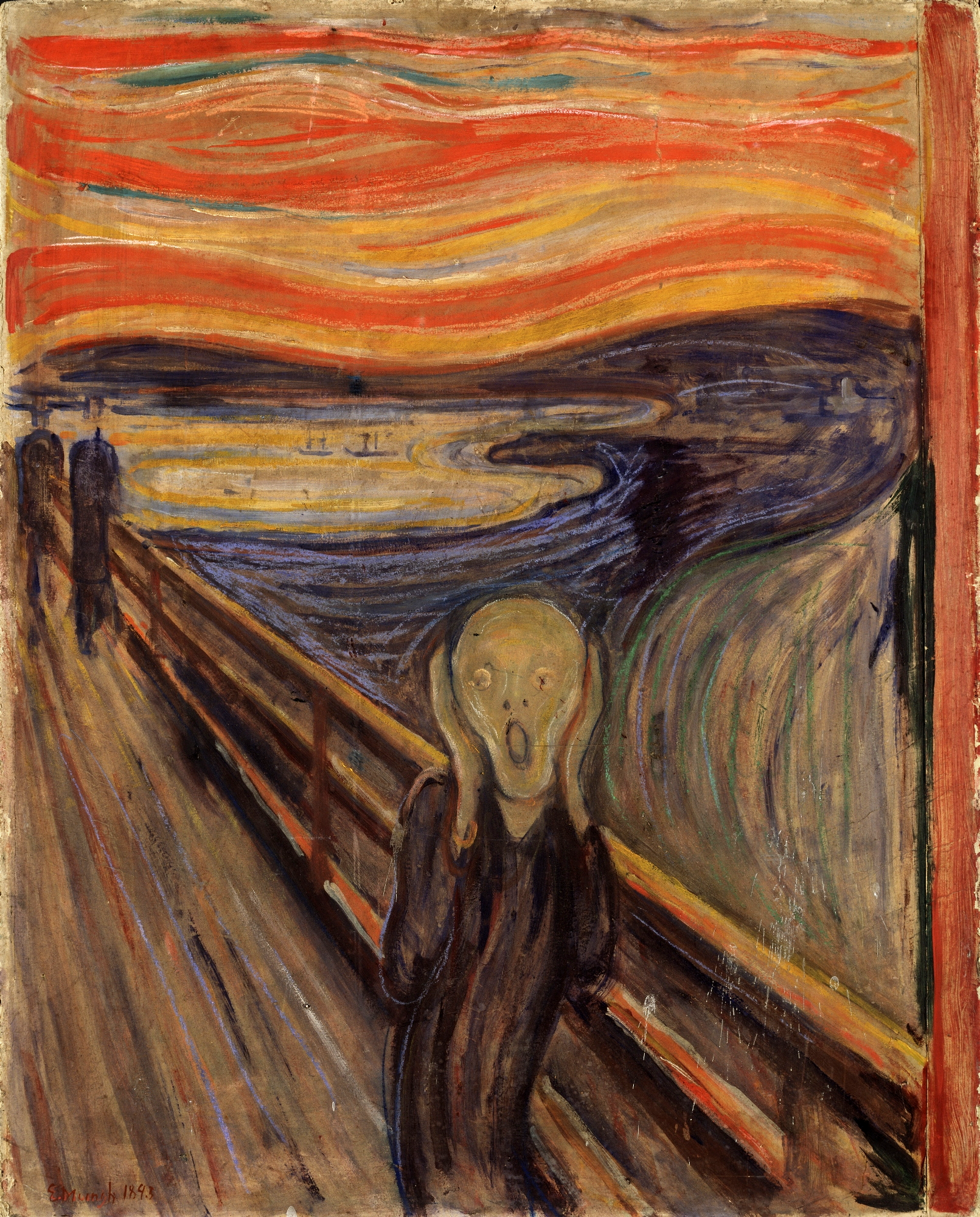
Art is where convention is, ipso facto, irrelevant, since creativity is by its very definition, the birthing or the configuration of something new. And this process often looks weird or wild or simply… crazy. To be clear, this doesn’t and shouldn’t mean harmful. Nor necessarily loud. But it does mean bold… but in any number of myriad ways. Think John Cage in his silent symphony. Think Marina Abromovic, in her meditative, interactive art. Think Cindy Sherman in her performance pieces, which feature herself as objet d’art, in different guises. All pushed boundaries and convention in their own weird and wonderful way. In a more prosaic example, I remember seeing footage of Joe Cocker singing at Woodstock, as a girl… I asked my mom what was wrong with him… why was he shaking? Yet I couldn’t take my eyes off of him. 

Beginner’s Mind—

It’s that element of crazy, again. It feels like freedom—the most basic human requirement. It’s the quality of being uncontrived. The Zen masters call naturalness. And it springs forth from the “Beginners Mind,” which is a mind that is free of concepts. In plain terms, it is a mind that is free of the “should be’s”. Free from fear of failure. Free from the corruption of other people’s judgments and opinions. Free from the rules of convention that we spoke of. Totally spontaneous and totally yourself. Joe Cocker let the spirit move through him. Cindy Sherman had to disappear, in a sense, in order to become the characters she became. 

A Strange and Perfect Pairing of Chutzpah and Selflessness—

It’s chutzpah. It’s bold. It’s brave. It breaks the rules. It can’t be tamed. It’s why every new genre has to break from the past. It’s rock and roll. And by rock and roll, I don’t only mean rock and roll as we think of it today. Using it loosely at this moment, I mean that which possesses that quality of boldness that I have been speaking of… Vivaldi, by this standard, was as rock and roll as it gets, with his reputed flamboyance and innovative spirit. He just couldn’t “plug in.” He was wild, like all rockers, who do whatever the hell they want to do. They scream and yell and kick and move their hips, like Elvis. They growl like Gregg Allman and Leon Russell… just growl on tune! 

But, in some measure of paradox, the artist has to lose himself, through the boldness. Or, said differently, the boldness must not come from ego, lest it be contrived, which is the antithesis of beginner’s mind. And the same is true for the viewer. And together, the journey is taken into abandon. And this is freedom.

It’s what good acting does… The actor loses himself. He lets go of control, for that moment. He  becomes the character, as effort gives way to effortlessness. It’s why Joshua Bell, the violinist, once said that at the moment of performance, all practicing is let go of. He has to trust at that moment that it’s in his bones.

The Enzo Brings it Back Around—

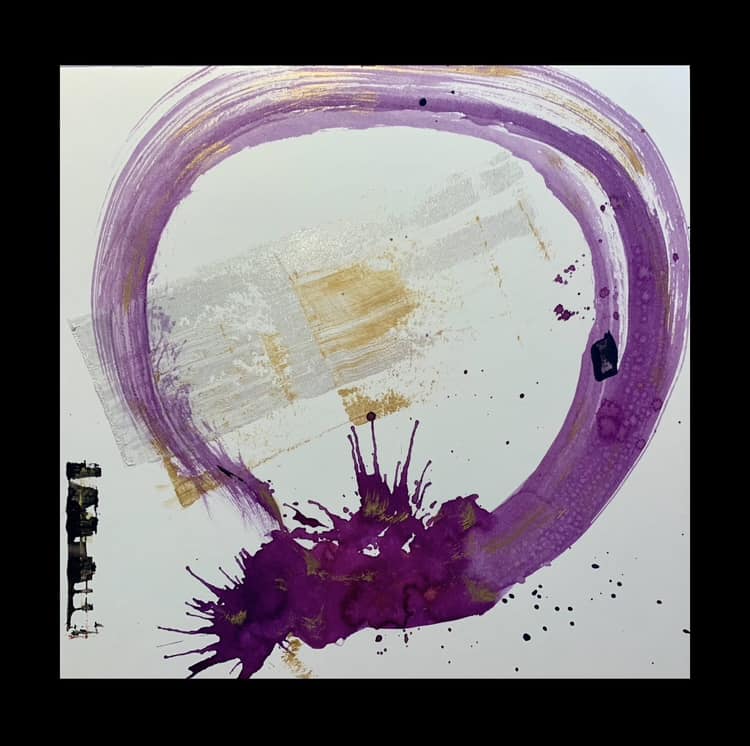
The Japanese Enzo displays this element of naturalness and spontaneity. Which is wild and irrational in its appearance of not-caring. And… free. Like all good calligraphy, you would never “go back over it.” Because perfection has nothing to do with it. Because perfection is in the head! The question is rather, is it “felt?” Not, “did you think it through?” Were you inspired at that moment? Was it free? Was it confident (and thus, bold)? Was it authentic? 

Like me, at that concert… when we act naturally, out of beginner’s mind, there is no limiting or constraining sense of “should be”… there’s no sense of embarrassment. There’s no sense of “not good enough.” 

For a plant or a stone to be natural is no problem. But for us there is some problem, indeed a big problem… The true practice of zazen is to sit as if drinking water when you are thirsty. Then you have naturalness. ~Zen Mind, Beginner’s Mind (Shunryo Suzuki)

In this way, art conveys what we wish we could be in “real life.” We long for that spirit of abandon. It’s why we love road trips; it’s why we love falling in love (“we are not in our right mind”… it’s been called a kind of temporary insanity, but we love it). That’s why we miss being children.

New Release! New Prayers to Mary

Presenting… New Prayers to Mary.

True prayer comes from the heart. It is an emanation of the soul’s longing for solace, healing and miracles. There is nothing more comforting than truly feeling the soothing embrace of divine love because it works on a higher level than traditional modes of therapy. It is independent of any religion because it is not about belief, but rather, experience.

Mary is the universally beloved connection to the mysterious and sacred realm we call God. She is the one figure that is adored by all spiritual traditions. New Prayers to Mary presents a fresh and new collection of prayers, which arose through my own love for Mother Mary.

Putting these prayers together with (partner and composer) Thierry’s musical accompaniment flowed as if meant to be, as if each piece of music was destined for the prayer it was coupled with. We found that each choice of music served as the perfect complement to the prayer, and that it enhanced and reinforced its intention.

It is our hope that these new prayers serve as a means of connection with the gentle and nurturing presence of the divine mother, whose love is always there. All we need to do is ask for it.

New Prayers to Mary is available here: https://itunes.apple.com/album/id/1744961867

Also available on all digital platforms.

New Prayers to Mary

Donna Quesada & Thierry Schollhammer

1. Connecting To Mary
2. Open To Spirit
3. For Forgiveness
4. For Depression
5. For Fear
6. For The Animals
7. For Anger
8. For Sleep
9. For OCD and Intrusive Thoughts
10. For Emotional Trauma

Out of “The Program,” as the Rabbi Calls it, and into the Heart – Donna Quesada

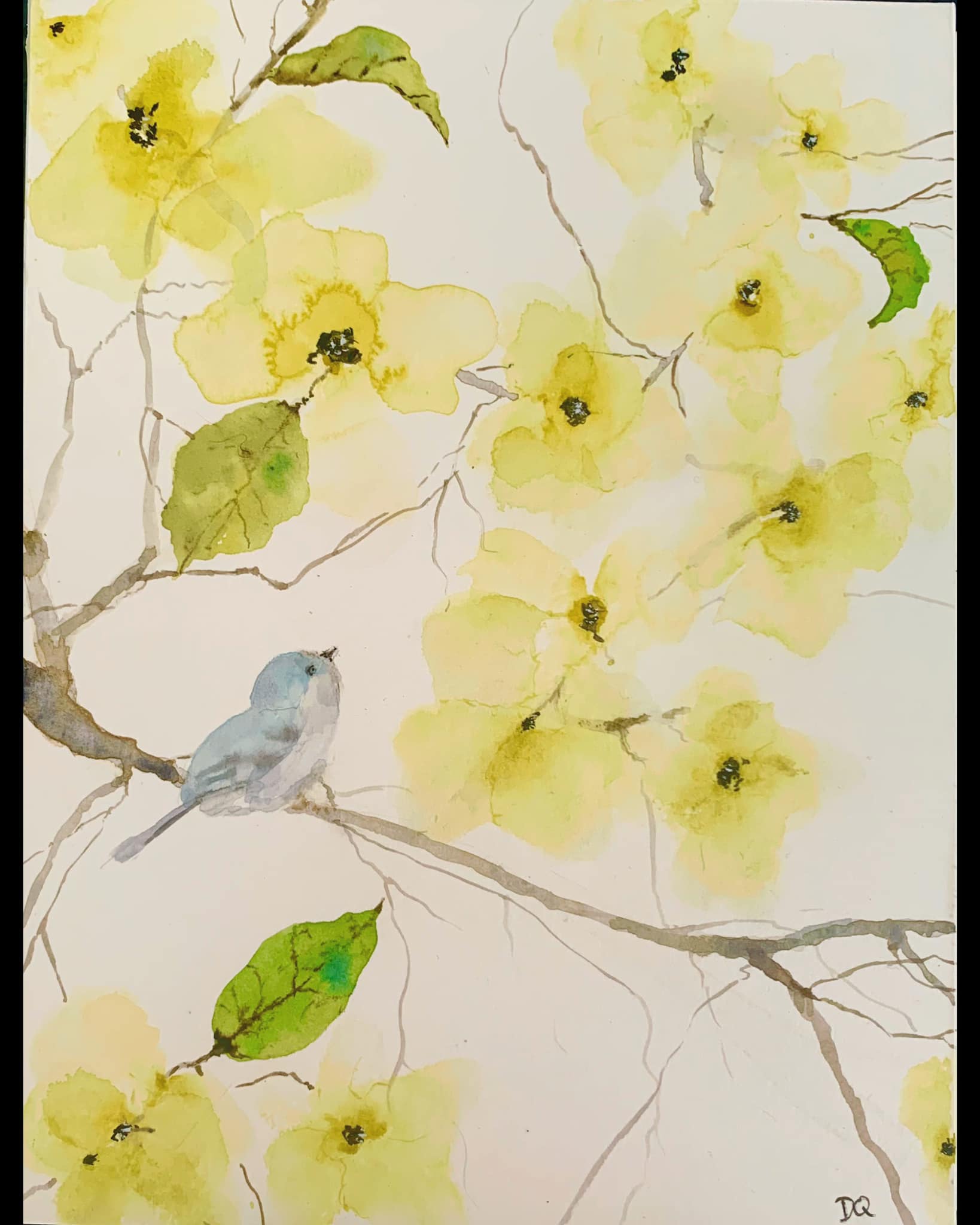
Watercolor by Donna Quesada

Why didn’t she invite me to the get-together?… She’s excluding me.

Why would he make that comment? … He’s trying to control me.

My mother always held me back as a kid … She didn’t want me to succeed.

These kinds of thoughts are always part of the default record playing through the ruminating mind, as my Zen teacher used to call it. Some call it the ego. A rabbi friend calls it “the program.” He never really provided a working definition of it, but if all the fears, insecurities, doubts and paranoia running through our system got all twisted up together, put in a mixer and then got squeezed out like a sausage, that would be the program. Only… it chatters, non-stop, like a hyper toddler.

Its only antidote is awareness.

In Yoga, the program would be considered part of the negative mind—our default channel. The others are the positive and neutral minds. But it takes more effort to get those channels to work properly. While it might be tempting to say that the positive mind is the preferred state of being, in reality the desired state is the neutral mind. This is what is meant by awareness.

Awareness; More Easily Said than Done—

Why is it so challenging to get out of the default negative program? And why does that have to be “the default?” According to some theories in psychology, it is because holding on is easier than letting go. In other words, holding on to negative thoughts and experiences, such as those mentioned at the top of the article, is easier than telling a different story or even better… no story at all.

But… WHY?

–  Because sometimes we hold on due to the fact that whatever it was, it was too much for us, and so we suppress the emotions involved, whether that event was simply a comment that someone made, or a physical act of abuse… We don’t process it properly and so we never really move on. In this vein, holding on is a self-protection mechanism.

–  Because sometimes, rather than the inward trajectory of suppression, the self-protection mechanism and paranoia takes the outwardly-directed form of blame. And now the old story has become our identity. We get sympathy from telling our story. It’s the victim’s gold-plated glory.

–  Because we want to toil with it. It’s as if we actually enjoy the old story… we want to somehow shape it into a more satisfying conclusion… we want to make sense out of it… Just like in movies, we want a problem to wrestle with, to gnaw on, like a dog with a bone. We want to work it out. After all, that’s the ego’s job description—it solves problems. It’s what it does. It’s “the fixer.” So, it will create a problem, if none exist.

Thus, the self-protection mechanism, in whatever form it takes, continues on.

Either way, we all got used to protecting ourselves at a very young age, when we lacked  better coping “tools” (and our parents and teachers likely lacked them, too), and editing our stories takes practice. Processing our emotions takes even more work.

Enter Yoga—

This is where Yoga, prayer, meditation and nature come in—to remind us who we really are. That we are not the ego, that we are not “the program.” We are not the fear or the envy or the paranoia. We see the good because God sees the good. We are God. So, we see and feel as He/She does. We forgive as He/She does. We lead with the heart because that is where God lives. The heart doesn’t think those negative things. The heart just is… right here, right now. And so, in coming into the heart space, all of the anguish vanishes, just like that.

This was always the purpose of religion… to reconnect us with who we really are. Because we forget. And historically, religion (literally “to connect to God”) took many forms, including the veneration and celebration of nature. It was not always an oppressive, institutionalized giant obsessed with rituals, trite notions of confession and the forbidding of premarital sex. It was simply the name given to any practice which brought you into a state of connection… It’s the meaning of Yoga, too—to connect. To become one with the divinity that lies within. The true meaning of holy… to become whole.

Namaste; The Divine Within—

In short… How does realizing who I really am beneath the program, heal me?

Because the heart doesn’t try to understand the “WHYS.”

It doesn’t try to make sense out of it or resolve it.

It doesn’t concern itself with the story.

And so… How do we get to the essence of who I really am? What is the right way? Is there a right way?

There are as many right ways as there are ways of being broken. A walk through nature can be as powerful as a walk through the church doors. Singing is as therapeutic as painting is for a painter, or surfing for a surfer. Because these things silence the chatter in the mind and bring us back into the body, and thus, into the here and now.

But, just to push into this a little bit more… is there a common denominator?

I think there is, and it comes down to the feeling of acceptance that lies within the heart, and the simultaneous release of any opposition to whatever the present moment offers.

In Taoism, it’s found in the application of wu wei — non-resistance. In Christian prayer, it’s found in the act of surrender to Christ. The Law of Attraction calls it alignment. No matter what we call it or what tradition we find it in, it’s the body, heart and spirit saying YES AND THANK YOU to the universe. The true meaning of the bow.

What does that look like to you? Laughter? Tears? Dancing? Whatever works…

“It’s nothing but a single word: Yes! … ‘I accept whatever you give, and I give whatever you take.’” ~Mother Teresa

Note: I originally published this article on awaken.com

What’s Around the Bend?

I like to tape inspirational messages to my dresser mirror. One of them reads “What’s around the bend?” I remember writing that one down at some point within the timeline of my divorce, when I was watching a lot of Abraham Hicks videos on YouTube. I like the mystery it implies. There’s something better coming… We just don’t know what it is, so get excited!

I still find it to be an inspiring reminder to refrain from getting sucked into the mud marsh of whatever life challenge may be sabotaging your moment. Since it is often the past that pulls us down and out of the purity of now, a reminder like this works as a counterpoint… a sort of “levity,” or lightness, to the “gravity” of our own ruminations.

During that chapter of my life, this little question, written on a blank flashcard, helped me get through the stress that is part of so many divorces… made still worse by the barrage of legal complexities that often feel overwhelming, woefully complex and interminable.

Having stayed too long in a situation that had become unhealthy, the little message also helped me take the first step into the long overdo event. Like so many others who remain in unhappy situations due to various fears revolving around the loss of security, comfort and familiarity, it took a push. That decisive push can come from anywhere… and it can be as small as an innocuous comment or as big as an act of abuse.

The Sticky Mind

As it turns out, that’s how the mind works… its default go-to is the past because that is what it knows through direct experience. That’s what is familiar.

And that’s why it’s often so hard to let it go. Our mind can only “see” what we are about to “lose.” It can’t see what we are about to gain, or in other words, what is around the bend. Whether it’s a breakup, or a lost job, or a move… the mind will focus on the loss and what we’re leaving behind because it has a hard time envisioning what may be on the other side. It can’t imagine the new life ahead because it hasn’t registered in its bank of lived experience yet.

It’s a bit like an addiction. As one of my spiritual teachers used to say, “you’re just spinning the old story.” And that’s how dependency works… We stay hooked on a behavior even when that behavior is no good for us and no longer brings us anything healthy or truly joyful.

Why would we continue spinning stuff in our heads if it doesn’t feel good? Why would we stay in a situation, physically, even after that situation has become dysfunctional? That’s where it gets interesting… and even more like an addiction. As addiction recovery specialists explain, people often use drugs or alcohol to keep from feeling bad, rather than for their pleasurable effects. It’s a way to stay a bit numb to life.

And there’s also existential fear. The loss of anything is a palpable reminder of our own impermanence. We know it intellectually. But on a guttural level, it seems impossible that we are subject to the laws of change, like everything else. And the anxiety it causes takes the form of clinging… clinging to anything that gives us a semblance of security, familiarity and constancy.

And so, dropping our story (that keeps us trapped physically) is like dropping an addiction — one that we hold onto to prevent coming face to face with loss and with time, itself. So, we’d rather not. The problem is, we are not bringing ourselves anything good with this paralyzing strategy.

Replace the Old with Something Better

The first step out is to find something to “replace” the old story with. This goes back to the Yoga Sutras, which explain that the best way to change a habit is to replace it with a better one. I have found that one of the most practical, on the spot remedies is to simply shift our perspective… and it’s got to be simple, otherwise we won’t do it.

Shifting into a spirit of curiosity about whats to come serves as an enticing replacement. It is somewhat like an affirmation, in that it works by re-habituating our thought patterns. But unlike the objection that is sometimes put toward the use of affirmations—that they are not believable—this profound but straightforward question “what’s around the bend?” is simple enough, so that our inner skeptic won’t reject it for being too far-fetched.

There’s nothing to disbelieve. It’s just an intriguing suggestion. And as soon as we begin tofeel better, reality itself feels better and the whole things begins to feed upon itself, like a self-propelled system. In short, we come to see a new reality, and we naturally shift into an uplifted state as new beliefs continue to follow from our new experiences.

You might be wondering… but isn’t this a future thought?… Whats around the bend? Aren’t we supposed to stay present?

Whatever we give attention to, will thrive. So, daily attention to exciting propositions brings a new sense of playfulness into our lives, in real time. We’re playing with possibility. And it makes life more exciting… NOW. The very idea of potential imbues the the present moment with a captivating sparkle of possibility.

The Road Not Taken

In the final episode of The Kominsky Method, acting coach “Sandy,” played by Michael Douglas, confides in his ex wife “Roz,” played by Kathleen Turner:

Sandy: Hey, can I tell you a secret?

Roz: Will I have to lie on the witness stand?

Sandy: I’ve lived my life with a broken heart.

Roz: I don’t understand.

Sandy: When I was a kid, I didn’t dream about being an acting coach. I dreamed I was going to be an actor. When that didn’t happen, I convinced myself that teaching is what I was meant to do. And that it was actually better than my silly childhood dream.

My Story, in Brief

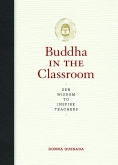
He was pulling the words right out of my own heart. But my parallel had to do with my unfulfilled childhood dream of singing. I never dared to describe it as a “heartbreak.” But in hearing that dialogue, I knew it was the right word. Because that’s what it felt like. In my book, Buddha in the Classroom, I tell the story of how, as a child, I would convince my mother that I was sick enough to stay home from school, so that I could sing along with all my favorite records, especially Elton John, Carly Simon, and Carole King (I’m a child of the 70s). I convinced her to sign me up for singing lessons and later joined the school choir. The rock band I formed with my drummer boyfriend in high school, would be my last go-round with singing… for a few decades, anyway.

As a young adult, I came to feel that I could not sing and simply stopped. But I was that mother who lived the dream through her kid… like those football dads who never got to play, so they live it out through their sons. And live the dream I did… through years of schlepping to violin camp, sax lessons, Guitar Center for new guitars and amps… and best of all, music in the house all the time. He always knew he could leave it anytime he wanted, but as destiny would have it, he took to it naturally.

The Road Not Taken Isn’t Good or Bad

Despite my little pity party with Michael Douglas, I have discovered that the road not taken gives us “juice.” It gives us a kind of useful frustration, even though that word gets a bad rap—as in the expression, “he’s a frustrated actor” (or, fill in the blank). This frustration can provide the impetus to channel that creative energy into everything we do. In other words, we can put that spirit into other endeavors, which imbues them with vigor and meaning.

I have also found that the myriad heartbreaks and “unfulfilled” areas of our lives, gifts us with a sweet sense of melancholy that makes us richer, as humans. But the kind of melancholy I speak of is not sadness or unhappiness or depression. It’s rather like a color… a wonderful hue in the prism of life. It gives us depth. It gives us empathy and sensitivity.

With some irony, it is that same sensitivity that enables me to feel music deeply and relate to others with a kind of profound compassion that wouldn’t be there if I had no understanding of heartbreak.

I would even say that the emotions that are often dismissed as “undesirable” are the salt in the stew of our character.

Spiritual therapist Linda Nardelli speaks of the importance of welcoming all emotions… “when I welcome my clients’ full range of emotions and see them as a whole, they often rationalize their feelings as not being spiritual or advanced. They’ve ascribed to the path of evolution and believe that they have to be beyond human to be spiritual. They perceive their humanity as being a bad thing.”

“It’s important to welcome your emotions. What’s wrong with frustration, shame, fear?” ~Linda Nardelli

Going Even Deeper

We grow up being told that if we chase our dreams and passions, we’ll live happily ever after. We are told to go after all the material goodies, including recognition, accolades and all the various symbols of success. Nowhere are we told about the space in the middle of dreams and disappointment. The space in between yearning and loss. A wise teacher once told me that “anxiety, heartbreak and tenderness mark the in between state.” But no one ever wants to go there.

What would happen if we found the courage to explore the in between? To feel what it really feels like there? This is the land where the spiritual warriors live. It’s where we become tender and where compassion wells up of its own accord, to take the place of bitterness, so that loss no longer feels like loss, but rather, like love.

It Doesn’t Have To Be Your Profession

What does it matter if it’s “what you do?” All the better if not! So as not to become corrupted by “work stuff,” like deadlines, evaluations, and worries about performance. As a hobby, it stays sweet, and never becomes odious.

My best friend was one of the “lucky” ones who was able to make a profession out of dancing. She once shared with me the common experience among the cast members of a famous musical she took part in. Far from reveling in prideful accomplishment for having been part of one of the longest running shows, they ended up physically and mentally jaded. Across the board. Many were dancing on old injuries and were scarcely able to find the motivation to go on stage night after night. Yet somehow, they managed to put themselves into their costumes and glissade onto the stage one more time because it was how they made their living.

It is the same motivation that gets most of the world to work every day.

When something becomes a job it often becomes burdensome. Think of the ancient Greek myth about Sisyphus. He is condemned by the guards to push a giant boulder uphill, over and over, all day long, even as it continuously rolls to the bottom of its own weight as soon as he gets it to the top. The gods understood the futility of wasted labor, so it was the perfect wicked punishment. In retelling the story, the French philosopher Camus likens the absurdity of the task to the predicament of every single one of us, who must push our rocks in our own way… as we struggle to meet deadlines, deal with coworkers and bosses and solve the problems that are part and parcel of any workday, anywhere.

But, when something is done purely out of love, without the label of work tagged onto it, and without the heaviness of deadlines hanging over it, it can be a joyful retreat.

Soul Purpose Matters More Than Profession

My beloved teacher, Guru Singh, once spoke about the importance of getting in touch with your soul purpose. “Your soul purpose is not to be a lawyer or a doctor,” he said, “but your soul purpose can express itself by being a lawyer or a doctor or an actor or a teacher or a mother or whatever. Your soul purpose isn’t your profession, but rather, your soul purpose will be expressed through your intention in your profession.” (Lecture at Yoga West 2/5/13)

Through coaching, Michael Douglas’ character confronted his own unprocessed emotions and created a safe space for his students to do the same. As a teacher, I can relate to the therapeutic value inherent in the profession. I have long gathered that this is a big part of what my soul’s purpose has been…

But thanks in no small part to a stressful divorce, and a little encouragement from my friends, I finally started singing again. It is inconsequential that it is nothing more than a therapeutic hobby. And it’s okay that I’m just an okay singer. Many classics were sung by okay singers who thought they couldn’t sing.

Michael Douglas’ character finally gets his day in the sun. On the big screen. The fact that he won an award made for good story telling, but it too, would’ve been inconsequential if it were otherwise. And no matter that it’s the final chapter of his life. The time is just right when we are able to infuse it with love. And in return, it will bring us only joy.

It’s all part of The Road. A part of the soul’s purpose that isn’t even fully understood… yet.

What is your road not taken? And how might you travel that road, now?

On Over-Explaining

The Realization—

It had been a long and exhaustive weekend. We went deep into many areas of personal betterment in a weekend training seminar. Sometimes the simplest-seeming things are the most memorable. One of those moments came when my favorite female teacher answered one of my questions with nothing more than this: “you don’t need to over explain.” I’m not sure I even remember the question anymore… I do remember that it had to do with the problem of explaining difficult concepts. What really struck me was the simplicity of her response. But also the thud of the obvious… such as when you’re hemming and hawing about asking someone to the dance… wondering how to do it, how to approach him/her, and what to say… when your best friend casually suggests, “why don’t you just ask him/her?”

But it sometimes takes years… I mean… decades to learn a new trick. Skip ahead 10 years to a lovely dinner party.

Example—

Host: Oh, you teach Taoism… what’s that about?

What I could’ve and should’ve said: An ancient Chinese philosophy that embraces nature and finding peace within the natural rhythms of life.

What I did say:

Me: ”If I was cornered and forced to explain, in a word, (Hah!… “a word”) what Taoism is, I’d say it all comes down, as all wisdom teachings do, to non-resistance.” (Ohh… but wait there’s more!) “It’s all about letting go,” I continued, “…letting go of our attachments, which conflict with what Lao Tzu calls the way of nature.” (Oh, but yes… I did!)

Another Example

A relative ran an invitation by me…

Relative: We’d love if you could join us on a group vacation to Puerto Vallarta, by cruise ship.

What I was thinking: Hmm… that sounds like a nightmare… I’m not a group travel kind of gal. I have sleep issues, and I like to make my own schedule, and I’m an introvert, and I get seasick.

Which came out like this…

Me: “Well, I’ll have to check my teaching schedule… Things’ve been hectic this last year, with the pandemic and all, and I’m grateful to have work.. so, I gotta accept whatever course-load they offer, since colleges have really taken a hit… so I’ll check in with you sometime in the next few weeks…”

But, this would’ve been enough: “Thank you for thinking of me, but I don’t do well with cruises… Let’s get together when you’re back, though!”

Why Do We Over-Explain?

Why do we feel we have to prove and convince?

Why do we feel that a simple word or two isn’t enough? Is it insecurity? Is it distrust of the other person’s ability to understand? Or, perhaps we seek approval… and so we continue our presentation, looking for that satisfying nod of approval. Is it the overachiever’s complex?… wanting to “be the best student” and do good, thorough work? Especially in my case… having gotten my degree in philosophy, a discipline which requires you to “argue your points with sufficient supporting evidence.” I remember being told that it’s not enough to know philosophy; one must be able to DO philosophy, which captures that spirit of argumentation. That’s why philosophers make good attorneys. This is certainly part of my own answer and the rest is probably a combination of all of the above.

With regard to the overachiever’s complex… life isn’t a classroom. And most people don’t need or want a lecture. And a thorough explanation simply isn’t needed. Most people just want a token word to satisfy a passing lackadaisical curiosity. Especially at a social gathering. And if there’s a genuine interest and a need to go deeper, you’ll know it. All those extra words serve about as much purpose as the extra clothes in our suitcase that never get worn on trips. But we bring them anyway, ‘cause… Better make sure!

Insecurity

But, the more interesting reason has to do with insecurity. Needing the other’s approval.

The Irony: While thinking that saying more will solidify our point, it actually does the opposite. While thinking that having the complete answer will boost our own sense of potency, it actually diminishes it, by making us appear unsure of ourselves. In another stroke of irony, while we think that a lengthy explanation will tighten the fortress against any possible objections, it actually leaves us more susceptible, since the insecurity will be felt. On the other hand, one strong statement communicates solidity, with no aggression, no sarcasm, and no over-explaining. It simply says, this is what it is. period.

Accept Your Power

My own teacher, Guru Singh, speaks often about self-authorization. This is another way of saying accept your power!It means breaking through the self-imposed blocks that we place on ourselves, due to the old fear-based, restrictive stories that we have been imbibing for years… stories that come from every corner… family, culture, educational systems, peers and social media.

With this freedom there are no blockages; you have the probability of every possibility; ideas and solutions for each moment are inside of each moment…you’re virtually unstoppable.” Of course, with this incredible freedom, you must now deal with the ‘equal and opposite’ — it’s the law of nature. The equal and opposite of total freedom is the daunting sensation that you have no right, you have no authority to be so free. This is life’s natural reaction; the only way around this is for you to be ‘self-authorized’ — give yourself the authority — no one can do this for you. It’s called Raj Yoga for a reason — the universal authority of royalty. ~Guru Singh

As part of our own awakening process, which includes the granting of our self-authorization, it’s crucial to reflect on our beliefs, which are built on the foundation of all those stories. If they are disempowering and limiting, then they will continue to compromise our ability to trust our own voice, our own convictions, as well our own personal truths. And we will lack the confidence to speak directly and simply. Funny, it goes back to the most oft-repeated refrain in all of western philosophy… Know Thyself.

*note: I originally wrote this article for Awaken.com

Loving My Anxiety

I recently shared this Pema Chodron quote with my Yoga students, which, as someone who wanted so badly to be “cured” by spiritual practice, I hoped it would strike a chord with them, too:

“When people start to meditate or to work with any kind of spiritual discipline, they often think that somehow they’re going to improve, which is a sort of subtle aggression against who they really are. It’s a bit like saying, ‘If I jog, I’ll be a much better person.’ ‘ If I could only get a nicer house, I’d be a better person.’ ‘ If I could meditate and calm down, I’d be a better person.’ Or the scenario may be that they find fault with others; they might say, ‘If it weren’t for my husband, I’d have a perfect marriage.’ ‘If it weren’t for the fact that my boss and I can’t get on, my job would be just great.’ And ‘If it weren’t for my mind, my meditation would be excellent.’ But lovingkindness — maitri — toward ourselves doesn’t mean getting rid of anything. Maitri means that we can still be crazy after all these years. We can still be angry after all these years. We can still be timid or jealous or full of feelings of unworthiness. The point is not to try to change ourselves. Meditation practice isn’t about trying to throw ourselves away and become something better. It’s about befriending who we are already. The ground of practice is you or me or whoever we are right now, just as we are.” ~Pema Chodron

It must have hit home with many seekers, who deeply resonate with the sense of defeat that tends to rise up alongside the demons that never seem to disappear for good. It is tempting to indulge in feelings of failure and inadequacy for continuing to feel the all-too-human feelings of angst, despite the sincerity of their spiritual practice. In other words, to continue to be perfectly imperfect, like every single human on this planet.

And in tandem with this call to love yourself, shadows and all, a student then asked me if it was necessary to experience a Dark Night of the Soul in order to awaken, spiritually.

I can only speak from my own experiences as a seeker, and consider myself to be a lifelong student, but with that said, I never thought of my own challenges as a “Dark Night,” as I never sank into the kind of despair that makes life feel unpleasurable. And I always considered myself to be a generally happy sort of person. But, we are complex creatures, and lurking behind the laughter is a kind of melancholic timbre that has likely colored my demeanor, the way the coastal fog renders the look and feel of Morro Bay. I never minded it, though. Quite the contrary, I came to see the familiar feeling like an old friend.

But it took a while for the relationship to settle into such copacetic intimacy and total acceptance. I remember the first instance of something like angst appearing after my biological father died, when I was a five year old girl. Shortly thereafter, I developed a fear of death that I was embarrassed to share with anyone.

When I began to experience panic attacks during my early college years, I suspected that traditional approaches in modern-day therapy would have limited reach. And they would have to reach deep, as this tendency seems to have a genetic inclination. My Jewish aunt used to joke when making light of her penchant for worry, “We’re just nervous people,” she’d say. But Jewish people are famous for falling on humor as a means of survival in a world that has been anything but kind. And it’s good practice to be able to laugh at yourself. Eckhart Tolle speaks of the ego-shattering capacity of laughter.

And so, my spiritual journey began. Although I never did “cure” my anxiety through spiritual practice, nor all the laughing that was always heard in my family home, what I did find was so much more beautiful than a cure. The things we’re not looking for are always better. Perhaps the universe knows best what we need. I now see the anxiety—or whatever it is that brings a person to seek—as merely a door that opens up to a world so rich and bounteous that the original “thing” becomes almost irrelevant.

It’s the kind of treasure that doesn’t reveal itself among everyday activities. It reminds me of that Irish story I used to tell my class about God being shy: The rabbits would wait until sundown to come out and frolic in the fields… because that’s when the farmers turned in for the day and the fields would become empty and quiet during that twilight pause just before sundown. Similarly, God waits until stillness abides in a seeker’s heart before revealing himself/herself.

The anxiety… or the depression… or the addiction… or the trauma… or whatever it is that often leads a seeker to the magical portal is merely the siren that activates the longing. For me, when that door opened, a tear flowed down my left cheek and for the first time, I felt love. But not a romantic love. Not a love that has any object, at all. Just love.

And with time, I began to experience other profound shifts. For example, I began to trust myself, with regard to everything. I trusted my judgment, I trusted my intuition, I trusted my abilities. I trusted my authority to speak up… to take action, and when necessary, to walk away. Most of all, I trusted my heart to guide me in the right direction. This last one was big for a philosophy student who had been nurtured on critical thinking and over-analysis.

It would be untrue to say that the anxiety has completely disappeared, but through the years, the triggers began to lose some of their charge, and I began to coexist with them differently. The relationship with the anxiety felt more easygoing. Less antagonistic. There was less of a fight. I could often laugh at it rearing its crazy ol’ head, and say, “you again?” It was like two old buddies that knew how to push each other’s buttons, but no longer felt so offended by the wisecracks.

I came to see that when the anxiety flairs up, it’s an indicator that something is off within. And those gifts that arose by way of the seeking, supersede its significance in my life. And for that, I can say I love it.

A Look at Telepathy… through Science and Personal Anecdote

Telepathy for Facebook and Then the World - WSJ

Collective Memory—

In my philosophy of film class, I always include Richard Linklater’s Waking Life, a veritable philosophy fest in words, ideas, colors, conversations, and even sound. With all held together under the grand question of what it means to live authentically, the topics span from free will to lucid dreaming, to the role of creativity and art in the human experience—touching on the central inquiry in the branch of philosophy known as Aesthetics. 

In one scene, two people lie in bed, speculating about about things of an esoteric nature… especially reincarnation and the notion of “collective memory.” 

“Maybe reincarnation is collective memory,” the character played by French actress Julie Delpy, suggests… “What I’m trying to say is that somehow I believe reincarnation is just a poetic expression of what collective memory really is.” And then she continues with a couple of examples, most notably, the crossword example, now of some repute:

There was this article by this biochemist that I read not long ago, and he was talking about how when a member of our species is born, it has a billion years of memory to draw on. And this is where we inherit our instincts. I like that. It’s like, there’s this whole telepathic thing going on that we’re all a part of, whether we’re conscious of it or not. That would explain why there are all these seemingly spontaneous, worldwide, innovative leaps in science, in the arts. You know, like the same results popping up everywhere, independent of each other. Some guy on a computer, he figures something out, and then almost simultaneously, a bunch of other people all over the world figure out the same thing. They did this study. They isolated a group of people over time, and they monitored their abilities at crossword puzzles… in relation to the general population. And they secretly gave them a day-old crossword, one that had already been answered by thousands of other people… And their scores went up dramatically, like 20 percent. So, it’s like once the answers are “out there,” people can pick up on them. It’s like, we’re all telepathically sharing our experiences. (Waking Life, 2001)

This phenomenon, whereby somehow, in a way that seems to exceed what we understand about reality by way of Newtonian causation (which applies just fine on the materialistic level), we are able to affect one another and share one another’s knowledge collectively, is sometimes referred to as the collective consciousness – a term first coined by French sociologist, Emile Durkheim.

Yogis Knew it When—

Yogis have had a similar belief for thousands of years… My own teacher, Guru Singh, speaks often about how we carry seven generations of familial information in our mind-body system:

It’s both a hologram within countless holograms, and a mirror of your consciousness reflecting images and experiences from the programming of your evolutionary history and future destiny. Your consciousness is an assemblage of all these images and stories from throughout the entire history of your incarnations and generations of your ancestry, and then projected through countless opportunities into your future…Your evolution — through tens of thousands of lives — makes up this kaleidoscope of your body and consciousness. The lives of your ancestors — for seven generations — all contribute to the makeup and experience of your physical body. Whenever you don’t realize that your experience is a mirror of all this, that’s when you’re living as a slave to the actions and reactions of the moment. Freedom is to experience your experience, while acknowledging it as a holographic reflection — an assemblage of personal perspectives experienced through the window of this projected consciousness and a mirror of reflections. This all takes place within your mental body — a result of your brain and its connection, or disconnection, with the Universal mind. When your brain is connected to the Universal mind — achieved through consistent meditation and contemplation — your thoughts are fresh and intuitive . . . flowing with the ease and grace of willingness. (Guru Singh, 2019)

So, to “wake up,” is to consciously recognize these tendrils of influences without remaining enslaved to the stories they carry. This is part of what it means to heal. For, to become liberated from “the story” is to heal. And when we heal ourselves, we also heal those past generations, as well as the future ones. There is no such thing as living in a solitary or isolated state… we are all interconnected, as one, in ways that we are just beginning to understand.

Telepathic Connections Abound… And Yet, We’re Still Bound to the Senses—

The characters in Waking Life pondered the idea that somehow, once “the answers are out there,” we can all tap into them telepathically… in a way that mirrors what the Yogis have said throughout the ages… in a way that cannot be accounted for by the traditional five senses. And yet, still today, centuries after the Age of Enlightenment, scientists run into all kinds of barriers and road blocks when trying to explore these sorts of topics.

Consider the case of British scientist Rupert Sheldrake, whose theory of Morphic Resonance was rejected as “heresy,” as if it were the 17th century. In short, he proposed that DNA is insufficient for explaining much of the behavior that is seen in all of nature, including the means by which we communicate with one another. He suggests that the missing gaps in science may be better explained by the idea of what he calls a morphic field, which is described as a field of information that influences everything, and also stores the collective habits of species. Think of it as something like an electromagnetic field, but as it relates to the extension of our “mind.” 

One of the most interesting aspects of Sheldrake’s idea is its ability to account for telepathic experiences:

The morphic fields of social groups connect together members of the group even when they are many miles apart, and provide channels of communication through which organisms can stay in touch at a distance. They help provide an explanation for telepathy. 

But, the mystical nature of what he was proposing was so offensive to the traditional scientific community that upon the release of his book, one influential reviewer proposed, in no ambiguous terms, that it would be well to burn it.  

Eight Personal Anecdotes of Telepathy (Or… Music, Bed and Instagram)—

1.I had just reconnected with an old friend from when I was 14 years old. Gino is two years older. We both worked in the Italian deli (I said I was 16). We became fast friends and quickly bonded over our shared obsession with Elvis Costello. When we reconnected, it was just before the pandemic hit, so I was sitting in my regular spot in the neighborhood coffeeshop, and had just begun typing out a response to his email when Elvis Costello’s “(What’s So Funny ‘Bout) Peace, Love and Understanding” started playing over the coffeeshop speakers.

2.This one also involves Gino and music: I sent him a link to a Joe Jackson video on Youtube. His response was immediate… “No way! Just two hours ago I was filling out security questions for an online form and it asked me for my first concert, which was Joe Jackson. I hadn’t thought of him in years. Then you send me this video!”

3.I was finishing the watercolors for my storybook The Sycamore That Wanted To Be a Cactus, and one of them required a detailed rendering of the Fed Ex truck, with its readily identifiable purple and orange logo. I enjoyed doing it and this feeling was enhanced by my recollection that my biological father, who passed away when I was a young girl, had done sign work as a career.  His father (my grandfather) had also been a Graphic Artist. I felt the need to share this moment, which was imbued with all kinds of special significance… that I was somehow carrying out my family lineage… a sort of “divine right”… through the act of painting a little sign in great detail. So, I sent a text to my friend Sharon, saying that “this is what my dad did in the 70’s, and back then, it was all by hand, and I really like doing this…” One hour later, I received a phone call from my aunt DD, his sister, asking for my mailing address. I hadn’t spoken to her in years. She explained that she’s going to be sending me a cherished ring that my dad wore… one that my mom had given to him.

4.It was last April, 2020: I had just posted another singing video to my karaoke channel on Instagram. The song was “Hello It’s Late,” by Stone Temple Pilots, a rock group I have followed for many years. I had gotten to know them a bit during my years as a music reviewer, especially bassist Rob Deleo, who I talked with the most, and so I decided to look for him on Instagram, thinking it might be fun to reconnect after all these years, or at least tag him. When I found him, I saw that he had just posted a picture from the making of that very song, only a few minutes prior.

5.I had just woken from a dream, imagining myself in conversation with a relative. I was responding to a “made up” question, saying “I’m small…” And then I clarified, as if having a real conversation, “What I mean is that I’m not very tallI’m a small person.” And I continued repeating this imaginary, one-sided dialogue in my head, when I decided to check my email. I saw that there was one from him in my Inbox. After the usual greetings, there was a random by the way… “I’ll explain later,” he said, “but I was wondering… how tall are you?”

6.It was just before going to bed one night. You know those loose, out of left field thoughts that swirl through your mind, just before slipping into dreamland? But I was still cognizant of one thought in particular… I was thinking about how neat it would be to name a baby girl “Misty.” A strange thought to be having, considering I’m past my childbearing season. And besides, I never wanted more than my one wonderful son, anyway. But I continued my musing on the name “Misty.” Like a misty, foggy beach… And, like that wonderful song, “Misty.” And then, I was wishing I had had better luck singing that one, but alas, it didn’t seem to suit my voice. Then I decided that I couldn’t sleep yet, and so I opened up my phone. Because Instagram was the last place I had visited earlier, it popped right up. At that moment, the latest post from a fellow singer who calls himself “Jazz Cat” was right there. He was playing “Misty” on guitar while a female vocalist sang the song.

7.It was in the evening, when I often watch live music on Youtube. I had just watched a recording of Burton Cummings, from The Guess Who, on the Stern show. Youtube now offers me things that it “thinks” I’ll like, and say what you will of Stern… he rescues cats and gets good musical performances out of artists! So, then I turned off the TV. Not quite ready to go to bed, I looked through some old texts from a boyfriend of the past. I was hoping to find a link to another Cummings performance of the song “Undun.” Unsuccessful, I got tired of scrolling and went to bed, but it must’ve gotten into my psyche… I woke up in the morning from a dream with him in it. I immediately had the thought, Whew, thank God it was just a dream. And then I had another thought, Wouldn’t that be something if there was a text from him? And just at that very moment, as if to test it out, I picked up my phone, and there was, indeed, a text from him. But it gets better… It was simply a link to… The Guess Who Greatest Hits, on Apple Music. I checked the time of the text… it was sent at exactly the moment when I awoke, although I hadn’t heard it, as sounds were silenced.

8.This one is to the point: One day, one of my good friends and I sent each other pictures of the Eiffel Tower, by text. At exactly the same minute, without any prior conversation leading up to this seemingly random exchange. 

*For more on Rupert Sheldrake’s story, see the BBC documentary on Youtube entitled “Rupert Sheldrake: The Most Heretical Scientist of Our Time
*I also published this on awaken.com, which I contribute to regularly.

Five Books To Take with You on a Spiritual Journey

I was asked to compile this list for a soon-to-be-launched website that will be similar to Goodreads and which will include my own book, The Buddha in the Classroom. These are my own top five spiritual reads! Thought I’d also share here. Enjoy! ~Donna

1.The Four Agreements ⎜ Don Miguel Ruiz


The Toltec wisdom in this classic is simply told, and immediate in its applicability. For example, the second Agreement reminds us to never take things personally. How much of our suffering comes from doing just that? These teachings bring our awareness to this tendency. And awareness, however basic, does the bulk of the heavy lifting when it comes to stepping out of old patterns that keep us from feeling at peace within.

2.The Wisdom of Insecurity ⎜ Alan Watts

In my own book, The Inspired Teacher (Originally The Buddha in the Classroom), I tell the story of my fortuitous and life changing first encounter with this book, while in my first year of college. Foreshadowing my career as a teacher of eastern philosophy, it lit the fire of my ongoing interest in Zen and had a profound impact on my personal journey into meditation. I sensed that the ironic title held some precious secret. I would discover, within its pages, the magic that happens when we learn to lean into the unknown, rather than fight against it. Indeed, the search for assuredness in life only seems to perpetuate the angst that is at the root of all the anxiety that characterizes the human condition… at least for many of us! Through letting go, we become more free.

3.The Divine Romance: Collected Talks and Essays on Realizing God in Daily Life ⎜Paramahansa Yogananda

This is part of an anthology of collected talks by the beloved Yogi, Paramahansa Yogananda, which also includes Man’s Eternal Quest and Journey to Self-Realization. They are what I keep in my own nightstand and what I open during times of trouble. And this one is my favorite of the three.


Paramahansa Yogananda is direct and loving in tone. This is the kind of book that doesn’t need to be read at once—you can open up to any page and find solace. The theme revolves around the importance of dropping the self-sabotaging bad habits that keep us from true joy.

4.Zen Mind Beginner’s Mind ⎜ Shunryu Suzuki

This may be the most loved and widely known book on Zen. Like the Paramahansa Yogananda selection I spoke of above, it is transcribed from a series of talks, and so, it has a direct and intimate feel. Like many Zen masters, Shunryu Suzuki speaks with humor and conveys deep wisdom through Koans and lighthearted parables. The relaxed tone reminds us that enlightenment isn’t meant to be complicated. It’s right here, but we miss it because we expect deep wisdom to come cloaked in armor and difficulties.


If you only read one book on Zen, let it be this one, as it covers everything from the basics of sitting to the notion of emptiness, and in a way that feels as effortless as a breeze.

5.Be Here Now ⎜ Ram Dass

When I first held this definitive item of the late sixties counterculture in my hands, I was delighted by the unconventional design of the whole thing, from the front cover through to the way the text is laid out… sometimes coming at you in spirals, carrying the whimsy and free spirit of its era. There was nothing else like it and there never has been. Technically published in 1971, it relays the atmosphere of change that was engendered by the events spanning the Vietnam era, including the general spiritual awakening which followed, and which Ram Dass (then Dr. Richard Alpert) helped inspire.


In a highly readable and artistic fashion, he shares the most essential messages from his own transformative experiences, spanning his journeys into psychedelia and later into life as a Yogi, following the life-changing meeting with his teacher, Neem Karoli Baba, in a stripped down, compelling and relevant way.