On Losing a Pet II: Licks from Beyond

Losing Marcel crushed me, and the grief lingered on, but I am writing from a point where I’m now in a much better place. With some soul-searching, a few little miracles and some “winks” from beyond, here are the little helpers that have put me back on the path to healing…

I was again lying on the bed, looking at photos of Marcel. All of my unfinished projects sat. My motivation for anything had been deflated.

I have a beautiful house at the foot of the Cumberland Mountains. There are birds and cicadas singing in the trees all around me. But, you can’t hear the sounds of the country if the screaming siren of longing within, is drowning it all out.

Someone said to me, “but you still have one dog.” I know, and he’s precious and adored. Grieving for one doesn’t minimize my love for the other. And vice versa. Just as my being here, perfectly alive, doesn’t minimize my Mother’s grief for my brother, who we also lost recently. 

I believe the analogy fits because as I explain in my other article On Losing a Pet, the pet relationship resembles the parent-child relationship in many ways… It’s like having a baby, except in the case of a pet, the baby ages and becomes a little senior, while remaining in baby form. It is a very unique situation and creates a bond like no other because you’re never ready to lose a baby… it never left the house, never went off to get married, or start a career, never learned to live on its own, and never gave you time to adjust to its absence. 

The Suffering Continued—

I joined a pet loss bereavement group. Okay, I joined a few. For a while, I found it comforting to share feelings and experiences with others, who were navigating the same kind of grief.

Yet the sadness, nostalgia, and the daily tears continued on… I even packed my heavy heart and brought it with me to France, where we spend a few months every year visiting my husband’s family and friends.

What I found strange, was that this “renewed” grieving for Marcel—now 1 1/2 years after his passing—was actually more intense than the previous year, when it would’ve been fresher and more raw. I became curious about this. 

Throughout the following days and weeks, I came to see the mourning as a melange of things. The grief had collapsed onto a mounting home-sickness, combined with sadness from having also lost my brother during the same year. It all cumulated gradually, and was lingering because of the simultaneous challenges on this particular trip. 

As one of my teachers used to say, the balance of levity was not up to the job in countering the gravity. So the gravity was winning. And I was sinking.

I went to a beautiful medieval chapel in one of the local villages. While sitting alone in the back, I asked for a deeper insight. Soft Gradual Shock, as opposed to Post Traumatic Shock, came to me.

It is softer, more gradual, and comes not from one specific thing, but from a handful of significant life changes, happening in a relatively short span of time. In my case, although we are very happy with our recent cross country move, it had followed many other significant life events… a divorce, a partial retirement, the dispersement of my beloved spiritual community and our sanctuary—which changed hands after the pandemic, and two major deaths. I was missing the places I used to go with Marcel… I was missing Yoga West, the one place I used to go for solace. The place where I taught others…

This insight, as I would later come to see, was the start of my healing journey.

On the last day of July, we could smell the smoke from the biggest fire in the history of France, which was swallowing up entire villages a few hours south of us. As if the fire wasn’t enough, it was the summer of an uncharacteristically long and intense heatwave that hit the entire country, as well as neighboring countries. No one had air conditioning. I was lying on the bed yet again, listening to Esther Hicks on the topic of grieving.

In the way that fire breaks open certain pinecones to release their seeds, something was born in me that day. 

Miracles & Healing—

“You’re a lazy focuser,” Esther said to the questioner. Yeah… I know, I said to myself, as if she were speaking directly to me. Then, she shared stories about the funny ways in which the departed make their presence known to those who are able see, such as through the sudden appearance of blue glass, feathers, and butterflies, which I had heard her talk about in the past. 

That very afternoon, I found a feather in our living room. But I didn’t want to fall prey to wishful thinking, as it was a grey, ordinary feather that could’ve blown in from the open window. 

The messages however, were now coming in like a series of spiritual e-mails… I had opened up the channel of communication. The teacher of my teacher, with whom I had received messages a few times many years ago, sent me a mantra, which I promptly put to a little tune on our piano. This particular mantra, Ang Sang Wahe Guru, synchronizes the finite sense of self to the infinite Oneness in the universe. We are one with spirit. 

I felt I was being pulled back into the light.

That evening, when it cooled just enough for an evening walk at the park, just behind the Boussac castle, I looked down to find another feather. Like the first one, it was grey and quite ordinary. I still didn’t want to read into it what wasn’t there, since feathers, in and of themselves, aren’t so unusual. My natural skepticism prevailed in that moment.

That night, Marcel showed up in my dream… 

In the dream, he was inside a birdcage. Dreams are always weird… He then found his way out of the cage, from a side door. He was so clever, that this is just the kind of thing he would’ve done. I then held him, knowing that I was having a cherished last moment with him. In the dream, this scenario did not present itself as sad. Instead, it felt precious.

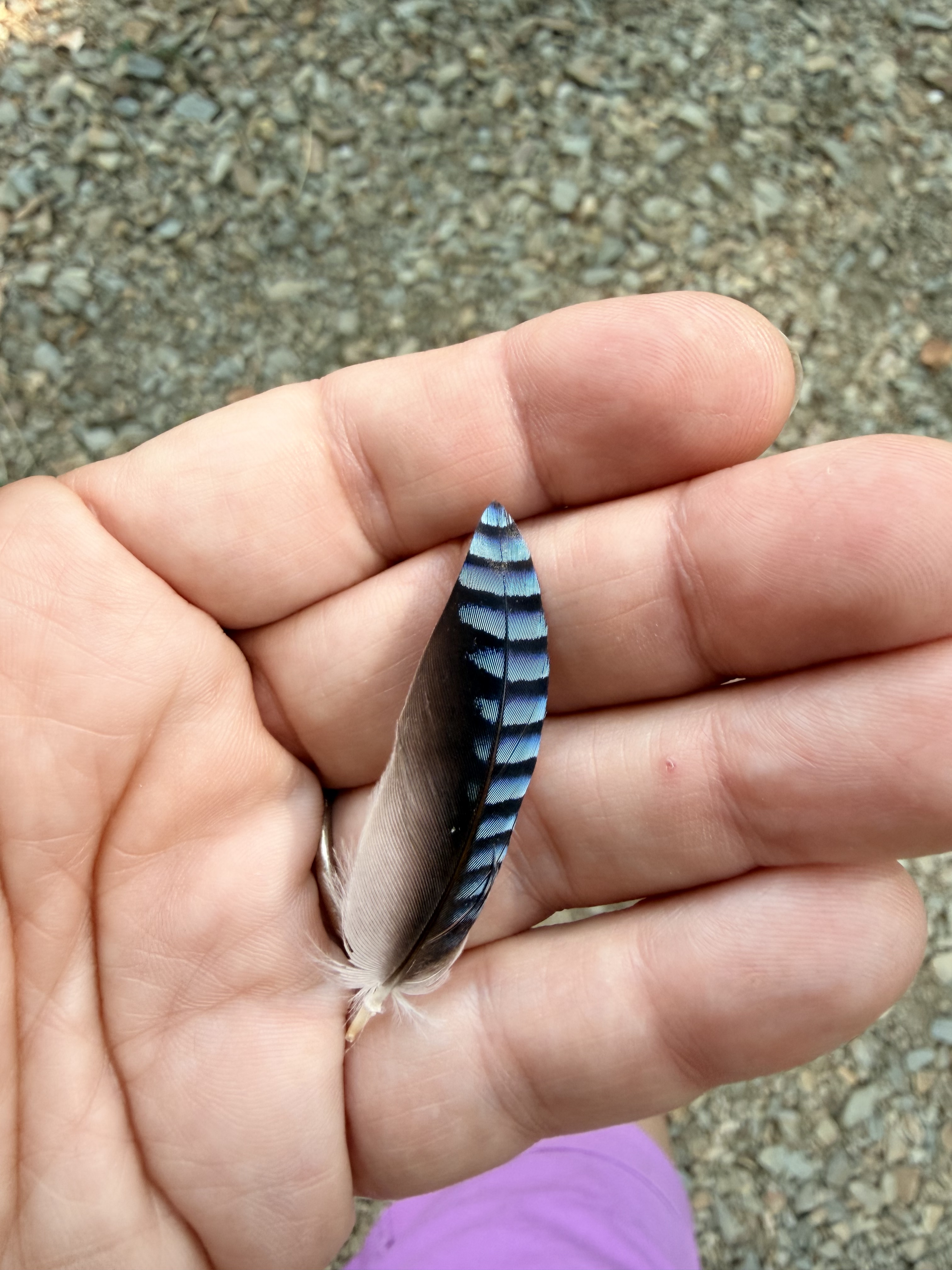
The next day, we went to the lake to cool off. When I was walking the forested trail that wraps around the water’s edge, I got to thinking about how I doubted the appearance of the two feathers…  And so, did he show up in my dream just to make sure I could have no doubt that he was near? I recalled the blue glass and the feathers… Two minutes later, as I was stepping over a fallen tree trunk that was blocking the path, I looked down to find, not a grey feather, but rather, a little blue feather. 

I returned to the beach chairs we had set up at the lake’s edge. An unusually bright orange butterfly landed right next to me and fluttered all around me while I was recounting my dream to my son by text.

I returned to the States the following week, while Thierry stayed behind for another two weeks. Knowing that I have a special affinity and affection for Mother Mary, my dear neighbor friend invited me to a centering prayer circle at the St. Mary Retreat near us. Afterward, while she was showing me the grounds and the view overlooking the Cumberland plateau, I looked down to find another little feather. It was also blue.
No Separation

While reflecting on these developments and on this new way of playing with Marcel in spirit, something else struck me… As weird as it sounds to say it out-loud, on some level, we think that our continued grieving keeps us close to them. We think we need to show them how much we love them by continuing to mourn. But this is a mistaken notion. My direct experience was showing me that our continued sadness actually blocks us from communicating with them in spirit.

Being physically focussed, as Esther Hicks puts it, also keeps us blocked. In other words, we obstruct what I have come to think of as, “winks from beyond”… those little messages that the deceased send us, to let us know they are near…spiritual tweets, in the form of flickering lights, hummingbirds, appearances in our dreams… or blue feathers and butterflies!

There’s no separation and no death, when we see ourselves as eternal beings. The true relationship is soul to soul, not body to body.

My spiritual teacher told a story one day… He had his own spiritual teacher, and asked him once… but where will you go when you die? His teacher’s response was to the point, as was his way: I will be as close as the nose on your face! 

Nobody goes anywhere!

So, when we say that someone is “gone”… We are mistaken.

Time is Relative—

While reading the stories on the Pet Grieving site, I came across many that broke me. Beloved pets leaving too soon, due to freak accidents or disease.

My son recently lost his soul-cat, Banjo, to a rare autoimmune disorder, at only four years old. 

To our standards, a life has been cut short. But LOVE, as corny as it sounds, is all there is. And if that soul received love here, then perhaps its mission has been fulfilled. 

I also read a story about a senior dog who had lived most of his life stuck inside, for 12 hours a day. But he was adopted by a loving family, as a 13-year-old senior, and for his last eight months, he lived his best life. He departed knowing he was loved.

Time is relative.

A butterfly lives 20 days, and a tortoise for 150 years. Taoism asks, which is superior? Those 20 days feels like an eternity to the butterfly.

Besides… that’s the deal with pets. We go into it knowing that we will likely outlive them. My Marcel lived 15 years… a long dog-life, by any standards. And he knew very well he was loved. He knew he was the king of the house. 

Yet, I still had a tough time of it. Because feelings are slow to respond to logic, facts about life-span, and even mystic wisdom. Emotions have their own timeline.

But, part of conscious focusing is to actively place our focus on the spiritual, rather than the physical. I began to do this like a daily sadhana, or spiritual practice. 

I reminded myself that energy is indestructible. This is a law. We really are eternal beings! 

We are spiritual beings having a human experience. (~Siri Singh Sahib)

When I stopped focussing on the sadness, and instead on the eternality of spirit, along with the meaninglessness of time, things began to shift within me. 

Focus on the love that you gave them… That’s what their soul came here to receive. How fortunate that they found you! That you found each other! 

Seize the micro-moments of joy, available along the way. Notice the things that feel good. Notice the beauty. Laugh. Don’t think that mourning holds them any closer. It is actually the opposite… your joy is your call to them. It’s how they recognize you!

On Losing a Pet

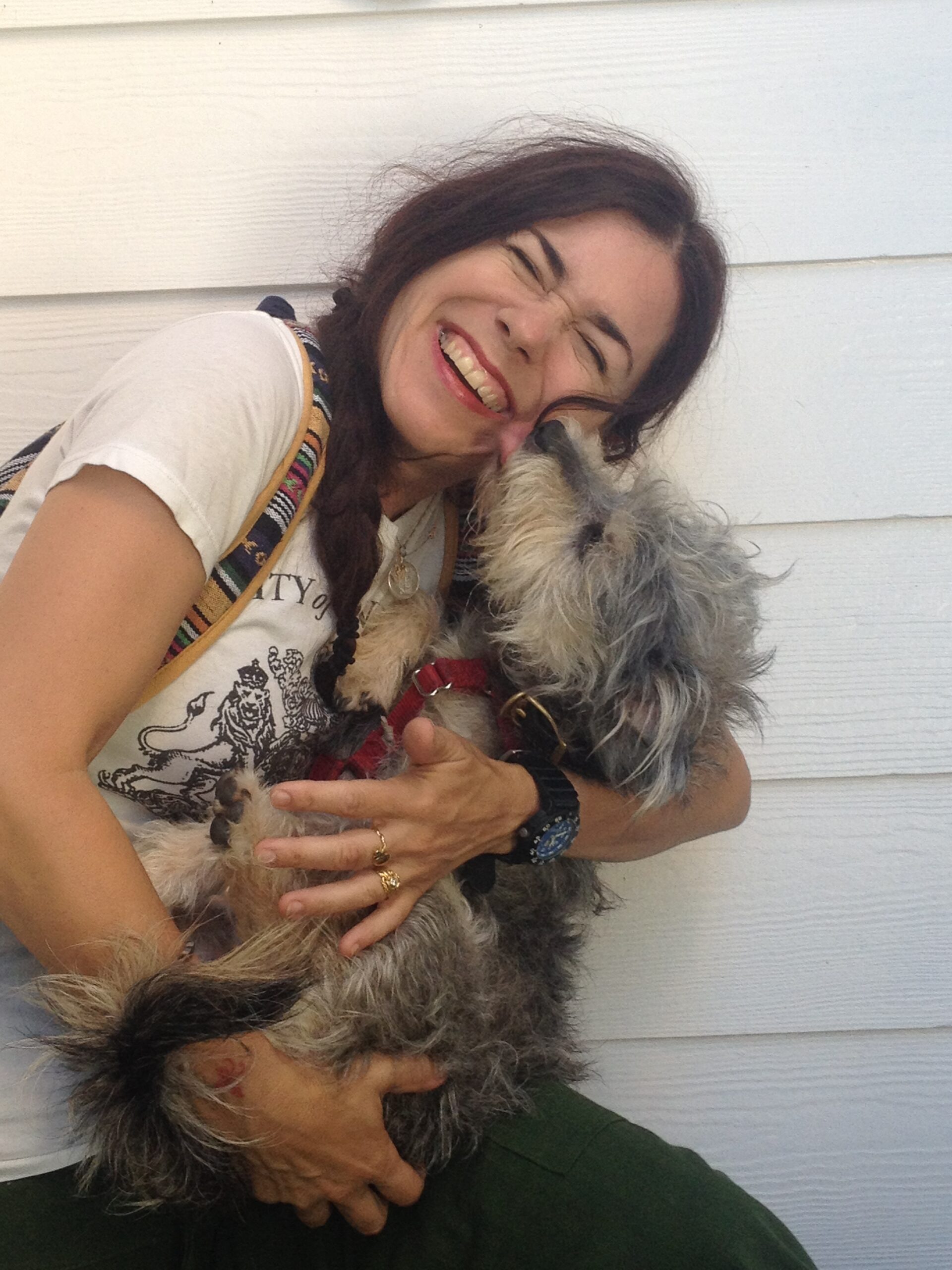
Those of you who have followed my work know that there is scarcely a picture of me without my beloved Marcel. As he was fifteen and had been showing signs of decline for more than a year,  losing him wasn’t entirely unexpected, but the profound sense of loss is nonetheless just as acute.I have had pets all my life and had gone through this before, but prior experience does nothing to make it easier when the time comes again, to say goodbye. So, I began thinking more about this very special bond between pets and their “persons,” and what makes it so painful to let go.

We’ve heard it said so many times… that our pets give us “unconditional love.” This may be true, but it never seemed to go far enough and didn’t quite capture the depth of the relationship we have with our beloved pets. There’s something ineffable there that goes beyond the notion of unconditional love.

beloved Marcel-awaken

A Rather Poetic Take

While grieving one night, an image of two souls connected appeared in my mind… When we live together with another soul, be it another human or a pet, our souls grow together and become one. Our lives merge… our habits and tastes merge. We come to depend on each other… we look for each other, we rush home for each other.

When we feel like shit, we cuddle in front of the TV together. We eat together, cry together, grow together, change together, lean on each other, literally and figuratively. We even hear each other breathe, and when the house is quiet, it is nonetheless full with the silent presence of another… one who loves you and is glad you’re there.

Then, when one soul is not physically there anymore, it leaves a gaping wound that needs to become whole again. Because we have become two souls connected, the loss of one is like losing a part of ourselves.

beloved Marcel-awaken

A Parental Dynamic

The relationship we have with our pet is not just a trifle… not just something on the sidelines of our life, or something “less than” our other more real relationships with human companions. It is an authentic relationship that deepens with time. It is very much at the core of our thoughts and how we arrange our every day.

We know each other’s habits. We communicate with a look. The connection is as deep and as meaningful as with any other kind of relationship. And it is hard for the mind and the heart to accept when any deep relationship has come to an end.

But when it comes to a pet, it is like a parental relationship in many ways, especially inasmuch as we are caregivers, and there is something counter to nature to see your “child” go …to let it go, rather than continue to take care of him/her.

Despite the fact that “rationally,” we know their natural lifespan is much shorter than ours, there’s a part of us that simply can’t make sense out of it when that time comes. When they are suddenly no more, the world feels all wrong. The heart still feels that they need us. And the realty is just too bizarre and makes no sense.

The event of their passing thus leaves us in a kind of shock. And nothing but time restores us to a place where we feel normal again and can look upon our memories and photos with pure love, rather than sadness.

beloved Marcel-awaken

Something that Helped Me

I found many meditations and essays on grief, but they only helped a little bit. Of all the things I read, there was one thing that someone said that did help:

 A lifetime of joy travels with them.

We tend to fixate on thefinal moments. I know I was doing that… Was he comfortable enough? How long was he aware of my presence? And so forth. Grieving is a strange, irrational and intense process.

But when I shifted my focus beyond the immediate moments at the end, and I looked over our life together, in its entirety, I could envision all the joy, all the adventures and all the love, stretching out over our fifteen years together… the car rides, the stroller rides, the walks at the marina, the park… the restaurants, the doggy friends, running through the house with the “crazies” after getting a bath. The cuddly mornings in bed. I could see how all of it was a part of him. It was embedded in his soul. And his spirit, now released, will carry it all. All of it, back to his puppy-hood.

The Meditation

May I have the courage and the bravery to let go… to let go of him/her… knowing that all things must pass. All things must pass.

May I always remember that a lifetime of joy travels with him/her.

May I always know in my heart that I gave my beloved the best of all possible lives with the resources that I had at the time.

May I take comfort in knowing that love never really dies… it lives on as a kind of spiritual force in the ethers. The love we shared lives on.

May I remember our time together with love, rather than sadness.

May I remember that they are never really gone… that their spirit is connected to ours with an unbreakable, energetic tendril, like a golden ribbon of love that is tethered to our heart.

May I be fulfilled in the knowing that there is meaning in my experience of loss… in the knowing that I have assumed this pain in order to spare them of theirs. And in the knowing that their soul came here to be loved… and loved they were! That was the gift that I gave … that was what we experienced together… LOVE.

Dreams Have a Way of Coming True…

“Golden Wind” available everywhere!

Many of you know me for my work as a writer, or perhaps as a meditation guide and teacher. But when I was a girl, my dream was to become a singer. Besides my best friend, Diana, who is still my best friend, my biggest joy in high school was the choral group.

Before that, I remember staying home “sick” from school as a young kid, so that I could sing along with my Linda Ronstadt, Carly Simon, and Carole King records. Like many music lovers in the 70s, my parents had shelves full of LPs, which included the entire collection of Chicago, The Stones, The Beatles (of course), and even Yes, Traffic, and softer options like The Carpenters.

In the days of albums, it was always a treat when you’d pull out the sleeve and find all the song lyrics, like in Elton John’s Yellow Brick Road album, which opened up into three panels… It was like a whole little world that included not just the lyrics, but watercolor depictions, as well… I would lose myself for hours pondering the stories that the songs were telling.

My other savior during those godforsaken high school years was when my drummer boyfriend and I formed a band. We were covering songs like Scandal’s “Goodbye to You” and “Breakout” by Swing Out Sister. Hey, it was the 80s!

But life happened. I went to university, found other interests and pursued new directions. Mostly, I felt that I was not really a singer. At some point, I came to recognize my limitations, lost confidence, and dropped the dream, like it never existed. I didn’t sing for over three decades.

During those 30 years, I taught philosophy, and being prone to introspection, I contemplated the quandary that arises when our skills don’t match our desires. I reasoned that it’s perhaps another example of the absurdities that French philosopher Camus speaks of, when he says, “Life has no other aspect than that of the absurd.” After all, how curious is it that some people don’t particularly want to do what they are naturally good at, while others want very much to do what they are not naturally good at!

I also began teaching Kundalini Yoga. It was not lost on me that one of the reasons this particular Yogic tradition appealed to me so much was because of its plentiful incorporation of chanting. It surely satisfied that unfulfilled need in me to sing.

Then something interesting happened in the middle of a difficult divorce… I started “Kimono karaoke” on social media, which featured yours truly, singing one-minute snippets of favorite songs, while dressed in a kimono, making good use of my kimono collection!

It started by chance, as a result of me demonstrating an old Olivia Newton John song to my dear friend and neighbor at the time. But I found that singing healed me. There was nothing else that kept me in a timeless space, in which I was so absorbed and full of joy that nothing else mattered.

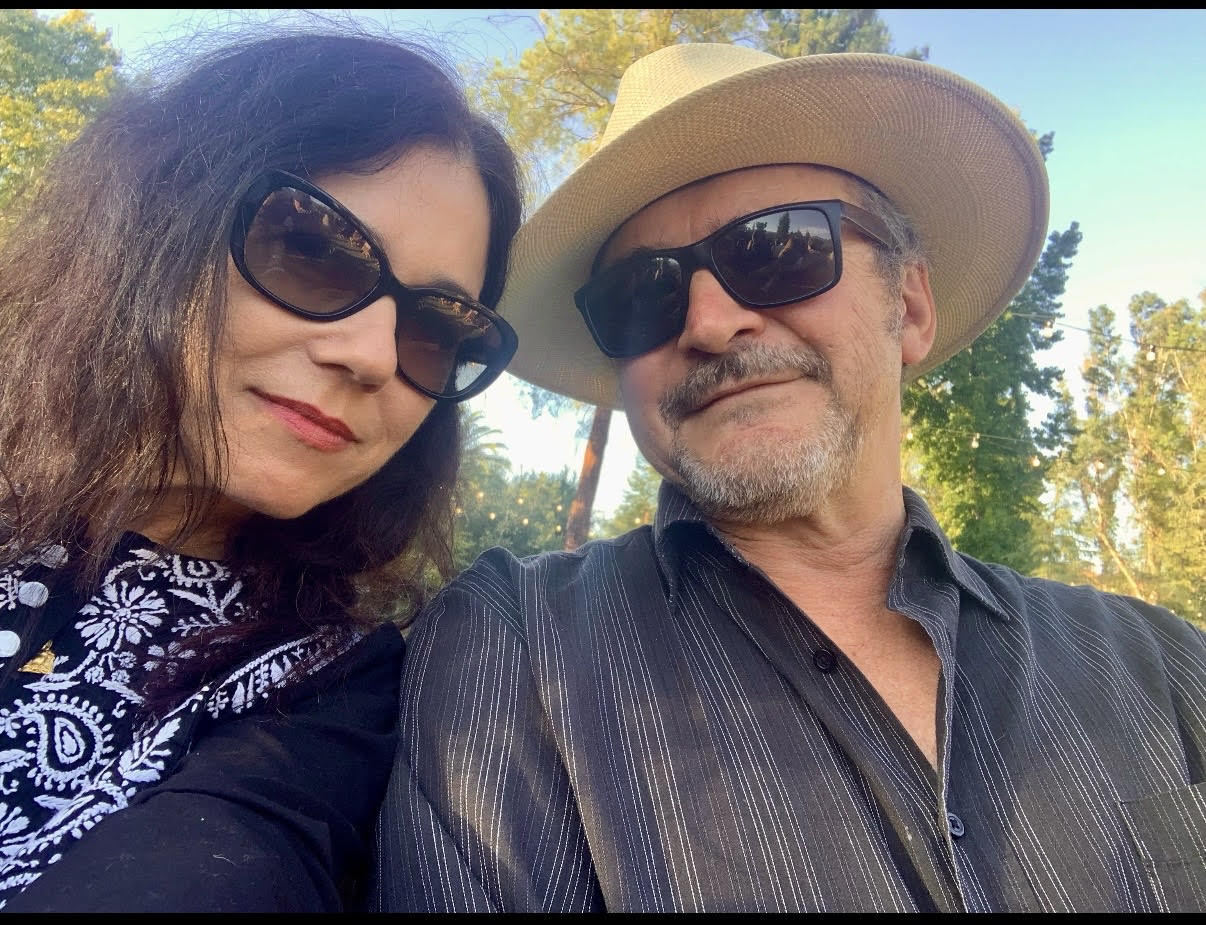
Finally, something else interesting happened… as if destiny was reminding me that you can’t really outrun those old forgotten dreams. My longtime love of France and music would show up in one package… specifically in the form of a French composer, with whom I began a written correspondence during the pandemic. We were essentially pen pals for a year, and eventually got married.

Turns out he had some unfinished songs he wanted to release and asked me if I would write the lyrics. Then he asked if I would sing a couple of them just to make some demos. We’d find a singer later. He decided to release them “as is.”

Here is the first one… If you love it, it is available for download everywhere!

Also available on Spotify, Apple Music, and most music platforms.

My New Single “Golden Wind”!

“Golden Wind” has landed!

Back story…

I wrote the lyrics for a few of my film-composer partner’s unfinished pieces, and we were going to look for a singer. But he had me sing a couple of them just to make some demos and eventually decided to release two of them, as they are. This is the first one! 💕

They both have a subtle samba vibe, and recall the classic Jobim era, when melody, romance, and poetry reigned.

Let me know what you think!

Available on Apple Music, Spotify and everywhere music is sold.

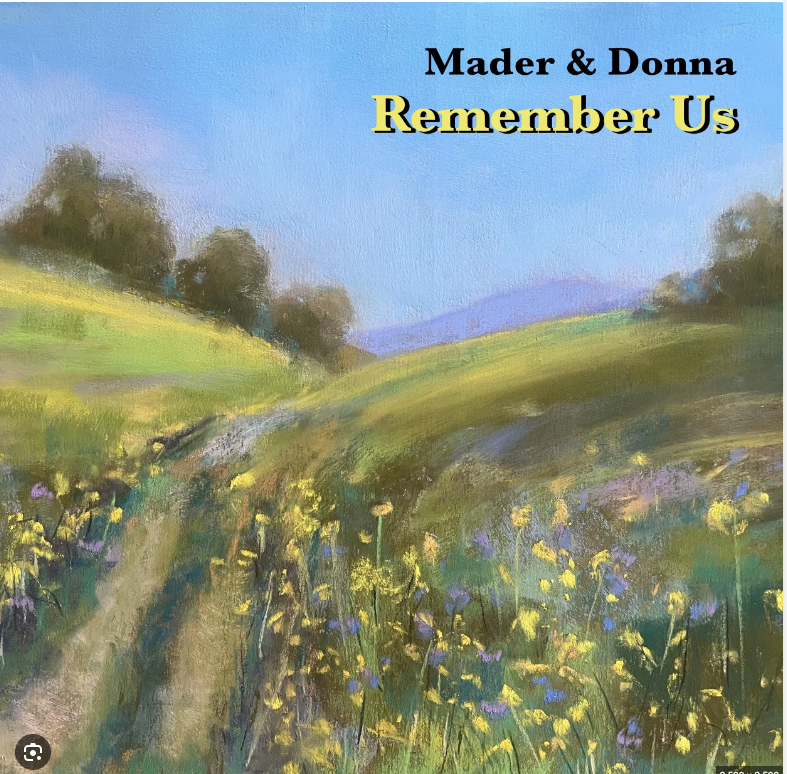
(Pastel painting by me)

Screenshot

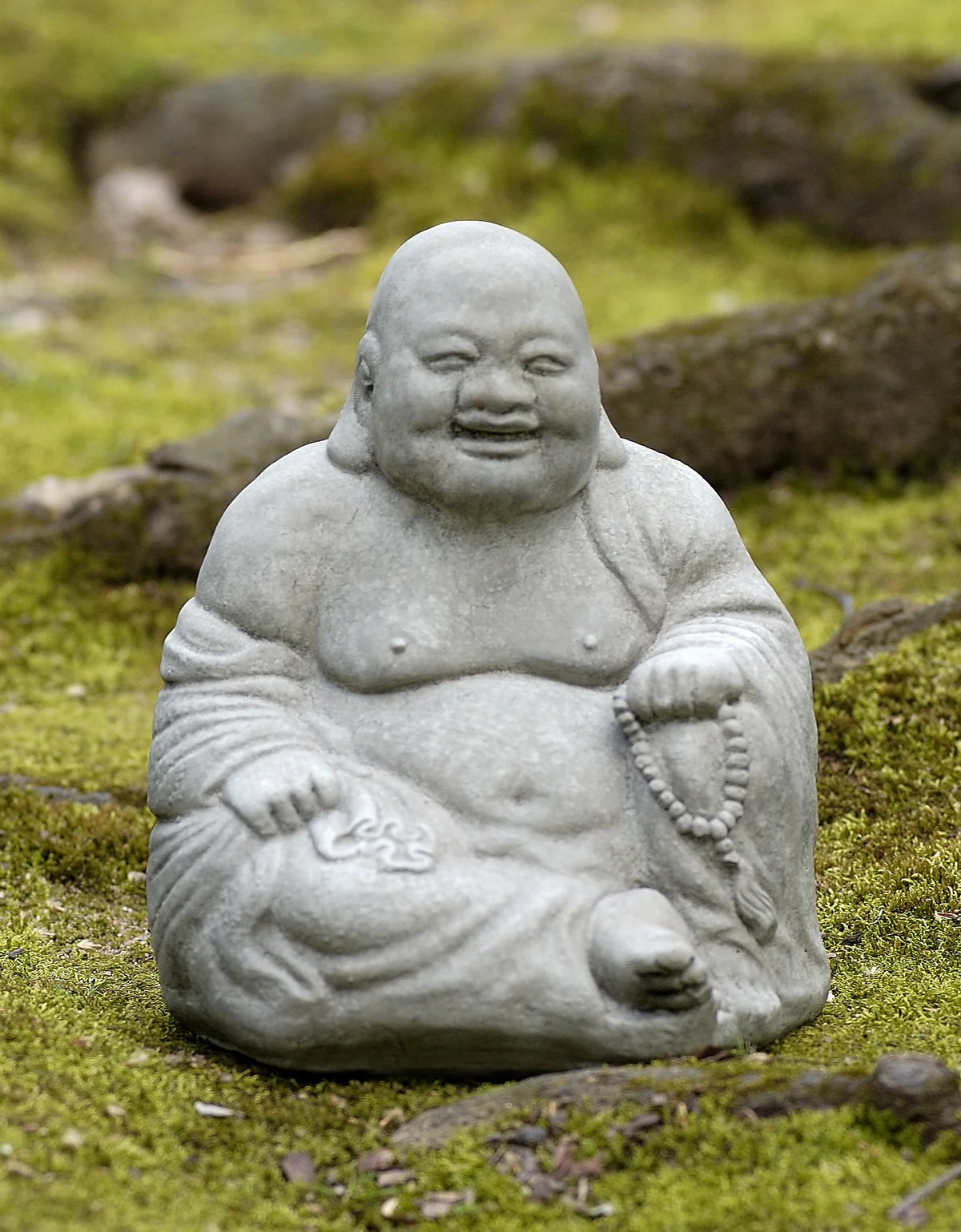
Hotei: The Laughing Buddha

This is a Zen koan, called “Happy Chinaman,” with my commentary

The Story of the Happy Chinaman (A Koan)—

Anyone walking about Chinatowns in America will observe statues of a stout fellow carrying a linen sack. Chinese merchants call him “Happy Chinaman” or “Laughing Buddha.”

This “Hotei” lived in the T’ang dynasty. He had no desire to call himself a Zen master or to gather many disciples around him. Instead he walked the streets with a big sack into which he would put gifts of candy, fruit, or doughnuts. These he would give to children who gathered around him in play. He established a kindergarten of the streets.

Whenever he met a Zen devotee he would extend his hand and say: “Give me one penny.”

Once as he was about to play-work, another Zen master happened along and inquired: “What is the significance of Zen?”

Hotei immediately plopped his sack down on the ground in silent answer.

“Then,” asked the other, “what is the actualization of Zen?”

At once, the Happy Chinaman swung the sack over his shoulder and continued on his way.

My Commentary—

I transcribed the story above exactly as it has been passed down, in Zen literature, since antiquity, despite the fact that the term “Chinaman” is now outdated. “Hotei” is the name of “The Laughing Buddha,” who actually existed and was a monk in China, in the 10th century. It is said that he was an incarnation of Maitreya, the Buddha of the Future. 

This story conveys a central tenet of Buddhist teachings, which encourages us to focus not on philosophy, but rather, on direct experience. This emphasis on practical knowledge goes back to the original Indian Buddha, Siddhartha Gautama, who often responded to metaphysical questions with silence.

The Buddha rejected metaphysics because it was not helpful or practical in ending suffering, which was his sole focus. Following are the detailed reasons for Buddha’s rejection of metaphysics.

Why Buddha pushed aside metaphysics—

1.Metaphysical questions dont lead to liberation

    When people asked the Buddha questions like:

    Is the universe eternal? Or, Where do we go after death? Or, Do we have a soul? …He would respond in unusual ways, such as remaining silent, or in one well-known example, by holding up a flower. 

    Siddhartha was a teacher until he left his body at 80 years old. He would always remind his students that these sorts of questions do not lead to nirvana, or freedom from suffering. They are irrelevant from the perspective of awakening.

    2.Metaphysical questions keep us trapped in our heads

    The Buddha compared metaphysical debating to being shot with a poisoned arrow:

    Analyzing these sorts of philosophical questions would be just as silly as a person refusing treatment because he first wants to know… who shot the arrow, where the shooter lives, and what kind of wood the bow was made of… when all the while, he’s dying.

    In the same way, metaphysical speculation has little practical value and only serves to distract us from the urgent task of freeing our minds from the attachments that keep us mired in discontentment.

    3.Metaphysical questions reinforce our ego 

    Buddha recognized that many of the metaphysical questions that we get stuck on, revolve around the nature of the soul, death and the possibility of eternal existence.

    In his commitment to help us find our way out of our own self-inflicted suffering, he always reminded his students that obsessing over questions of this nature would only strengthen the very thing they were trying to dissolve: the notion of a permanent self. 

    4.Metaphysical questions cannot be resolved through direct experience

    Buddha always reminded his students to trust only their own direct experience on everything… to see for yourself how the mind works, how suffering arises and how it ends.

    But, metaphysical questions tend to be unverifiable, as they are grounded in belief and speculation, rather than experience. So, for this reason, he preferred not to encourage them.

    In summary—

    At the heart of Buddha’s teachings is that our own attachments… to things, to ideas, and to our selves and our own immortality… keep us trapped in our own heads.

    By swinging his sack over his shoulder, and carrying on with his day, rather than allowing himself to get ensnared by the questions posed by the other Zen master, Hotei was demonstrating this teaching, without saying a word.

    Enlightenment is right here, right now! It is found in action, not in speculation!

    As an aside, by posing those questions in the first place, the other Zen master was likely testing Hotei, as that kind of good-spirited “leg-pulling” is common in the Zen tradition. Surely, as the story identifies the petitioner as a “Zen master” and not merely a “student,” he would’ve known very well the caveat of sinking into metaphysical questions!

    Simply put, Buddha avoided metaphysics because it doesn’t solve the problem of suffering. His focus was not on explaining the universe but on transforming the mind, which is the very source of this suffering.

    What Is The Ego?

    In Psychology—

    How you think about the question of the ego depends on the context. For example, within the framework of modern psychology, Sigmund Freud described the Ego as part of the mind’s three-part structure, which also includes the Id and the Superego.

    In this model, the Id is the part of the mind that governs our instinctual impulses, such as the most basic urges for pleasure and sensual gratification. It is the most primitive part of us and is activated immediately upon birth. It is totally unconscious and revolves around the most basic needs, such as a baby crying for milk.

    The Superego is the source of authority, discipline, and control. It is the internalized pool of laws, moral imperatives and rules, accumulated from family and society. It is sometimes called our “conscience.”

    If the Id is our inner Veruca Salt, screaming “I want it now,” then the Superego is the prototypical, authoritarian Catholic school nun, with a ruler in her hand.

    The Ego, for Freud, developed from the Id, as the arbitrator between the childish demands of the Id and the unyielding restrictions of the Superego. It is the voice of reason. The idea is that, as we mature, we learn how to control our impulses, and behave politely, rather than just cry for food. But with a healthy Ego moderating between the two, we still have room for healthy and appropriate pleasures.

    In Everyday Language—

    In colloquial speech, people rarely reference Freud’s notions of the Id, or the Superego. But the word Ego itself, is used all the time. It is usually used in a different way, though. Rather than referencing the ego as our inner arbiter, it is typically used to describe someone’s pride.

    We say things like “He is so egotistical… always boasting about himself,” and so forth.

    “Ego” used in this way, stands in contrast to the notion of humility.

    In Spirituality—

    In spiritual contexts, the ego is often described as our sense of personal identity—it is the story we tell ourselves about who we are, for example, “I am a giving and generous person,” or, “I am a sensitive person.”

    It sounds innocent and harmless enough, but in many spiritual traditions, the ego is seen as something that limits our awareness and by extension, our spiritual development because it separates “me” from “everything else,” when we’re supposed to be embracing oneness.

    Buddhism is highly developed in this regard, and treats the ego as an illusion created by the mind. Not only is it an impediment to our advancement on the spiritual path, but it’s not even real! The ego is just the mental habit of identifying with the idea of a “fixed self,” thus creating a sense of a “me” that is separate from the world.

    In Buddhism, there is no “me” that is separate from the world. In fact, in a sense, there is no “me” at all!

    That sense of self that we are so attached to is really just a marriage of fleeting phenomena, both physical and mental, which Buddha called “Skandhas,” and which is basically just all the things we feel and sense in the world. Because we’re alive and we have a body with senses, we’re constantly sensing things, like colors, temperature, sounds and smells. And from these perceptions, we go on to form beliefs and opinions about it all.

    But, upon further investigation—and this is where mindfulness practice comes in—we see that none of it is permanent. It all arises and then falls away. And we do, too. Nothing we witness is fixed. Yet we cling to it all, as if it was.

    We especially cling to ourselves, and this is the source of our suffering, since now we have so much to defend and protect… our needs, our reputation, our position, our honor, our appearance, our status, our possessions, our correctness, our image, our youth… as if we were immortal. And on, and on…

    But, there are no “things” or “selves”… Just processes. Or said differently, just the act of “processing.”

    So, in summary, in Buddhism, the “ego” is just the illusion of a fixed, independent “me.”

    With this said, what is left to protect? We can sigh a huge sigh of relief as we begin to let go.

    That’s all enlightenment is… we can just “be” without the constant need to defend, enhance or protect our image.

    My Own Take On the Ego—

    Similar to the basic spiritual sense of ego as a sense of self-identity, I see ego in three layers. The first is benign, the second two layers are where ego becomes inflated and somewhat damaged by degree.

    In the first layer, I see ego as self-awareness. It comes with being an advanced sentient being. Since it comes as “part of the deal,” with our aliveness, it’s beside the point to ask what we need it for… It simply is. Being a person comes with self-awareness.

    But… As soon as we have self-awareness, we begin to have self-consciousness. And as soon as we have self-consciousness, we become aware of how people respond to us. We begin to crave approval.

    This is where the second layer of ego develops—It is the craving of approval and all the ways this makes life more difficult than it has to be. With the craving of approval, comes its opposite… the fear of disapproval… the fear of judgment, and rejection. Now we have the birth of insecurity and damaged self-confidence.

    We also have the appearance of shyness, which is also ego… it’s just the other side of it. It’s the side of ego that fears rejection so much, that it becomes dysfunctional to the point of paralysis.

    Finally, in the third layer of ego, we have ego’s broken manifestation. We play it off as arrogance or just a “fragile” ego… but in this third facet, ego becomes insatiable. It needs to impress all the time, it needs constant reassurance and recognition. Its need to distinguish itself from others is voracious.

    Narcissism is the final corrupted stage of this third layer—Extreme vanity and narcissism. For the narcissistic ego, the unarticulated axiom at work is SELF, at the expensive of others.

    I have read that clinical narcissism is not truly fixable, though I do think mild versions of it can be modified with conscious and mindful recognition of it, in conjunction with the will to correct it.

    But we live in a culture that seems to encourage narcissistic behavior. This is not necessarily “clinical” narcissism, and can certainly be mitigated.

    What would this look like? It would look like awareness without any sense of being better than. It would look like inclusiveness. In other words, there’s room enough for everyone to succeed. It would show up as a mentality of abundance, rather than lack. Love rather than fear. Sharing rather than greed. And always with a sense of being interconnected with all.

    Short Summary—

    Psychology: Ego appears as the rational self.

    Common use: Ego appears as pride and self-importance.

    Spiritual view: Ego appears as the constructed, but false sense of “Self.”

    My Spin: Ego appears as a three tiered variation of self-awareness, ranging from benign to corrupt.

    My Zen Teacher

    Me, taking my Zen vows (2005)

    20 years ago, I took my Zen Boddhisattva vows with my teacher, William Nyogen Yeo Roshi. I found out a few months back, that he had passed away. Known simply as Nyogen Roshi, he was a successor of Maezumi Roshi, who brought Japanese Zen to the United States in 1956 and was widely considered the foremost Zen master of the 20th century. Nyogen Roshi was the last of 12 students authorized by Maezumi Roshi to succeed him as a teacher, and was thus given the title “Roshi.”

    My teacher was a true teacher. He cared nothing about accolades or recognition. He was compassionate and simple. He also had a good sense of humor. Most of all, he cared about the Dharma and about preserving it well. In this light, I thought that the most beautiful way to remember him would be to share one of his teachings. This Zen lesson, which I have named with an acronym DER, came from a Dharma talk at the temple where we, the Sangha (community), used to gather on Saturday mornings for meditation, Dharma talk and lunch. To my knowledge, this teaching was never written down, except in my
    own book, Buddha in the Classroom; Zen Wisdom to Inspire Teachers (2011). This passage is adapted from chapter 5, in which I am sharing my frustration with my students’ tardiness…
    ~ ~ ~
    In his Dharma talks, my Zen teacher often repeats a three-part teaching: Don’t deceive yourself; Don’t make excuses; and, Take responsibility. Each time he transmits this message to us, he is keeping alive the flame of a living tradition, as did his own teacher, Maezumi Roshi, when he carried the very same lessons forth from his native Japan. The teachings are so pertinent that I remember them as an acronym, DER, for easy retrieval. I always find it appealing that the teachings start with the self, putting us face-to-face with the connection between our own states of mind and our subsequent treatment of others. But looking inward at our own state of mind requires courage. Don’t deceive yourself. 

    How often do we mask dishonesty? It takes courage to lay the armor of the ego down and to concede—even to ourselves—our true motives and agendas. This internal candidness transforms us, and in turn, everyone and everything else we come into contact with, either directly or indirectly, which is infinite in scale over the course of a lifetime. We go to great lengths to try to fool ourselves. I remember when I took some change from my father’s dresser as a kid. I told myself that if he had just given it to me in the first place, then I wouldn’t have had to take it. So, it was his fault. Psychologists call it rationalizing.

    A couple of years ago, my son bought a vehicle that wasn’t as described in the ad. It was the first time he had handled a transaction of this magnitude on his own. He gave the seller the money and drove away with it, even though all the signs were there—no tags, an odometer reading that was higher than described, and other small peculiarities that were indications of a shady deal. Well, someone could have just stolen the tags, he said, and maybe the guy misread the mileage. He knew he had been bamboozled, and deep down he also knew he had participated in his own deception, telling himself that it was the perfect truck—that it was a good deal, and there was no other like it. He was spellbound, and ended up with undisclosed tickets and back fees on the vehicle. A good lesson, to be sure; but as adults, we’re just as willing to deceive ourselves, and we get ourselves into similar situations. We do it every time we spend money we shouldn’t under the guise of necessity and urgency, because the sale ends tomorrow, or because they might run out—only to look back and see we’ve participated in increasing our own debt. And when we’re truly honest, we can see that it was for things we didn’t really need.

    I used to tell my students: If I had to sum up Buddhism in just one statement, I would call it the discipline of letting go. Letting go of what? The ego. The self. The idea of self, and the cloak of separateness the ego-self wears. Every time we deceive ourselves, we drive our ego’s agenda, and we reaffirm that abiding sense of separateness. The ego is normally associated with arrogance, but that narrow definition leaves out its many other masks—such as the one it pokes through every time we refuse to budge from that avowed agenda; every time we find ourselves so rigidly attached to our own idea that we will push it at any expense—even if it means deceiving ourselves.

    Student tardiness conflicts with my agenda, so my ego goes to work to control it. But as the disagreeable situation continues, the ego simmers, and the frustrated desire for control and order intensifies. I am a pressure cooker. A look, a word, or a wrong gesture opens the valve and the pressurized steam floods the room. In my head, I blame them, the culture, and the world, and it shows in my demeanor. I deceive myself by thinking I play no role in it at all, and all the while, I exhaust my energy waiting for the world to change. When you blame, you open up a world of excuses, because as long as you’re looking outside, you miss the opportunity to look inside, and you continue to suffer. 

    Even as you employ different strategies for controlling the problem, there will always be the students that continue to trickle in late, every semester, for as long as you teach, forever. The idea of confronting yourself first, in the face of something so disrespectful, sounds ironic. Coming in late is clearly wrong, you may be thinking. It’s their fault, and they need to get their act together. Yes, but you don’t want to suffer until they do. You want to be liberated and at peace, able to smile as you deal with these everyday annoyances. The true irony is that when you flip the whole thing over in this way, the annoyances will probably stop being annoying. Pointing outward rather than inward prevents you from considering your own need to control, as well as your own sensitivity to minor provocations. To continue in the context of my teacher’s caveat, DER, it is thus a refusal to take responsibility, and to take your own foibles to task.

    Some of my colleagues won’t admit students into the room after fifteen minutes. It’s a reasonable cutoff. One of my son’s teachers locks the door just one minute after the scheduled start time of his aviation class for aspiring pilots and air traffic controllers. One minute might strike you as downright unreasonable, until you hear his compelling and amusing analogy: If this was an airplane, the doors would be locked, and even if you were only one minute late, you would have missed your plane. Ask yourself: Where is your own balance point between “anything goes” and rigid intolerance? Curbing the compulsion to drive our agendas at any expense is part of finding that balance. And how expensive is it? 

    Does your inner disturbance ruffle the peace more than the tardies do? If so, that is a quite a tab. Zen’s answer is a compromise, which Buddha called the Middle Path. Just watch them without controlling them, Zen says. There’s an opening of the heart that occurs when you pull back for a moment, into the stillness—when you simply watch. In that space, there is room to turn the light inward and ask honestly, “Why does this bother me so much?” Ask, is this person doing something bad to me personally? The point is not laxity, but inner peace, which has to come first. You have to be peaceful before looking to external solutions.

    Like those kaleidoscopes we all had as kids, consider the new shapes and colors that emerge with just a small adjustment. Yes, tardiness seems intolerable, and as convinced as I am that it’s a symptom of undisciplined youth, I can also laugh at myself because I’m starting to sound like the older generations who have always said the same thing. Anyway—and this is the real point—our own spinning minds that toss judgments around like batting machines are even more intolerable than the tardies. That incessant spinning ruins everything, so which is worse? They both cause suffering all around, especially to ourselves.

    Letter to My Dog Marcel (10/1/09-12/12/24)

    AKA: Marcel the Terrier
    AKA: Marcel Dupont
    AKA: Mumu

    It’s been a year. I can still hear your “double bark” in my head… It wasn’t really a bark. It was you trying to tell me something. You were a communicator. You used your voice and your eyes with such determination.

    I can still see you looking at me with that sideways mouth, made crooked in your later years, from having teeth removed. You really were “a character.”

    It didn’t take long to find out you were a rascal. Yet, at the same time, there was something very dignified about you.

    I’ll never forget the day I took you home from the shelter… you were only six months old. You weren’t content to stay in the backseat, and you—little brazen you—somehow managed to poke your head through the two front seats, by standing on the floor of the backseat, in order to see where we were going.

    From that point on, no more beating around the bush… You went straight to the front seat, where proper people sit.

    You certainly weren’t just my “pet.” And to say that you were my “fur baby,” doesn’t quite capture it for me, either. Although you were. It doesn’t feel like enough to say that you were my “best friend,” either. Although you were. And companion isn’t quite enough. You were, in every sense of the word, my soulmate.

    After I got you home that day, in 2010, I read the paperwork that the shelter had given me about your history. I learned that you had been adopted and then returned back to the shelter. It broke my heart. But perhaps it was because you were meant to be with me.

    After all, you chose me, that day in the shelter. You were so smart… You licked my hand through the holding cage, then figured out where I would go next, and walked through to the backside, in order to capture my attention again, as I passed down the next aisle!

    After a few weeks, I could see why the wrong family may have felt you were “too much,” as you would growl if you didn’t like the way you were approached, or if you felt intimidated. But I could handle you just fine and I even found your shenanigans charming. We would call that growling face “the uglies,” or as my Italian grandma used to say, “que bruto.” Then you would quickly become cute again. You were my angel, and still are. Your favorite place in the world was my lap.

    When I was at work, you’d take your spot on top of the highest point of the sofa… because where else? That was “The King’s” spot.

    You were entitled, that’s what you were.

    You were content to let us think that it was you AND Kanoa getting into the trash, when we left the house, during those last few years. We now know perfectly well that it was you and only you, all along.

    Kanoa was the perfect brother for you… he let you be who you were, even if it meant living in your shadow, a little bit. When it was time to go for a walk, or switch gears in any way, he waited for your cue.

    He indulged your tomfoolery as much as I did. Like that day in Venice Beach, when you were both in the stroller. It was one of my first real dates with Thierry, and I tried to make light of your behavior toward the skateboarders, while holding you down with one hand, as you transformed into a Tasmanian devil. “Yeah, some dogs do that with skateboarders.”

    Kanoa, meanwhile, squeezing himself behind you, as if he was trying to hide from embarrassment, while trying to preserve his dignity. I could almost hear him, “it’s my brother… not me!… I like skateboarders just fine!”

    You were Robert De Niro to Kanoa’s Billy Crystal in that movie where he has trouble controlling his outbursts.

    You should see Kanoa now… He has become the new little king! He has a Corgi friend named “Barkley” that lives in the back, and a Goldie friend named “Max” that lives next-door, along with his little Yorky brother, “Teddy.” Teddy is the one that likes to run loose through the neighborhood. I wish you had gotten to know this house. At least you were here for a month and a half, so you know where I am.

    Yes, Kanoa has really come into his own… I think he likes being top dog now. I sometimes feel nostalgic for our beach mornings. Remember when we would get a bagel and coffee from Noah’s, sit in the car and share it, before taking our walk?

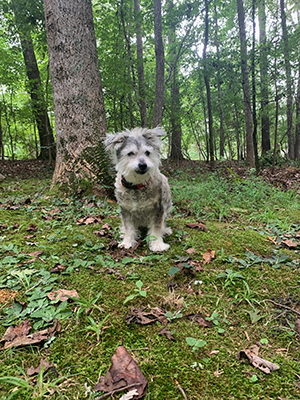
    But Kanoa owns the forest… that is really his world. You should see him following all the delicious scents on the trails… a mix of damp earth, fungi, and decaying leaves… Heaven.

    And guess what? He even comes to the table for cheese bits now, the way you used to. Of course, he’s not the foodie you were, but he has now discovered the pleasures of a good, stinky Camembert. I suspect you have instructed him from afar, how to hold the stare long enough ‘til we cave. He’s quite good at it now.

    I’ll never forget that day we had to rush home from the movies because you had gotten into some Trader Joe’s chocolate. I had to make you throw up with hydrogen peroxide.

    Getting used to being without you has been harder than I thought it would be. Non-dog people might not understand, but no matter where I was, if I couldn’t take you with me, then I started glancing at my watch after two or three hours… preparing my exit, because all I wanted to do was come home and be cozy with you.

    You lived for me and I lived for you.

    Even though I know your spirit has no dimension now, and you reside inside my heart, I miss your little “terrier head,” your funny, crooked little smile, and your rascally ways, so much.

    Love, Mom

    The Hindu Notion of God… How To Know Brahman Pt II

    Experiencing or realizing Brahman isn’t about believing in an idea—it’s about directly knowing the ultimate reality through the transformation of consciousness. It’s the kind of knowing that can only come from experience.

    How do we gain those experiences? Through the Yogas. Although the word “Yoga” is often associated with physical poses here in the west, its roots come from the Sanskrit “Yuj” and means “to yoke,” or rather, to connect to the divine that is within and without.

    As I explained in Part 1 of this series on Brahman, in Hindu spiritual teachings, the divine is everywhere… there is nothing that is not divine. The Four Main Yogas highlighted below, explain the pathways to Self-Realization… to realizing that divinity within.

    Note that I will interchangeably use expressions like “liberation,” and “Self-Realization,” to convey what can never be described adequately with words… the direct experience of Brahman.

    Said more simply, these Yogas are the paths to God…

    1.Jnana Yoga (Path of Knowledge)

    This is the path of the intellect. It focuses on the philosophical ideas and meditative disciplines taught in the Upanishads and in the Advaita Vedānta.

    An example would be Ramana Maharshi’s approach, which emphasizes self-inquiry to realize the Atman, or the little spark of Brahman that lies within. The central practice involves asking the question “Who am I?” to trace the sense of self back to its source and to prompt the realization that the sense of “I” is not a separate entity, but rather, just a stream of thoughts.

    This method helps to dissolve the ego and to see the Self as the underlying, unchanging reality. Zen Buddhism is in many ways, a continuation of this path, with the Kensho experience of sudden enlightenment, being not unlike the realization experience of Jnana Yoga. The differences emerge in the context of Buddha’s skepticism of the permanence of the soul.

    The idea is that when all identification with the body and mind falls away, the seeker awakens to Brahman — the infinite, formless consciousness — and to the unmistakeable knowing that it is none other than “I.” It was within all along. You are it and I am it and there is nothing that is not it.

    2.Bhakti Yoga (Path of Devotion)

    This is the pathway of the heart. It is the devotional path, which is emphasized in the Bhagavad Gita.

    Here, Brahman is experienced as the personal God — whether we are referring to Krishna, Shiva, Devi, or any beloved form, including Jesus and Mary and all the saints. For the truly devotional, there is no distinction between traditions! They are all Bhakti traditions, and serve as portals to the divine.

    I like to say that if Jesus and Buddha met at a gathering, they would find in each other, an instant kinship and would break bread together while talking and laughing into the wee hours of the night. It is we ignorant mortals that like to put a partition between the spiritual traditions.

    In Bhakti practices, such as prayer, chanting, and silent devotion, the devotee surrenders his/her ego and experiences the feeling of oneness within.

    Eventually, the sense of the separate “I” dissolves, and only divine presence remains, which is another way of realizing Brahman.

    3.Raja Yoga (Path of Meditation)

    This is the Yogic path described by Patanjali in the Yoga Sutras, and focuses in large degree on stilling the mind. To this end, Patanjali outlines the Eight Limbs of Yoga, which form a cohesive system that begins with lifestyle, then addresses the energies of the body, and ultimately tames the wild horses of the mind, so as to achieve Self-Realization.

    In summary form, here are The Eight Limbs of Raja Yoga:

    • Yamas (ethical restraints): My teacher called these the “what not to dos” because they include instructions to avoid harming other beings, and to avoid greed. The idea is not so much to moralize, but rather, to stay away from behaviors that tend to reinforce the ego and the idea of the separate self.
    • Niyamas (observances): While my teacher called the Yamas (above) the “what not to dos,” he called these the “what to dos” because they include things like commitment and surrender, which all contribute to a calm, simple and disciplined life, and make liberation more likely.
    • Asana (physical postures): These are the postures that most people in the west identify as “Yoga” (although the postures are but one step, in a multifaceted approach to Self-Realization!). Patanjali’s inclusion of postures recognizes the body as a more approachable vehicle toward the ultimate goal of taming the mind. The body is more tangible and allows us to break through our physical resistance to stillness as we get better at focusing our attention inward.
    • Pranayama (breath control): One of my teachers would always remind us that “there is only one thing the mind will follow, and that is the breath.” Working with our breath is the most viable way to calm the nervous system and in turn, the busy mind.
    • Pratyahara (withdrawal of the senses): I like to think of Pratyahara as the discipline of managing our external distractions. It’s an application of what any elementary classroom teacher meant when he/she would tell us to mind our own business and stop worrying about what others are doing. We are cultivating the discipline to go inward.
    • Dharana (concentration): If Pratyahara (above) is the discipline of managing our external distractions, then Dharana is the discipline of managing our internal distractionsThe ability to concentrate is not always automatic. Our thoughts take us hither, thither and yon, and harnessing the frenzied energy of the mind takes practice.
    • Dhyana (meditation): This is the real objective. This is the ability to sit in meditative stillness. This is what it has all been leading toward. The word “Dhyana” eventually became “Chan” as Indian teachings made their way into China, “Seon” in Korea, and “Zen” as those teachings continued on their journey to Japan. Hence, Zen focuses on seated meditation as a vehicle to enlightenment.
    • Samadhi (absorption): Samadhi is the experience of being absorbed in the divine. In Zen, it is called “non-distracted awareness.” In this state, the individual mind merges with cosmic consciousness.
    1. Karma Yoga (Path of Selfless Action)

    Taught in the Bhagavad Gita, this path transforms daily life into spiritual practice. The seeker acts without attachment to results, dedicating all actions to the Divine. The idea is that selfless service (seva) purifies the heart and dissolves the ego — allowing a gradual experience of God realization.

    When a man sees, hears, touches, smells, and tastes what is real, and realizes that the Self is Brahman, he becomes free from sorrow.” ~Upanishads

    The Hindu Notion of God… What is Brahman? Pt I

    What is Brahman?: To be absolutely direct… everything… meaning, EVERYTHING that exists, is an expression or manifestation of Brahman. This means that all the Gods that are associated with Hinduism, are Brahman. Shiva, Krishna, Parvati, Durga, Lakshmi… all of them, are manifestations of Brahman. Humans are Brahman. The trees, rivers, and all the animals of the seas and forests are Brahman. Energy is Brahman.

    Again, like the actors on a stage, Brahman just appears differently in different contexts.

    Brahman is the universe and everything in it. Since Brahman is everything in the universe, the concept of the universe, and the universe itself… and since Brahman is divine, it is self-evident to simply say that the universe is not separate from the divine.

    Pantheism

    This is the pantheistic aspect of Hinduism… Everything is divine. God is everywhere and in all things. Pantheism just means that nature is inseparable from God. God is everywhere and in all things.

    When you look into a creature’s eyes, you are looking at God. When you wrap your arms around a tree, you are embracing God. When the beauty of a sunset renders you speechless, you are experiencing God.

    In a pantheistic universe, all of nature is sacred. In a pantheistic mindset, we feel a natural sense of unity and kinship with all beings, since all beings are Brahman. All beings are sacred.

    Hinduism is often mistakenly described as “polytheistic” because of the appearance of so many deities. But they are all aspects of Brahman! So, then why have all the Gods? Because Brahman can seem too abstract to conceive of, and we need a tangible manifestation of source energy to relate to… and to embrace. The many manifestations present in the Hindu pantheon of Gods represent the many ways that God appears.

    Like us, God isn’t just one thing. He is a she sometimes, and an it at other times. He is loving sometimes and harsh at other times. She is peaceful and then downright angry. This is very different that the western point of view, in which God is generally thought of only in the masculine form and described as all good all the time. Here, God is not so different from us… we have many aspects to our personality, rather than just one.

    But, of course it’s no different than us… we are IT!

    The metaphor used in the early Hindu scriptures, to emphasize the oneness of all, is the ocean. We feel so unique. We feel separate. But that’s just our ego. We are just waves on the surface of the ocean… for a while, our ego tells us we’re a big beautiful wave… and everyone, everywhere, would love to just lay their eyes on us… photographers would love to capture our perfect barrel, and surfers would travel near and far to take us on!

    But alas, we will crash back into the same ocean from whence we came. Moreover, we were never any different!