Tag Archives: Buddhism

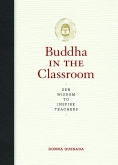
Excerpt from Buddha in the Classroom (Our Fixation on Passion)

Excerpt from Chapter 19—Passion; Accept, Adapt, and Abandon Hope

The real problem with our fixation on passion is the near certainty that even a blazing fire will dim with time.

Then what?

Even when passion is pursued and found, the affair won’t last forever. Passion changes. We change. A dancer friend recently shared with me the common experience among the cast members of a famous musical. Far from reveling in prideful accomplishment for having been part of one of the longest-running shows, they’re sick and tired physically, and mentally jaded. Many are dancing on old injuries, and are scarcely able to find the motivation to go onstage night after night; yet somehow they manage to put themselves into their postures and glissade, on tiptoe, onto the stage, one more time, because it’s how they make their living. It is the same motivation that gets most of the world to work every day.

It reminds me of the ancient Greek myth about Sisyphus: He is condemned by the gods to push a gigantic boulder up a hill, over and over, all day long, even as it continuously rolls to the bottom of its own weight as soon as he gets it to the top. The gods understood the futility of wasted labor, so assigning it was the perfect, wicked punishment. In retelling the story, the French philosopher Albert Camus likens the absurdity of the task to the everyday predicament of every single one of us, pushing our rocks in our own way, as we struggle to meet deadlines, deal with coworkers and bosses, and solve the problems that are part and parcel of any workday, anywhere.

But Camus was an optimist.

Despite his fate, it is Sisyphus himself who decides to be happy. He can whistle and hum happy songs while he pushes his rock, or he can lament and endlessly curse his fate. The irony is that as soon as he realizes the power inherent in his own reaction, he is liberated. He makes his fate his own. It is he alone who decides to be happy or miserable. In a nod to our own capacity for liberation, Camus says, “We must imagine Sisyphus smiling.”

Dharma: The Lesson for Teachers

Sisyphus’s existentialist smile resonates with the Buddhist reminder to let go. Sisyphus smiles because he accepts his fate. To let go is to accept. And through acceptance, Sisyphus liberates himself from his sentence. To accept is to simultaneously stop resisting. When you stop resisting, you are able to enjoy your experiences, which is to say, your life.

Accept, adapt, and abandon hope, Zen says…

Mindfulness vs Distraction

Mindfulness vs Distraction

Seventh on Buddha’s eightfold path, Zen buzzword, and greatest hit of Buddhism in general, is mindfulness–which is simply the practice of being here. It at least sounds simple, and it is, but simple is not always easy. Which is why it takes practice. With slightly more elaboration, it is the deliberate, but nonjudgmental, attention we place on the present moment.

A student asked me one day about it, and why it was preferable to distraction, especially in the face of something unpleasant. For example, if you have a headache, what’s wrong with watching TV just to zone out? In brief, distraction immediately separates us from the situation, which might sound desirable, but the problem is, the discomfort remains, and worse, we rob ourselves of the opportunity to surrender, and worse still, of the opportunity to recondition ourselves out of old patterns. And as life is full of discomfort, we’ll simply continue to suffer as a result, as we try in vain to run, time after time, and find, time after time, that wherever we go, there we are.

The question is a bit like the one I was considering the other day.

Presence vs The Big Picture

During the first few days following my book’s release, I found myself checking sales statistics obsessively, looking for sales info and any other sign of excitement that would signify, what was to me, an important event. But, this kind of narrow focus only sets us up for disappointment. I reminded myself how fortunate I was just to be published and how wonderful it is that my book is finally available. Moreover, I reminded myself of the real purpose, which is to inspire other teachers. I marveled at how strange it is that being published—every author’s dream—suddenly wasn’t enough. We are funny creatures that way, endlessly grasping for the next thing while missing everything. This reminder to myself, of what is essentially at the heart of Buddha’s Noble Truths, engendered a swelling of gratitude that left no more room for frustrations.

Funny enough, the very next day, one of my Yoga masters told a story about pain. He described a midwife he knew, who had the habit of telling her screaming clients, while in the grips of agony, to remember that they are having a baby! It might sound like a silly reminder of the obvious, but it indicates importance of putting the pain into perspective.

But, isn’t this a departure from presence? You might ask. After all, the pain is as present as it gets!

But in neither case—my obsessive checking nor the laboring woman—does the reminder to see the big picture negate the importance, or, if I may, the presence of presence. It’s not obvious at first, but the fact is that seeing bigger means seeing more, and seeing more means nothing other than more presence!

You’re looking at everything, you’re in tune with all that is, rather than merely your own hang-up. And by getting in tune, you’re dropping your resistance to the current situation, and since resistance is what magnifies all discomfort and suffering, by dropping the resistance, you’re lessening, at once, your suffering.

As the Taoists would say, don’t push the river.

By coming back into reality, as it is, you’re losing the AVERSION to the discomfort, you’re with what is, rather than fighting what is…and you’re in peace.