

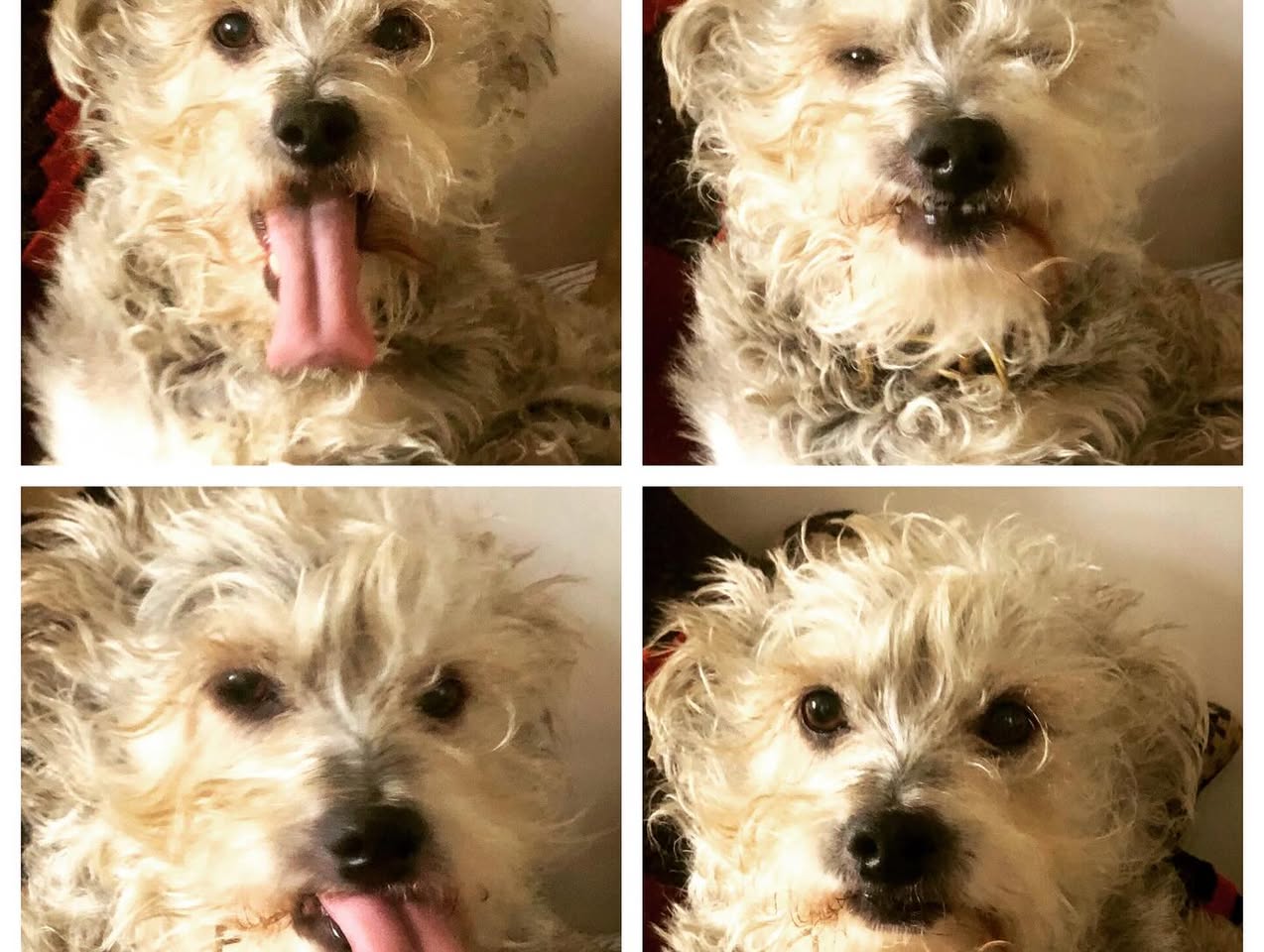
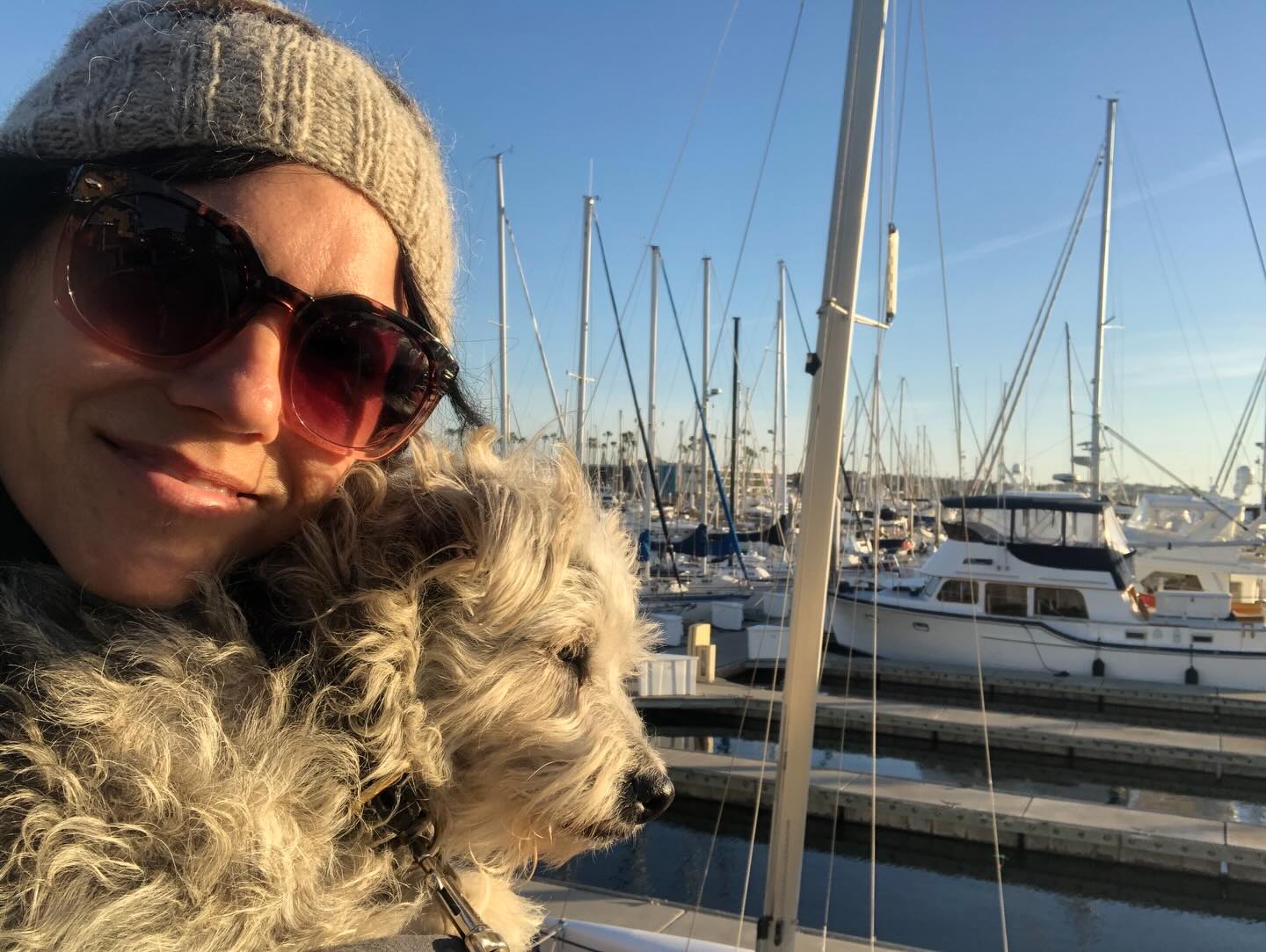
AKA: Marcel the Terrier
AKA: Marcel Dupont
AKA: Mumu
It’s been a year. I can still hear your “double bark” in my head… It wasn’t really a bark. It was you trying to tell me something. You were a communicator. You used your voice and your eyes with such determination.
I can still see you looking at me with that sideways mouth, made crooked in your later years, from having teeth removed. You really were “a character.”
It didn’t take long to find out you were a rascal. Yet, at the same time, there was something very dignified about you.
I’ll never forget the day I took you home from the shelter… you were only six months old. You weren’t content to stay in the backseat, and you—little brazen you—somehow managed to poke your head through the two front seats, by standing on the floor of the backseat, in order to see where we were going.
From that point on, no more beating around the bush… You went straight to the front seat, where proper people sit.
You certainly weren’t just my “pet.” And to say that you were my “fur baby,” doesn’t quite capture it for me, either. Although you were. It doesn’t feel like enough to say that you were my “best friend,” either. Although you were. And companion isn’t quite enough. You were, in every sense of the word, my soulmate.
After I got you home that day, in 2010, I read the paperwork that the shelter had given me about your history. I learned that you had been adopted and then returned back to the shelter. It broke my heart. But perhaps it was because you were meant to be with me.
After all, you chose me, that day in the shelter. You were so smart… You licked my hand through the holding cage, then figured out where I would go next, and walked through to the backside, in order to capture my attention again, as I passed down the next aisle!
After a few weeks, I could see why the wrong family may have felt you were “too much,” as you would growl if you didn’t like the way you were approached, or if you felt intimidated. But I could handle you just fine and I even found your shenanigans charming. We would call that growling face “the uglies,” or as my Italian grandma used to say, “que bruto.” Then you would quickly become cute again. You were my angel, and still are. Your favorite place in the world was my lap.
When I was at work, you’d take your spot on top of the highest point of the sofa… because where else? That was “The King’s” spot.
You were entitled, that’s what you were.
You were content to let us think that it was you AND Kanoa getting into the trash, when we left the house, during those last few years. We now know perfectly well that it was you and only you, all along.
Kanoa was the perfect brother for you… he let you be who you were, even if it meant living in your shadow, a little bit. When it was time to go for a walk, or switch gears in any way, he waited for your cue.
He indulged your tomfoolery as much as I did. Like that day in Venice Beach, when you were both in the stroller. It was one of my first real dates with Thierry, and I tried to make light of your behavior toward the skateboarders, while holding you down with one hand, as you transformed into a Tasmanian devil. “Yeah, some dogs do that with skateboarders.”
Kanoa, meanwhile, squeezing himself behind you, as if he was trying to hide from embarrassment, while trying to preserve his dignity. I could almost hear him, “it’s my brother… not me!… I like skateboarders just fine!”
You were Robert De Niro to Kanoa’s Billy Crystal in that movie where he has trouble controlling his outbursts.
You should see Kanoa now… He has become the new little king! He has a Corgi friend named “Barkley” that lives in the back, and a Goldie friend named “Max” that lives next-door, along with his little Yorky brother, “Teddy.” Teddy is the one that likes to run loose through the neighborhood. I wish you had gotten to know this house. At least you were here for a month and a half, so you know where I am.
Yes, Kanoa has really come into his own… I think he likes being top dog now. I sometimes feel nostalgic for our beach mornings. Remember when we would get a bagel and coffee from Noah’s, sit in the car and share it, before taking our walk?
But Kanoa owns the forest… that is really his world. You should see him following all the delicious scents on the trails… a mix of damp earth, fungi, and decaying leaves… Heaven.
And guess what? He even comes to the table for cheese bits now, the way you used to. Of course, he’s not the foodie you were, but he has now discovered the pleasures of a good, stinky Camembert. I suspect you have instructed him from afar, how to hold the stare long enough ‘til we cave. He’s quite good at it now.
I’ll never forget that day we had to rush home from the movies because you had gotten into some Trader Joe’s chocolate. I had to make you throw up with hydrogen peroxide.
Getting used to being without you has been harder than I thought it would be. Non-dog people might not understand, but no matter where I was, if I couldn’t take you with me, then I started glancing at my watch after two or three hours… preparing my exit, because all I wanted to do was come home and be cozy with you.
You lived for me and I lived for you.
Even though I know your spirit has no dimension now, and you reside inside my heart, I miss your little “terrier head,” your funny, crooked little smile, and your rascally ways, so much.
Love, Mom







 Donna Quesada Schollhammer