Tag Archives: philosophy

Judge Not Lest You Be Judged (Here’s Why)

This teaching is part of the common thread that runs through all wisdom teachings. Here, I explore the reasons why.

1. Because we don’t have access to the Akashic records. The universal perspective is not always revealed or in accordance with our clock, our limited perspective or our expectations. Life and its workings are too vast.

Case Study. Consider the old story of the Taoist farmer whose horse runs away. His neighbor is quick to come and appraise the situation: “What bad luck!” he declares. The farmer just shrugs his shoulders. When the horse comes back with another horse, the neighbor comes again: “What good luck!” The farmer just shrugs. When the farmer’s son tries to saddle the newly acquired, wild horse and breaks his leg in the process, the neighbor comes again: “what bad luck.” The farmer shrugs. Finally, when the army comes, ready to haul the kid off to a bloody war, they take one look at his broken leg and decide to leave him behind. “What good luck! Your son sure picked a good time to break his leg!” the neighbor proclaims.

A broken leg is generally not seen as a “good” thing, but in this case, it saved the kid’s life.

The farmer was too wise to get involved with these assessments. He knows he doesn’t know what’s good or bad in the big picture. He is able to let it unfold and is willing to honor the process. This takes wisdom, humility and courage. Wisdom to know we don’t know. Humility to yield to the unknown and courage to be fine with it, regardless of the outcome.

It’s a willingness to live in trust, rather than in fear.

2. Because everyone has lessons to extract from each and every event that appears in their lives. And as my teacher often puts it, the messenger will keep coming back until the message has been delivered. Everyone has their karma (which doesn’t mean punishment).

3. Because, by judging, you now take the karma. (Doubly: for interfering and because you have demonstrated need for the lesson and compassion for that perspective.)

4. Because the judging is more a statement about you, than the object of your criticism. Our reality is shaped and limited by our thoughts and experiences, meaning, our perceptions provide us with a very limited viewpoint. This means, further, that it’s guaranteed we don’t have the whole story. Only at the end of time can we make over-all assessments. Who will be here? This is why the wise know better than to speak.

Those who say don’t know and those who know don’t say ~Tao Te Ching

But in the guise of “being concerned,” we speculate, condemn and as Zen author Karen Maezen Miller is wont to say, we run commentary. The base assumption is that the other—even when (especially when) the other is a family member—needs our concern. That energy could be better directed inwardly, toward our own needed improvements, for we are all a work in progress.

If you have reached a state of human perfection and have no need for continued work and improvements…Congratulations! Your work here on earth is complete.

Here is an example that both highlights the absurdity of making judgements about others and at the same time, illustrates the workings of truly turning the pointer to the inside, rather than toward others:

Case Study. Your aunt tells you your wife needs to dress differently because her way of dressing, she feels, will influence her daughter to dress in a way that solicits male attention and fosters promiscuity.

But, in your reflections, you note that when it comes to alcoholic beverages, your aunt tends to serve herself generously, sometimes to the point of excess. If we look from a wider lens, and follow her own logic to the end, we see that this, too, might be setting an undesirable example—it may foster alcoholism, or at the very least, irresponsible drinking in her children. Of course, the whole thing is absurd and endless, for, everybody has “stuff.”

I have a dear friend who now avoids a member of her own family for habitually starting sentences with “You need to…” As we become more conscious, we also become more aware of how often our words express this kind of judgmental attitude toward others.

Here’s what it boils down to:

❖ Everybody is a mixed bag, with aspects that we might label as “good” and others as “bad.” And everybody has a history, complete with skeletons and dregs of many varieties. Acceptance of people as evolving entities, like ourselves, fosters better relations.

❖ We are shaped by countless influences, from our Zodiac sign, to our favorite TV show growing up, to our first kiss, our first best friend, our first broken heart, to more obvious, genetic and social factors. Meaning, we are a confluence of infinite influence.

❖ We don’t know how others will perceive us (The young girl in my example will probably only see the good in her aunt. As in The Little Prince, only adults discriminate. Children see through, to the heart of a person.)

ACCEPTANCE; Life in the balance – accept it all. Nothing is good or bad but thinking makes it so. It is the nature of the universe to establish balance; thus, trying to prevent perceived bad will also block desired good. Instead, welcome challenge and difficulty, enjoying the indicated activity, and growing in each situation.” ~Guru Rattana
True Freedom Is More than Free Will

“It might sound funny coming from a guy in prison, but never before have I felt so free.” ~Denzel Washington in Flight

The kind of freedom the philosophers talk about in the west is quite different than the freedom of the saints and mystics and Yogis.

The philosophers speak of defining our own purpose and identity through the choices we make, of carving out our own paths and therefore, living an authentic life. In philosophical terms, it means rejecting the traditional notion of destiny and the corresponding idea that things are inevitably the way they are, set and fixed, in a pre-planned, determined universe.

Existentialists like Sartre—so called, because our very existence is ours to shape—would famously ask, where is this plan? The very idea left too much room for excuses, he said, since it would then be all too easy to pawn off our actions on circumstances, falling back on such clichés like It must have been in the cards, or That’s just the way I was made. And so, the urging was to use our free will, the natural byproduct of being born as a conscious human being.

Is this the same as the injunction, in the eastern mystic traditions to wake up? To actively shape our own Karma by making conscious choices and to reshape our plethora of long-established, unconscious habits through mindful awareness? Insofar as we are to create our own lives, with all the responsibility that goes along with this freedom, there is a parallel.

But existential freedom has more to do with conscious choosing than one’s state of consciousness.

For thinkers like Sartre, consciousness is the source and spring of free will. But, this unyielding and often rigidified consciousness is exactly the source of trouble from the point of view of Buddhist and Yogic teachings. Existential freedom (free will) is an ability to choose from among genuine alternatives that exist in the world, whereas the freedom the Yogis speak of refers to an awakened state of mind that shapes what we see as choices in the first place.

* For more on this topic, see my book, Buddha in the Classroom (Chapter 19. Sartre and Buddha—True Freedom is a Settled Mind)
* The next post will expand on this theme, exploring the differences between spiritual development and traditional methods of self help.

The Brahmin and the Cobbler (A Story of Enlightenment)

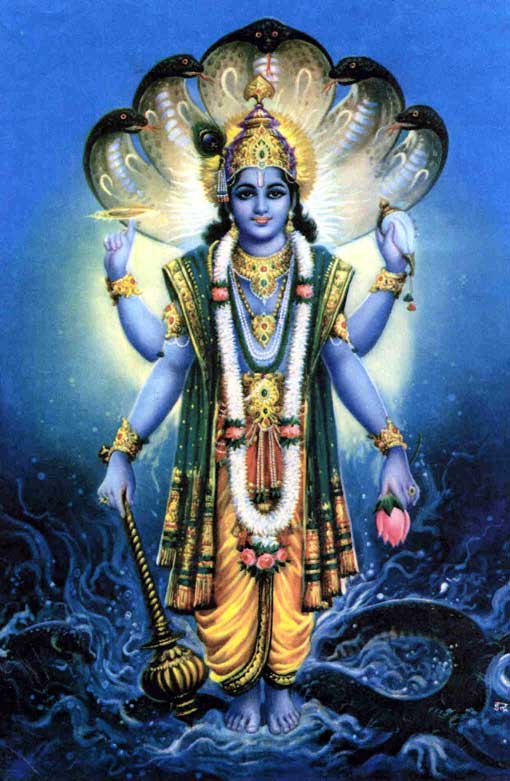
Here is an old story from Indian lore. It takes for granted the spiritual expectation, in Vedic philosophy, that with good karma and spiritual advancement, we may gratefully escape samsara, the seemingly endless cycle of birth and death that keeps us trapped in the torment of our own karma and misery. It also takes for granted the assumption that the Brahmins—the high-caste priests—would have earned the privilege of liberation first. But watch for the twist! Here, The God of time, Narayan—another name for Lord Vishnu—offers a surprising decree. I am retelling the story as I remember it.

—   —   —   —

Once on a sunny day near the Ganges, a Brahmin priest, who had just finished his oblations, came across Narada, the messenger of the Gods. After bowing deeply in respect, the Brahmin took the liberty of asking the divine sage for a favor:

Brahmin priest: “Could you be so kind as to ask the supreme Lord, Narayan, when I’m going to be liberated from this world and joined with him in holy bliss? I know it will be soon because of my station, and all, but I would just like to know, all the same.”

Narada: “No problem, my sir. I’ll ask when I see him.”

Further along down the river, a lowly cobbler, fixing shoes by the wayside, also stopped Narada, as he was passing through, and chanced to approach the great emissary:

Cobbler: “Could I appeal to your kindness by asking you to speak to the great God on my behalf?”

Narada: “I’d be happy to.”

Cobbler: “You see, I’m growing more weary each year, and I’d just like to know how many more lifetimes I am doomed to suffer in this material world?”

Narada: “I’ll be sure to pass on your message.”

And Narada continued on, passing seamlessly through to the spiritual world. When he saw the great Lord Narayan, he bowed to his feet, as is the custom in approaching great spiritual masters. The Lord then asked if there was anything he could do for Narada, who proceeded to put forth the concerns of both the priest and the cobbler.

As Lord Narayan can see through the barriers of time, and into eternity, he thus knows all. With a brief pause, he informed Narada of the destiny of his supplicants:

Lord Narayan: “The cobbler will come to me at the end of this present lifetime. But the Brahmin will live through at least 100 more lifetimes.”

Seeing the confused look on Narada’s face, the Lord only smiled and gave these instructions:

Lord Narayan: “Next time you see the cobbler and the priest, they will ask you what I was doing when you saw me. Tell them I was threading an elephant through the eye of a needle. When you see their reactions to this, you will then understand everything.”

So, Narada went on his way. The first man he saw was the Brahmin, who was shocked and insulted by the news:

Brahmin priest: “A hundred rebirths in this hell! I don’t believe it! You probably didn’t even see the Lord! Tell me, what he doing when you saw him?”

Narada: “Threading an elephant through the eye of a needle.”

Brahmin Priest: “Threading an elephant through the eye of a needle? That’s totally absurd! You must be lying about everything!”

So, Narada excused himself and pressed on until he found the cobbler. He gave him the news that he would soon be liberated and would be joining the realm of the Lord at the end of this lifetime, at which point the peasant exclaimed in joy:

Cobbler: “Oh, what blessed and glorious news! But, alas, tell me my good sir, what was the Lord doing when you saw him?”

Narada: “He was threading an elephant through the eye of a needle.”

Cobbler: “Lovely. Absolutely lovely.”

Narada: “You mean, you believe that?”

Cobbler: “Why, sure! You see that huge old oak tree up the hill? It grew from a tiny acorn. So, if the Lord can squeeze a gigantic oak tree into a little seed like that, He can just as easily thread an elephant through the eye of a needle.”

And with that, Narada understood the difference between the priest and the cobbler, as well as why the priest was not yet ready for liberation.

Perfectionism; The Link between Self-Forgiveness & Healing

You can never get rid of your fears, you can never get rid of your pain, no matter what effort you make, until you have the guts to forgive yourself. Just forgive yourself. ~Yogi Bhajan (1/29/86)

I came across this quote by our teacher. Because it spoke to me, I saved it, but I found myself wondering…why? Why do we need to forgive ourselves? That analytic hex I’ve got was at it again. In my left-brained delirium, I discovered the connection in the perfectionistic tendency. So, for others who may be similarly afflicted (by the need to know, or by perfectionism), here is my take on the link between personal evolution and self-forgiveness.

  • To forgive is most literally, to forth-give. In other words, to go forwards.
  • Because the perfectionism that many of us get caught up into, creates subconscious road blocks, which manifests as a plethora of psychological hang-ups, as well as physical issues. We perfectionist types literally make ourselves sick over the possibility of failing in some way. Forward-thinking healers in the medical profession who have embraced this phenomenon, refer to the myriad psycho-somatic conditions more euphemistically, as mind-body issues. Letting ourselves, or others, down, is so unbearable, that mind-body issues, such as pain or depression, becomes more acceptable psychologically. So, forgiveness, in this regard, is more about forgiving what we perceive to be failures, so that we can move on.
  • The secondary emotions that accompany the perfectionistic tendency result in additional unconscious baggage, such as guilt, regret or even anger, which is perhaps the the worst of all because of the internal backlash it generates. I like to refer to these emotions as “backpack emotions,” that only perpetuate our issues.

In short, when we let go of harmful emotions, we simultaneously enable ourselves to heal. Those toxic seeds worked as a scapegoat, in effect—a distraction, of sorts, that allowed for an ailment that our minds considered more acceptable than personal disappointment. Letting go enables our personal liberation.

God and Prayer

I remember my beloved grandmother teaching me how to say my bedtime prayers when I was little. I liked saying them. They made me feel secure. And for many years, I felt that something was missing and incomplete if I forgot.

Perhaps a certain spiritual longing was always there. Because I also remember relishing the opportunity to go to church with a very religious friend, during my adolescent years.

But then, as a college student — especially as a philosophy student — I encountered all of the arguments against God and later even lectured on Aquinas’ notoriously flawed five proofs for the existence of God, in my own classes. I pointed out all of the irrefutable logical fallacies in those five proofs, to my own students.

During those years, I wondered about the absurdity of it all. God, that is. And by extension, the whole idea of praying to a God. In my logically trained young mind, I wondered about the idea of a God that would proceed with his plans for annihilation and devastation, only to suddenly cancel them at the request of a petitioner. After all, I reasoned, that’s why people pray, to convince God to alter some undesirable course of events. I wondered about the idea that he might change his mind so whimsically.

But then one day, I realized how differently things can look when you flip them around. One day, I flipped around my own viewpoint about it all. Or, it was flipped around for me.

I came to see that God is within, not without.

Additionally, praying isn’t about loving a God out there, somewhere. And changing the course of events is secondary to the understanding of prayer as connection, rather than petition. It is about connecting with that which may be called, infinity, for there is no adequate way to convey the sense of going beyond the confines of what you thought of as your finite self. (Nor is there any adequate way to convey that which is beyond the confines of reason.)

And it isn’t about fear, as in the idea of fearing God, for, there’s no room for fear where divinity lives.

And about the business of changing some course of events; coming to divine consciousness – becoming conscious of our own divine nature – reveals our role in creating that very shift we seek. And that makes it nonetheless incredible, but all the more awe-inspiring and wonderful.

As Zen says, “you create your own universe.” And as Yoga says, “you control the universal consciousness.”

But alas, it isn’t really about personal pleas, petitions and procurement, at all. It is really just the personal expression of gratitude and completeness. Praying, that is. For no other purpose. Like a flower reaching up toward the light, leaning over permanently to one side with time, devotion expresses this feeling of affection and longing, but with no object of desire.

What’s Wrong with Distractions?

Can you just sit, without the need to go shopping, have a drink, play some slots, meet some girls…or guys,  place a bet, see the game, look at magazines, call people, surf the net or have a smoke?

But what’s wrong with those things? You might ask.

In philosophers’ patter, let’s presuppose three things: (1) That the highest purpose of human existence is to awaken our consciousness (2) That by ethically wrong, we mean the deliberate causing of harm to a sentient being (3) That there is a difference between ethical wrongness and and spiritual wrongness.

With that in mind, we first have to understand what is meant by “wrong.” We can rule out the idea that anything is ethically wrong with those things mentioned (presumption #2)—because in doing them you’re not causing direct harm to yourself or others and you probably have no intention to. But, those kinds of attractions may be considered wrong in the sense that they fail to support us in our longing for true inner contentment. Moreover, they don’t serve in bringing us nearer to the most exquisite goal of spiritual awakening (presumptions #1 and #3).

We’re talking more about what an activity doesn’t do for us than what it does do. And it doesn’t mean that we shouldn’t ever engage in amusements for the sake of amusement. It just means that we shouldn’t expect them to deliver what they are incapable of delivering.

Joy and happiness never derived from the external world. It is only the ego that looks habitually and incessantly for the next new thing—attached as it is, to the illusion of fulfillment by these things, as well as to the illusion that fulfillment happens at some other time. So, we are deceiving ourselves, from the beginning, by looking for happiness from anything, amusements, novelties, fantasies, experiences, in short, from things—things external to ourselves, things whose novelty quickly wears off, whose initial thrill wears away and whose very fabric wears out. All external things have a shadow side. The addict crashes every time and every time goes looking for another fix. The shopper needs the current issue, the gamer needs the latest version.

We even look to other people as potential sources of happiness, thus converting them into possessions and approaching them in the spirit of ownership, with negative emotions, like jealousy, suspicion and resentment the inevitable result of such an arrangement.

Meanwhile, we become prey to our own never-ending search for fulfillment out there. By doing so, we are essentially giving up our power to the world. And when we disempower ourselves, we become further distanced from the ultimate goal of awakening and further entrenched in illusion.

In Zen terminology, true joy comes from waking up to this moment. In Yogic language…from the realization of your own divine, abiding Self.

Nothing is more empowering than our liberation from the chains that bind us to the mistaken belief that joy is external to us. Distractions, by definition, keep us from this realization, thus leading us astray from our spiritual goal, wasting our time and disparaging our sacred purpose as humans.

And this, we may call spiritual wrongness (presumption #3).

On the Farcical Nature of Patriotism

I was always uncomfortable with patriotism (Germanic: Obeying the “father”). I thought it was just that little spark of rebelliousness I always had. But I have come to see it as a legitimately objectionable idea. And that’s just it. It’s an idea, a story, a fiction. The whole notion of national borders and cohesiveness is a comfortable and politically necessary, but nonetheless illusory, myth.

Not only is the diverse and multifaceted population in a continuous rise and fall, but the ideologies that these varied people hold are in constant flux. Due to uncountable reasons, the inhabitants that occupy the geographical space called a country, are inconstant, in all their disordered habits and in all their contradictory beliefs, and are thus, anything but cohesive…in anything. Is there a status, or position, at all? And if there was, what would it be?

I found comeradeship when I discovered political scientist Benedict Anderson’s Imagined Communities. Communities are imagined, since none of the members of even the smallest nation will ever know, or even meet their fellow-members. The members have only a mental idea of their membership in this group. The curious, and perhaps most disturbing part of this fantasy, is that these imaginings make it possible for millions of people to die on behalf of this community.

Breaking down the fallacy of the entity called a nation, is a bit like breaking down the entity habitually called a person. It is convenient to think in terms of a unified self, but upon investigation, there are but scores of systems and processes. Nervous systems, circulatory systems, digestive systems, all in flux, creating our bodies, minds, flickering consciousness, ever-changing moods, and endless desires—all in flux, which is to say, in a process of dying, but we are uncomfortable with that word, and with the very idea.

So, just as the fiction of the nation provides us with a sense of fraternity and belonging, the familiar concept of selfhood and personality supplies us with the needed sense of security and identity.

Can we give up fiction at the cost security? Even a false sense of it?

On Meaning

I am in the process of phasing out my old blog. But before removing it completely, I backed it up and pulled a few to the side that I thought should be made over and brought out for another curtain call.

Why not leave them exactly as they were? Because I’m not exactly as I was. Here’s a short and sweet one.

What is the meaning of life, philosophers ask.

It is rather like asking, what is the meaning of the sound of the violin.

The very question of meaning seems so very meaningless unless we understand that it is only according to our individual perspectives, shaped from the changing position of our conscious minds, that anything has meaning—even our very own lives.

There are 87 different meanings found in every breath we take, in every second of every day, in every one of our thoughts and in every action we take.

We shape the world with our thoughts—and our thoughts, in their turn, shape who we are.

The sound of the violin means one thing to the conductor, another to the lovers in the restaurant, and another to the feisty old grouch who doesn’t like anything. To many others, it has no meaning, at all.

There is meaning in every-thing, and meaning in no-thing. There is a profusion of meaning in every little thing, and no single meaning in any one thing.

Misunderstanding Religion; What Is its Purpose?

One thing students realize when they begin their readings for my class, is the lack of anything resembling unified agreement, among academics, on what religion is.

Firstly, if you’re looking for agreement among academics, you’re looking in the wrong place.

But in a more analytical vein, every attempt at a common denominator is defeated by a counter example. Even the belief in God, which isn’t embraced in the context of Buddhism, is frustrated. In short, we are hard-pressed to find one feature common to all religions of the world. So, rather than one solitary feature, scholars have taken to describing a collection of characteristics – things like community, beliefs and stories –
that are inevitably found, in some combination or another, in the world’s many religions.

One student expressed concern over the problem of interpreting those stories that are part and parcel of the world’s religions. In a disdainful tone, he alluded to the violence that is easily justified by a relativistic interpretation of religious writings.

A common and seemingly justifiable concern, considering the state of the world today.

Nonetheless, I find it lamentable because it stems from a massive misunderstanding of what the whole point of religion is and has always been. Arguing about scripture reduces it to nothing but philosophy—a discipline which is deep, difficult and meaningless, all at the same time. Joking aside, it’s not exactly meaningless, if we understand that its value lies, not in finding answers, but in the very act of asking questions. That is, meaning emerges when we stop misunderstanding its purpose.

Likewise, in the domain of religion, we get hopelessly caught up in the supposed contradictory nature of certain passages, especially where violence is implied. This is common in the context of the Jewish and Christian bibles, and in that of the Koran. But what if we were to consider the very purpose of these holy books differently? What if we were to assume its purpose lay in encouraging us to look upon our own violent ways?

Thus, rather than assume a breach between our virtues and those in the holy stories, we might consider the purpose of those stories. And more pertinently, we might let go of the assumption that these stories contain explicit instructions. In that way, the bible may become purposeful.

But perhaps the most profound problem lies in a different kind of chasm. There is an immense difference between the spiritual state of the reader and the nature of the divine. A holy book is of a different nature than a science book or a philosophy book or a car manual. Dare I say bluntly that its arcane nature will be missed by an unenlightened mind? Its higher truths will not be revealed to eyes that don’t yet see, to a mind that is not ready.

Or even more to the point, to a mind that pushes an agenda.

Anyone can misuse anything when guided by greed, selfishness, lust for power, and vengeance. A person whose mind is clouded by odiousness has eyes that are blind. He will misinterpret, misconstrue and misuse. He’ll abuse the land, other people, scripture, and everything he touches. Put that person in a position of power and watch the world crumble.

Which brings me around to the closure of the circle and to my final point, that of looking to the academics for a definition of something that does not lend itself to definition.

Just as looking for answers misses the point of philosophy—which values itself on the questions it asks, looking for definitions misses the point of religion—which treasures only experience as a means to truth.

No matter the religion, its purpose is to bring the practitioner to an experience of his or her own wholeness. When this underlying essence and purpose goes missing, it quickly and inevitably dissolves into empty rituals. How could it be anything else in the absence of an awakened consciousness? Even the meaning of the word religion betrays its supreme spiritual purpose—to remember your spiritual identity. But without clarity all we have is confusion, without heartfelt practice all we have is mechanized ceremony and without open eyes all that is left is the blind leading the blind.

Picking a Bone with Jobs’ Quote

“Your work is going to fill a large part of your life, and the only way to be truly satisfied is to do what you believe is great work. And the only way to do great work is to love what you do. If you haven’t found it yet, keep looking. Don’t settle. As with all matters of the heart, you’ll know when you find it. And, like any great relationship, it just gets better and better as the years roll on. So keep looking until you find it. Don’t settle.”

— Steve Jobs

I like Steve Jobs. And I like to follow my heart. But, with due respect, I still think this oft quoted passage is problematic and needs a more balanced perspective—here are some of the reasons why:

1. Not everyone has the privilege of doing “what they believe is great work.” Millions of people in the world are doing jobs that may not have been their primary career choice—and that is putting it politely. For example, they may be making the small parts that no one sees, the parts that run the machines that guys like Steve Jobs envisions. They are the tasks many of us would call drudgery, but many are simply glad and thankful to have the work at all, at a time when choices are limited. Perhaps they’ll make a change later, but should they be miserable until then because they don’t believe the work is “great work?” (Changing their belief is therefore the place to start, which brings me to #2.)

2. And about the claim that “the only way to be truly satisfied is to do what you believe is great work,” it seems to me that what you believe can be changed. You don’t have to marry your beliefs. Beliefs are just beliefs and they change with our maturity level and with our experiences and with 150 other reasons. Heck, they change from day to day—they sway like the palm trees in the wind and can be influenced by our ever-changing perspectives. Thank goodness; that means we’re growing! Thus, I would change “the only way to be truly satisfied is to do what you believe is great work” to “the only way to be truly satisfied is to find the greatness in what it is you do.”

3. Finally, toward the notion that, “like any great relationship, it just gets better and better as the years roll on,” I would like to serve up a reality check—what makes great relationships great, is when all parties understand that it’s not always fun and it doesn’t always “feel good.” All relationships have their ups and downs. And equally so with the work we do. It won’t always be the way you dreamed it would be, you won’t always feel like going, and you might one day feel like you don’t like your job anymore. It seems to me that the truly liberated and wise will take those days in stride and remember not to get caught up in those temporary feelings. And from a clear connection to the importance of what it is they are doing—because everything has its place and purpose, along with a good dose of gratitude, they will undoubtedly maintain a consistently cheerful attitude.

We might liken this cheerful person—who finds the beauty in what it is he does—to the Greek mythical character, Sisyphus, who continues to push his rock with a smile…without telling himself that the task is ridiculous and absurd.