Tag Archives: spirituality

Two Stories: An Opportunity for Growth Rather than Grief

forgivenessHere are two situations which I present as examples of ways we allow ourselves to be negatively affected by others. But I show that they may be seen as opportunities for liberation, rather than suffering. Although I have fictionalized them by changing the details, they both resemble recent events in my own life.

Situation #1: You work in an office. You came up with a wonderfully creative idea that you’re sure will be adopted by management. This plan is likely to win a new contract with a highly sought-after company and will also guarantee your upward mobility in the company. But, to your shock and distress, you learned that as soon as the new guy obtained one on one time with the boss, he represented your idea as his own. You feel betrayed and disappointed.

“Wisdom Balm for Situation #1:
” Convert your anger, your hatred and your betrayal into compassion. Suppose somebody betrays me. I feel that god is very kind because he has given me the energy to tolerate it, and I am not the one who betrayed.” ~Yogiji

Situation #2: You wrote a screen play over a year ago. You just got word from your agent that a well-known film producer has made an offer to buy the rights to it. You always had faith in this project and knew in your heart it was a story that needed to be told. You also know how hard it is to get this kind of recognition here in L.A., where the market is so saturated and competitive. When you sent out a celebratory e-mail to your friends and family, most everyone responded with accolades, except the people that matter most to you. You feel hurt and unacknowledged.

“Wisdom Balm for Situation #2:” Happiness is your birthright. It cannot be taken away from you.” ~Yogiji

The first situation portrays an action that is taken as a betrayal. The second is rather, the omission of an expected course of action. What these two stories have in common — for the spiritual practitioner — is the need for forgiveness, or as I like to say, “forth-giveness,” since, as implied in the word, it is through the process of forgiving that we allow ourselves to go forward.

If we permit ourselves to feel victimized us, we are giving away our power. This is especially poignant in the first situation. So, when you see the occasion as an opportunity to practice and go higher in your way of looking and ultimately, in your spiritual awareness, you unchain yourself, at once. Say, thank you for this blessed challenge. And you come away feeling lighter. And lightness is closer to the divine.

In the second situation, the wisdom quote is deceptively potent. Just as we give away our power when we allow ourselves to feel victimized, we do it still, when we wait for someone’s approval to validate our sense of worth and accomplishment.

What difference does it make who notices?

No matter who notices, there will always be plenty who don’t, so this becomes a fruitless concern. You can authorize yourself to enjoy it. Besides, it is likely that the others don’t understand. Especially in a situation like this one—a family in the midwest, for example, simply wouldn’t understand how huge it is to sell a script in Hollywood! They’re probably just waiting for you to get a real job, anyway. The point is that your celebratory moment was never about others’ recognition, at all. It’s about you serving the world in a way only you can. That takes it to a higher level.

And higher still, is to realize, in both cases, that the perceived wrong isn’t about you. It’s about them. It’s a betrayal of their own consciousness. It indicates where they are in their own evolution. They are driven by their own demons, their own fears and insecurities. Far from making us more bitter, this recognition enables us to have compassion for them, since we’ve all been there. To this end, there is a teaching in our Yoga tradition that urges us to recognize that the other person is you.

This way of seeing brings us immediately into humility, as we begin to understand that everyone is ourselves at a different stage. And when we’re humble, we stop fighting and we heal.

So, we become at once, empowered and humbled. Empowered because we let go of our own victimization while authorizing our own experience of joy. Humbled because we come to see that our mission is less about impressing the world than it is about serving it.

Judge Not Lest You Be Judged (Here’s Why)

This teaching is part of the common thread that runs through all wisdom teachings. Here, I explore the reasons why.

1. Because we don’t have access to the Akashic records. The universal perspective is not always revealed or in accordance with our clock, our limited perspective or our expectations. Life and its workings are too vast.

Case Study. Consider the old story of the Taoist farmer whose horse runs away. His neighbor is quick to come and appraise the situation: “What bad luck!” he declares. The farmer just shrugs his shoulders. When the horse comes back with another horse, the neighbor comes again: “What good luck!” The farmer just shrugs. When the farmer’s son tries to saddle the newly acquired, wild horse and breaks his leg in the process, the neighbor comes again: “what bad luck.” The farmer shrugs. Finally, when the army comes, ready to haul the kid off to a bloody war, they take one look at his broken leg and decide to leave him behind. “What good luck! Your son sure picked a good time to break his leg!” the neighbor proclaims.

A broken leg is generally not seen as a “good” thing, but in this case, it saved the kid’s life.

The farmer was too wise to get involved with these assessments. He knows he doesn’t know what’s good or bad in the big picture. He is able to let it unfold and is willing to honor the process. This takes wisdom, humility and courage. Wisdom to know we don’t know. Humility to yield to the unknown and courage to be fine with it, regardless of the outcome.

It’s a willingness to live in trust, rather than in fear.

2. Because everyone has lessons to extract from each and every event that appears in their lives. And as my teacher often puts it, the messenger will keep coming back until the message has been delivered. Everyone has their karma (which doesn’t mean punishment).

3. Because, by judging, you now take the karma. (Doubly: for interfering and because you have demonstrated need for the lesson and compassion for that perspective.)

4. Because the judging is more a statement about you, than the object of your criticism. Our reality is shaped and limited by our thoughts and experiences, meaning, our perceptions provide us with a very limited viewpoint. This means, further, that it’s guaranteed we don’t have the whole story. Only at the end of time can we make over-all assessments. Who will be here? This is why the wise know better than to speak.

Those who say don’t know and those who know don’t say ~Tao Te Ching

But in the guise of “being concerned,” we speculate, condemn and as Zen author Karen Maezen Miller is wont to say, we run commentary. The base assumption is that the other—even when (especially when) the other is a family member—needs our concern. That energy could be better directed inwardly, toward our own needed improvements, for we are all a work in progress.

If you have reached a state of human perfection and have no need for continued work and improvements…Congratulations! Your work here on earth is complete.

Here is an example that both highlights the absurdity of making judgements about others and at the same time, illustrates the workings of truly turning the pointer to the inside, rather than toward others:

Case Study. Your aunt tells you your wife needs to dress differently because her way of dressing, she feels, will influence her daughter to dress in a way that solicits male attention and fosters promiscuity.

But, in your reflections, you note that when it comes to alcoholic beverages, your aunt tends to serve herself generously, sometimes to the point of excess. If we look from a wider lens, and follow her own logic to the end, we see that this, too, might be setting an undesirable example—it may foster alcoholism, or at the very least, irresponsible drinking in her children. Of course, the whole thing is absurd and endless, for, everybody has “stuff.”

I have a dear friend who now avoids a member of her own family for habitually starting sentences with “You need to…” As we become more conscious, we also become more aware of how often our words express this kind of judgmental attitude toward others.

Here’s what it boils down to:

❖ Everybody is a mixed bag, with aspects that we might label as “good” and others as “bad.” And everybody has a history, complete with skeletons and dregs of many varieties. Acceptance of people as evolving entities, like ourselves, fosters better relations.

❖ We are shaped by countless influences, from our Zodiac sign, to our favorite TV show growing up, to our first kiss, our first best friend, our first broken heart, to more obvious, genetic and social factors. Meaning, we are a confluence of infinite influence.

❖ We don’t know how others will perceive us (The young girl in my example will probably only see the good in her aunt. As in The Little Prince, only adults discriminate. Children see through, to the heart of a person.)

ACCEPTANCE; Life in the balance – accept it all. Nothing is good or bad but thinking makes it so. It is the nature of the universe to establish balance; thus, trying to prevent perceived bad will also block desired good. Instead, welcome challenge and difficulty, enjoying the indicated activity, and growing in each situation.” ~Guru Rattana

Love Thyself First

self-love-KundaliniI decided to repost this short article about Self-Love. I added the third notation, as well as the meditation, that follows. It is a meditation that I just did recently, at a training retreat and I loved doing it—I hope you try it and that you love it, too! The way I see it, the explanation is for our understanding (for our head) and the meditation is for the realization of Self-Love (for our heart).

For the Head…
We are so often told, in spiritual teachings, as well as in self-help manuals, that in order to love others, we have to love ourselves first.

Is this true?

It is!

Why?

Firstly, because if we are angry and hateful on the inside, we have only those emotions to project.

Secondly, because if we’re angry and hateful on the inside, the object of those emotions is de facto set upon ourselves and this sets in motion, a mechanism of victimization. By directing negative energy onto ourselves, we make ourselves the object of our own discontent. Then, our mind gets to work to find a source of blame in opposition to that object. The result of this process is that we then assume ourselves to be victims and when there is a victim, the rational mind, in its inherent dualistic structure, will then seek a culprit.

Unable to find one, everyone becomes an offender and those negative emotions are then displaced outward unto the whole world—we become angry at the world.

Thirdly, when we do not find within ourselves, a cozy sanctuary to come home to, we tend to relate to others from a place of neediness—a need for approval, validation and affirmation of self-worth. But, when we begin to nurture a connection to our own divinity, we begin to heal within. This kind of love has nothing to with egoism—it is where compassion begins. We forgive our faults and accept ourselves as whole and complete, as we are, before we can do the same for others. In this wholeness, we feel centered, empowered and no longer need to place blame on others or look to external sources for fulfillment. And when we take our power back, in this way, we begin to truly heal.

For the Heart…
Meditation: Affirmation For Self-Love

Posture: Sit straight in a cross-legged position.

Mudra/Movement: Place your right hand on your heart and say, “My heart, I love you.” Place your right hand on the eyes and say, “My eyes, I love you.” Move to the top of your head and say, “My head, I love you.” At the navel point say, “I love you.” And placing your hands on both your knees say, “I love you.”

*Find your rhythm and continue on, for at least three minutes.

True Freedom Is More than Free Will

“It might sound funny coming from a guy in prison, but never before have I felt so free.” ~Denzel Washington in Flight

The kind of freedom the philosophers talk about in the west is quite different than the freedom of the saints and mystics and Yogis.

The philosophers speak of defining our own purpose and identity through the choices we make, of carving out our own paths and therefore, living an authentic life. In philosophical terms, it means rejecting the traditional notion of destiny and the corresponding idea that things are inevitably the way they are, set and fixed, in a pre-planned, determined universe.

Existentialists like Sartre—so called, because our very existence is ours to shape—would famously ask, where is this plan? The very idea left too much room for excuses, he said, since it would then be all too easy to pawn off our actions on circumstances, falling back on such clichés like It must have been in the cards, or That’s just the way I was made. And so, the urging was to use our free will, the natural byproduct of being born as a conscious human being.

Is this the same as the injunction, in the eastern mystic traditions to wake up? To actively shape our own Karma by making conscious choices and to reshape our plethora of long-established, unconscious habits through mindful awareness? Insofar as we are to create our own lives, with all the responsibility that goes along with this freedom, there is a parallel.

But existential freedom has more to do with conscious choosing than one’s state of consciousness.

For thinkers like Sartre, consciousness is the source and spring of free will. But, this unyielding and often rigidified consciousness is exactly the source of trouble from the point of view of Buddhist and Yogic teachings. Existential freedom (free will) is an ability to choose from among genuine alternatives that exist in the world, whereas the freedom the Yogis speak of refers to an awakened state of mind that shapes what we see as choices in the first place.

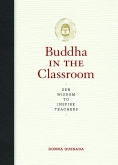
* For more on this topic, see my book, Buddha in the Classroom (Chapter 19. Sartre and Buddha—True Freedom is a Settled Mind)
* The next post will expand on this theme, exploring the differences between spiritual development and traditional methods of self help.

The Morning, the Mosque and the Glandular System

What do the early morning, the pituitary gland and the mosque have in common?

I had done my early morning meditation the other day before taking my dogs out for their walk. I live on the street with the beautiful Mosque, so I always see activity there during the pre-Dawn hours. On this occasion, I saw my mechanic, who is a Muslim. The sun, not yet reflecting off the minaret, was just beginning to lighten the sky as I waved hello and turned the corner.

If I were to walk a little further, I’d see the Orthodox Jews making their way to temple for their early morning prayers. And in the many Buddhist temples across town, the monks are chanting their first sutras while the smoky aroma of sandalwood incense fills the dimly lit room.

The pre-Dawn hours have always been the favored time to engage in spiritual practices, among all traditions, since the time before those practices were subsumed and consumed by religion as we know it today…since the time when all who practiced were Yogis—since, true to the spirit of the word, they were merely seeking divine union. They were mystics, seeking nothing but the experience of God.

Although the façades have changed, the inner motivations are varied and the reasons why are largely unknown, the custom of rising early remains.

In Sikh scriptures, it is known as the Amrit Vela—that special and tranquil time we may call the ambrosial hours. The ancients may not have known that this is the time when our glandular system undergoes a natural shift, but they knew there was something very magical about it. They may not have known about the pituitary gland, whose proper function regulates all other endocrine functions and brings us into that state Yogis called Shuniya, but they experienced this state of neutrality and they knew that this was the gateway to higher consciousness…to that realm that transcends time-space boundaries.

These are the hours when the world sits still. It is when the earth’s magnetic field and its angle in relation to the sun make it the perfect time to sit still with it. It is when we are given refuge from the tug-of-war between those forces known in the Bhagavad Gita as Rajasic and Tamasic. Between fire and sloth. But between them, there is balance. It is therefore, the most Sattvic time to enter into that divine stillness that lies within. It is when ego’s protective wrapping is most easily peeled away, along with those habits that go along with it.

It is as such that in these ambrosial hours, the pituitary gland—master at the helm—secretes optimally and when all those who pull themselves out of bed to practice, can melt into the stillness that was there all along.

Gratitude (It Goes Both Ways)

It was an ordinary Tuesday morning on campus. On the heels of an especially hot September, it was already stuffy inside the classroom. Amid the pre-class clamor, I sat, perusing the instructions for a meditation that was originally given by my teacher some 30 years ago. I thought twice about it. It seemed too detailed and too complex for a classroom setting. But I went ahead with it, anyway.

We were a couple minutes into it, when I passed my eye over my 80 students, from left to right, across the oddly shaped, wide room. Through the darkness, I saw only fingers pressing together at the heart center, closed eyes and heaving chests pumping air in segments.

After class that day, I saw two of my students hanging out by the field—with exaggerated puffing, one was instructing the other in the correct way to do the meditation. The next day at my home studio, a student, who is also in my college course, was practicing this meditation as I entered.

Truth be told, I was feeling a bit off my game lately. Like I didn’t have my usual spark. So, what happened two days after this meditation, was especially meaningful.

One of my students caught up to me as I was walking to my car after class. She is a young woman who as I learned, is in the middle of a painful divorce. They were high school sweethearts, she told me. The separation process has been so painful she nearly dropped my class before the semester even started because she didn’t think she would be able to handle the extra demands and pressure.

Through tears, she continued to share her story. Then she told me what had happened the day before—how the meditation had helped her pull herself out of another panic attack, just after a particularly difficult phone conversation with her ex. She said it was the first time she had felt empowered rather than crushed.

She wanted me to know that her tears were now the tears of hope and gratitude and that for the first time in months, she was able to experience the taste of renewed joy—even in the midst of crisis. She is looking upon this internal shift—this newfound sense of optimism and inner strength as a rebirth. My own heart melted when she told me she was holding in her mind the image of me giving instructions for the meditation in class, to ensure that she was doing it right.

Her intention was the most important ingredient of all, I reassured her. And that can only come from her. She had decided it was time to heal.

With a long hug we parted. The gratitude goes goes ways. Here’s why it’s so important to share these kinds of things:

1. The other person may need to hear it, as I did in this instance. Positive feedback of this sort is a source of upliftment and inspires the recipient to continue doing what they’re doing. Moreover, it lets them know they’re making a difference.

2. It enables connection and that’s what we live for.

3. We spend too much time criticizing—both ourselves and others. But as my teacher, Yogi Bhajan, has said: It takes the same energy to complain as it does to compliment. When there is a short circuit there is a complaint and when the energy is flowing there is a compliment. Thus, taking a moment to scatter flowers, rather than count the weeds, makes the world feel beautiful.

Uniqueness vs Ego

The Art Student

One of my international students knocked on my office door one day. She was a 21 year-old Korean girl that I would learn was here to study engineering. Although, as I also quickly learned, she didn’t like engineering. When I welcomed her into my office, she lifted her eyes briefly to say hello before quickly looking down again. When she began to tell me about her situation she could barely hold back the tears. She was clearly under a lot of stress. As it turned out, the decision to study engineering was not her own. It was a decision made by her father as the condition of going abroad. What she really wanted to pursue was art. This was the first time she had confessed her true feelings about the issue, she said, as the tears, held back for too long, flowed with relief down her cheeks, dripping on her notebook. Her father didn’t feel that art would prepare her for any kind of career and refused to pay for a useless major, she explained.

This story (from my upcoming book) shows why it is so disastrous to compel others to fit into a pre-carved mold, to fashion them by the we-know-what’s-right-for-you pattern.

I began reflecting on what it means to truly live authentically. It means living by the light of our own uniqueness, embracing it and more importantly, sharing it, for, our uniqueness endows us with gifts that are multiplied when offered back out to the world. How may this girl help shape the world through her art? Who can know the future of her life on either path?

But isn’t this ego? Isn’t it more spiritual to not press and push and assert ourselves? What is the difference between personal empowerment and ego? Or, between uniqueness and ego?

Ego just wants to stand out.

Individuality without YOU is just difference. ~Catalyst Yogi

Standing out, or, being different for the sake of being different, is not true uniqueness.

True uniqueness is the acceptance of your own gifts, talents and capabilities. It is the willingness and courage to live from your own authority, shape your own beliefs, forge your path and create your own destiny. It is the right to be yourSELF.

Ego is not yourSELF. It is an impostor shaped from images, roles, expectations and ideas—your own outdated ideas, as well as other peoples’.

We affirm our own existence. There is no one exactly like me. My attributes are singularly my own. My uniqueness is to be respected, cherished, honored, trusted. ~Guru Rattana

While ego, in its search for approval, fame, pleasure and glory, leads us inevitably into disaster, embracing our uniqueness—our true Self—allows  us to better serve in this existence. After all, only you can offer what you have to give.

The Brahmin and the Cobbler (A Story of Enlightenment)

Here is an old story from Indian lore. It takes for granted the spiritual expectation, in Vedic philosophy, that with good karma and spiritual advancement, we may gratefully escape samsara, the seemingly endless cycle of birth and death that keeps us trapped in the torment of our own karma and misery. It also takes for granted the assumption that the Brahmins—the high-caste priests—would have earned the privilege of liberation first. But watch for the twist! Here, The God of time, Narayan—another name for Lord Vishnu—offers a surprising decree. I am retelling the story as I remember it.

—   —   —   —

Once on a sunny day near the Ganges, a Brahmin priest, who had just finished his oblations, came across Narada, the messenger of the Gods. After bowing deeply in respect, the Brahmin took the liberty of asking the divine sage for a favor:

Brahmin priest: “Could you be so kind as to ask the supreme Lord, Narayan, when I’m going to be liberated from this world and joined with him in holy bliss? I know it will be soon because of my station, and all, but I would just like to know, all the same.”

Narada: “No problem, my sir. I’ll ask when I see him.”

Further along down the river, a lowly cobbler, fixing shoes by the wayside, also stopped Narada, as he was passing through, and chanced to approach the great emissary:

Cobbler: “Could I appeal to your kindness by asking you to speak to the great God on my behalf?”

Narada: “I’d be happy to.”

Cobbler: “You see, I’m growing more weary each year, and I’d just like to know how many more lifetimes I am doomed to suffer in this material world?”

Narada: “I’ll be sure to pass on your message.”

And Narada continued on, passing seamlessly through to the spiritual world. When he saw the great Lord Narayan, he bowed to his feet, as is the custom in approaching great spiritual masters. The Lord then asked if there was anything he could do for Narada, who proceeded to put forth the concerns of both the priest and the cobbler.

As Lord Narayan can see through the barriers of time, and into eternity, he thus knows all. With a brief pause, he informed Narada of the destiny of his supplicants:

Lord Narayan: “The cobbler will come to me at the end of this present lifetime. But the Brahmin will live through at least 100 more lifetimes.”

Seeing the confused look on Narada’s face, the Lord only smiled and gave these instructions:

Lord Narayan: “Next time you see the cobbler and the priest, they will ask you what I was doing when you saw me. Tell them I was threading an elephant through the eye of a needle. When you see their reactions to this, you will then understand everything.”

So, Narada went on his way. The first man he saw was the Brahmin, who was shocked and insulted by the news:

Brahmin priest: “A hundred rebirths in this hell! I don’t believe it! You probably didn’t even see the Lord! Tell me, what he doing when you saw him?”

Narada: “Threading an elephant through the eye of a needle.”

Brahmin Priest: “Threading an elephant through the eye of a needle? That’s totally absurd! You must be lying about everything!”

So, Narada excused himself and pressed on until he found the cobbler. He gave him the news that he would soon be liberated and would be joining the realm of the Lord at the end of this lifetime, at which point the peasant exclaimed in joy:

Cobbler: “Oh, what blessed and glorious news! But, alas, tell me my good sir, what was the Lord doing when you saw him?”

Narada: “He was threading an elephant through the eye of a needle.”

Cobbler: “Lovely. Absolutely lovely.”

Narada: “You mean, you believe that?”

Cobbler: “Why, sure! You see that huge old oak tree up the hill? It grew from a tiny acorn. So, if the Lord can squeeze a gigantic oak tree into a little seed like that, He can just as easily thread an elephant through the eye of a needle.”

And with that, Narada understood the difference between the priest and the cobbler, as well as why the priest was not yet ready for liberation.

Five Tricks to Get your Mojo Back

Mojo, as popularized in the Austin Powers movies, is defined in the Urban Dictionary, as The ability to bounce back from a debilitating trauma and negative attitude. This is how I think of it, as well.

One of my students recently found herself in a funk (depressed mood). She asked me if I ever find myself in this sort of situation. Of course! She then asked me if I have any tricks. Of course! And that is the only difference.

Here I share my top five:

1. Before getting out of bed in the morning, do 1-3 minutes of Breath of Fire. This is a powerful breathing technique used in the form of Yoga that I teach. Among a long list of benefits, it not only balances the nervous system, but very effectively oxygenates the system, which is vital in kick-starting your body’s natural healing mechanism. Your body responds to this boost of vitality both physically and psychologically. Doctors who recognize the interconnectedness of mind and body stress the importance of breathing in the healing process. An example is Dr. Sarno, who cites oxygen deprivation as a prime cause of what he calls mind-body disorders. Whether the roots of your funk are psychological or physical, the Yogis have known about the power of breath for thousands of years. As an aside, film buffs will remember the scene, in Harold and Maude, in which the full-of-life Maude tells Harold to “greet each dawn with a breath of fire.”

*Here’s how to do it: (Remember, do this before getting out of bed!) Begin panting like a dog. Notice how the inhales and exhales are of equal duration. Notice also, how the “pumping action” comes from the belly. These are the proper mechanics of it. Now, close your mouth and continue on through the nose. This is Breath of Fire!

(To make it even more powerful, lift your legs and head six inches off the mattress while you do breath of fire for at least one minute. This gets easier with time!)

2. Super Food! 38.00 for magic-in-a-bottle. I’m lucky to live five minutes from Dr. Schulze’s famous warehouse, but they ship anywhere—and people fighting illnesses of all sorts use this product. (Note: I have no stock in this company!)

If you have a juicer, add a scoop of this green powder to freshly juiced spinach, apple and lemon. The super-trick is to make sure you drink it first thing in the morning, on an empty stomach, so that it goes straight to your bloodstream and to your cells. If you don’t have a juicer, add a scoop to a glass of water with freshly squeezed lemon, or shake it up in a bottle of apple juice or V8. Remember: on an empty stomach! Wait a half hour before eating.

3. Take a half-hour walk, first thing in the morning, before eating. The earlier, the better—preferably at the break of day when the street lamps are still lit. This rejuvenates psychologically, as well as physically. You are drawing on your own prana, or, life-force, free from the weight of digestion. Similar to the mechanism of homeopathy, this has the effect of stimulating your own inner power. On a subconscious level, you understand that you are capable of waking up your own inner vitality.

4. Switch to the heart-perspective. This has been an enormously important element in my own journey. What does this mean to you? If the funk has come about because of physical illness, how might the heart-perspective facilitate healing? This is subtle, but unspeakably powerful. It may be a simple matter of letting go of the inner fight against your physical body. And letting go of the fight allows healing. The inner acceptance of the time needed to heal, allows healing. In the case of mental disturbances, for example, an exchange with an irritating person, it may mean reminding yourself of how trivial the situation is, in comparison to worldly issues, or reminding yourself that the offensive action was done out of ignorance and not out of intent to provoke. Both perspectives engender forgiveness, and ultimately, healing.

5. Pray. This is like supercharging the heart-perspective. It took me a long time to fully appreciate the power of prayer. Especially “nondirected prayer,” which invokes the natural healing ability of surrender, and ultimately brings about an “inner unburdening” (and gives you back your mojo!)  Here’s a little something about this from one of the teachers in my tradition, Dr. Dharma Singh Khalsa:

One of the most potent forms of the mind-power effect is the type of prayer called nondirected prayer. In nondirected prayer, there is no request for a specific outcome. Instead, the person who prays focuses on the feeling that things happen for the best, and focuses upon his or her desire to see events unfold naturally, according to the benign flow of the universe.

Hence, it doesn’t matter to whom you pray. You are attuning yourself to the higher powers that be and to your own higher consciousness, which is the ultimate perspective changer. After all, as the Yogis also say, it’s all maya! Just a dance and none of it is as serious as we make it out to be. This enables a true liberation.

And don’t get stuck on the word desire in the quote above. They’re made out to be terrible things, but it depends on what kind and how we’re able to direct them.

Perfectionism; The Link between Self-Forgiveness & Healing

You can never get rid of your fears, you can never get rid of your pain, no matter what effort you make, until you have the guts to forgive yourself. Just forgive yourself. ~Yogi Bhajan (1/29/86)

I came across this quote by our teacher. Because it spoke to me, I saved it, but I found myself wondering…why? Why do we need to forgive ourselves? That analytic hex I’ve got was at it again. In my left-brained delirium, I discovered the connection in the perfectionistic tendency. So, for others who may be similarly afflicted (by the need to know, or by perfectionism), here is my take on the link between personal evolution and self-forgiveness.

  • To forgive is most literally, to forth-give. In other words, to go forwards.
  • Because the perfectionism that many of us get caught up into, creates subconscious road blocks, which manifests as a plethora of psychological hang-ups, as well as physical issues. We perfectionist types literally make ourselves sick over the possibility of failing in some way. Forward-thinking healers in the medical profession who have embraced this phenomenon, refer to the myriad psycho-somatic conditions more euphemistically, as mind-body issues. Letting ourselves, or others, down, is so unbearable, that mind-body issues, such as pain or depression, becomes more acceptable psychologically. So, forgiveness, in this regard, is more about forgiving what we perceive to be failures, so that we can move on.
  • The secondary emotions that accompany the perfectionistic tendency result in additional unconscious baggage, such as guilt, regret or even anger, which is perhaps the the worst of all because of the internal backlash it generates. I like to refer to these emotions as “backpack emotions,” that only perpetuate our issues.

In short, when we let go of harmful emotions, we simultaneously enable ourselves to heal. Those toxic seeds worked as a scapegoat, in effect—a distraction, of sorts, that allowed for an ailment that our minds considered more acceptable than personal disappointment. Letting go enables our personal liberation.