Tag Archives: spirituality

God and Prayer

I remember my beloved grandmother teaching me how to say my bedtime prayers when I was little. I liked saying them. They made me feel secure. And for many years, I felt that something was missing and incomplete if I forgot.

Perhaps a certain spiritual longing was always there. Because I also remember relishing the opportunity to go to church with a very religious friend, during my adolescent years.

But then, as a college student — especially as a philosophy student — I encountered all of the arguments against God and later even lectured on Aquinas’ notoriously flawed five proofs for the existence of God, in my own classes. I pointed out all of the irrefutable logical fallacies in those five proofs, to my own students.

During those years, I wondered about the absurdity of it all. God, that is. And by extension, the whole idea of praying to a God. In my logically trained young mind, I wondered about the idea of a God that would proceed with his plans for annihilation and devastation, only to suddenly cancel them at the request of a petitioner. After all, I reasoned, that’s why people pray, to convince God to alter some undesirable course of events. I wondered about the idea that he might change his mind so whimsically.

But then one day, I realized how differently things can look when you flip them around. One day, I flipped around my own viewpoint about it all. Or, it was flipped around for me.

I came to see that God is within, not without.

Additionally, praying isn’t about loving a God out there, somewhere. And changing the course of events is secondary to the understanding of prayer as connection, rather than petition. It is about connecting with that which may be called, infinity, for there is no adequate way to convey the sense of going beyond the confines of what you thought of as your finite self. (Nor is there any adequate way to convey that which is beyond the confines of reason.)

And it isn’t about fear, as in the idea of fearing God, for, there’s no room for fear where divinity lives.

And about the business of changing some course of events; coming to divine consciousness – becoming conscious of our own divine nature – reveals our role in creating that very shift we seek. And that makes it nonetheless incredible, but all the more awe-inspiring and wonderful.

As Zen says, “you create your own universe.” And as Yoga says, “you control the universal consciousness.”

But alas, it isn’t really about personal pleas, petitions and procurement, at all. It is really just the personal expression of gratitude and completeness. Praying, that is. For no other purpose. Like a flower reaching up toward the light, leaning over permanently to one side with time, devotion expresses this feeling of affection and longing, but with no object of desire.


What’s Wrong with Distractions?

Can you just sit, without the need to go shopping, have a drink, play some slots, meet some girls…or guys,  place a bet, see the game, look at magazines, call people, surf the net or have a smoke?

But what’s wrong with those things? You might ask.

In philosophers’ patter, let’s presuppose three things: (1) That the highest purpose of human existence is to awaken our consciousness (2) That by ethically wrong, we mean the deliberate causing of harm to a sentient being (3) That there is a difference between ethical wrongness and and spiritual wrongness.

With that in mind, we first have to understand what is meant by “wrong.” We can rule out the idea that anything is ethically wrong with those things mentioned (presumption #2)—because in doing them you’re not causing direct harm to yourself or others and you probably have no intention to. But, those kinds of attractions may be considered wrong in the sense that they fail to support us in our longing for true inner contentment. Moreover, they don’t serve in bringing us nearer to the most exquisite goal of spiritual awakening (presumptions #1 and #3).

We’re talking more about what an activity doesn’t do for us than what it does do. And it doesn’t mean that we shouldn’t ever engage in amusements for the sake of amusement. It just means that we shouldn’t expect them to deliver what they are incapable of delivering.

Joy and happiness never derived from the external world. It is only the ego that looks habitually and incessantly for the next new thing—attached as it is, to the illusion of fulfillment by these things, as well as to the illusion that fulfillment happens at some other time. So, we are deceiving ourselves, from the beginning, by looking for happiness from anything, amusements, novelties, fantasies, experiences, in short, from things—things external to ourselves, things whose novelty quickly wears off, whose initial thrill wears away and whose very fabric wears out. All external things have a shadow side. The addict crashes every time and every time goes looking for another fix. The shopper needs the current issue, the gamer needs the latest version.

We even look to other people as potential sources of happiness, thus converting them into possessions and approaching them in the spirit of ownership, with negative emotions, like jealousy, suspicion and resentment the inevitable result of such an arrangement.

Meanwhile, we become prey to our own never-ending search for fulfillment out there. By doing so, we are essentially giving up our power to the world. And when we disempower ourselves, we become further distanced from the ultimate goal of awakening and further entrenched in illusion.

In Zen terminology, true joy comes from waking up to this moment. In Yogic language…from the realization of your own divine, abiding Self.

Nothing is more empowering than our liberation from the chains that bind us to the mistaken belief that joy is external to us. Distractions, by definition, keep us from this realization, thus leading us astray from our spiritual goal, wasting our time and disparaging our sacred purpose as humans.

And this, we may call spiritual wrongness (presumption #3).

It’s All About Switching Gears

My Project
I just finished the main portion of an advanced supplement to my training as a Kundalini Yoga teacher. This module focused on Vitality and Stress and is one of five voluntary courses we can take at the level two classification. What I call the main portion was the time spent in the company of our Sat Sanghat (community) and teachers: three weekends during the last month, which began at 7AM on Saturday and ended at 5PM on Sunday. We basically just went home to sleep on Saturday night. In that way, they were like meditation retreats. But also because, although there was a copious amount of information exchanged, the emphasis was on our experience. So, the days were transformative and intense, with our teachers taking us through the numerous Kriyas and meditations related to the topic of the course. Our continued work is to be done on our own, and consists of reading, journaling, follow-up meetings, an exam, and a 90 day sadhana (personal meditation) to be done every day for 31 minutes.

I have decided to make two of the journal entries public, by way of this blog. The first of these follows, below. It has to be done in a very specific way—we explore any situation from the perspective of what we call, in Kundalini Yoga, the negative mind, the positive mind and the neutral mind, followed by a short commentary arrived at from the state of shuniya—non-attachment. Because this module focused on Vitality and Stress, the situation should be one which was potentially stress-provoking. And it is supposed to be done in an unedited, free-flowing manner.

The perspectives I will present may or not be mine. They may be fabricated, or derivative of those reactions I have witnessed in others around me. Because this is public, I’ll preface the actual journal with an introduction, focusing on the role of the three minds.

Introduction: On The Three Minds
Life without conflict exists in a coffin. ~Yogi Bhajan

So, how do we get through our conflicts with grace? How do we come out clean? The problem comes into focus when you consider that for the majority of the population, the negative mind—which serves the legitimate purpose of alerting us to possible danger—serves as the go-to mode. They get paralyzed by an incessant flow of self-doubt, suspicion, anger, fear and hatred. And they live there. The worst is that in order to feel better, they drink, smoke, party, shop, gamble and take drugs. All of it is for the purpose of silencing the negative mind, of escaping. Our power lies in our ability to switch gears: to go from the negative mind to the positive mind, and finally to the ideal vantage point of the neutral mind, which, like a mirror, reflects reality as it is, without bias or preference.

“It doesn’t matter if you are a Sikh or a Moslem, or a Hindu or a rabbi or a Christian or Jew…if you are a millionaire or a pauper, or if you are beautiful or ugly.” None of it matters if you don’t know how to switch those three gears, says our teacher, Yogi Bhajan.

He says it would be like driving a car and getting stuck in fourth gear. An accident waiting to happen. But all the everyday meltdowns are due to exactly this—getting stuck, like that car. Getting stuck in the negative mind. Although the negative mind is of utmost importance, we don’t want to live there. But we do.

The Situation
My son tells me his ex-girlfriend is pregnant. He tells me she is set on having the baby. They do not intend to get married. He acknowledges it is his. Now his comments as of late make sense: “I think it would be cool to be a young Dad…I’d teach him/her how to play guitar and surf.” I ask all the usual questions, the whole routine that parents do, about what his responsibilities will entail and the changes that may arise in his relationship with his ex. But I am calm.

The Negative Mind
The poor child—growing up in the midst of likely turmoil and perpetual disagreement and disharmony. And this will derail my son from his goals. How will he afford child support at his age? I wouldn’t be able to take on full-time infant care at this point in my life! The disputes between them will inevitably cause her stress, which will create a toxic environment for the developing baby. They’re too young to hold it together for the sake of the child. They’re going to fall apart. How will they ever iron out a mutually satisfactory arrangement when they do? And how will they maintain a peaceful correspondence? 

The Positive Mind
The only thing that makes anything difficult is lack of motivation, and nothing motivates like becoming a parent! Nothing makes a man out of you faster than becoming a father. And I already see positive changes in him—he’s glad he didn’t buy a motorcycle. Hallelujah to that. And he’s talking again about finishing his tests in aviation. This was a timely kick-in-the-pants. Funny how the universe works! No body’s asking you to take on full-time infant care! I’m actually looking forward to holding a little child-spirit in my arms. A little mini-my-son! I’d love to take it around and teach him or her all I can. We’re going to completely spoil it. And I can water-paint while it sleeps. And push the stroller while I walk Marcel at the same time. I’ll be one enthusiastic, young-ish Grandma!

The Neutral Mind
In Indian spirituality, they didn’t choose to have this baby; the baby chose them. It is beautiful. Because it’s life. It’s natural. Everyday, babies are born in as many diverse situations as your imagination allows. No one is ever ready to have a baby. And when you scratch beneath the surface, even the ones who meet society’s expectations and appearances are a mess. Appearance is never a guarantee of anything. The most important thing is a mother’s loving arms and she has shown herself to be equal to the task. I was just like her when I had my son. I was her. And nearly the same age. And equally determined. Fiercely protective from the first moment. It grounded me and brought such joy into my life. The things I thought mattered didn’t matter at all. It was just the two of us for over two years and those years were so cozy and sweet. I would just stare at my baby’s beautiful face. I shall tell her this. Life will present us with one challenge and seeming crisis, one after another, for ever. That’s what we’re here for. The only question is, how will we present ourselves?. With love and acceptance? Or with fear and insecurity? From expansiveness? Or limitation? After all, we can either accept it now, or accept it later. My task is to show up as a source of upliftment, positive energy, love and support. I can do that. Their challenge is to rise to the occasion. I get to watch my son grow up now. I choose to reside in faith. We don’t really get to control much, anyway.

Final Comment
As my teacher Gurudhan said, “our task is to open ourselves up to what is in front of us.” God…the universe…infinity…life…will put situations in front of us. Are you receptive? It’s all about change, he explained. “And how we face that change is part of the adventure of going into different realms of consciousness.”

When you are not bound by the negative force or the positive force…Then YOU are the force. ~Yogi Bhajan

~

PS. Stay tuned for the second journal entry!

The Long, Swollen Pause

The idea that pauses in conversation are bad has been indelibly etched into our belief system. We even have an expression for this unwanted interval: The awkward silence. Because in our minds, conversation should be a lively flowing exchange. The good conversationalist, we are told, should know how to keep the dialogue moving.

But even in the context of what we would call “small talk,” a well-timed pause is of great benefit; it not only allows for a moment of reflection, but gives a greater sense of intention to what will eventually be said.

In a potentially heated conversation, a befitting pause is not only beneficial, but vital. A deliberate pause can totally prevent fall out. In Kundalini Yoga, we talk a lot about the neutral mind. The simple act of waiting before speaking—for as long as you need to—can bring us there. Yet, as simple as it is, we forget to do it.

The neutral mind is the mind of the sage. It is the mind that stays cool, come what may. So called because it neutralizes our reactive tendency. Staying neutral is easier said than done. Yet we all know someone who is just naturally that way—unaffected by the things that throw most people into melt-down mode. The neutral mind allows you to step back rather than getting sucked into the drama.

This reservoir of calm, called the neutral mind, opens us up to our own intuition—that deep-rooted confidence and conviction that is quite outside of the senses. When our intuition is working, it is like a good radio antenna, which makes us more attuned to information that we don’t pick up through the noise of sense data.

The long, swollen pause is like Lao Tzu’s empty cup—it is that space which the universe can fill. The neutral mind is nonjudgmental. It listens without classifying or condemning. It has to, so that it can receive, rather than impose. And when it does, it’s like a trouble maker getting out of the way. That’s when a connection is made. That’s when the station is tuned in. That’s the state of no separation. That’s when we see through, to the other side of the words—the words that are so baffling: How could he say that??? That’s where we see the cry for help, attention, or  understanding—the true intention behind what is actually uttered (because, remember, people don’t always know how to say what they really want to say).

Finally, it is the neutral mind that is the bridge to reality itself, unfiltered by our triggers and reflexes, and all the story lines that give rise to them. It is pure and unspoiled by our criticism and preferences, and free of all the static that gets in the way of effective response and judgment. In short, it debars the reactive tendency.

As one of my teachers puts it, it is the neutral mind that allows us to see it and then un-see it. The pause is the way. But it takes courage because it means busting through what others expect of us, as well as our own old habits. But the rewards are well worth it because it is the key to effective communication.

The Ego—What Is It?

Ego is a misconstrued phenomenon. I often forget this fact when I say something like, It felt ego-driven to me. And the person with whom I’m speaking will say something like, Really? You think he was arrogant? So, here, I offer a little portraiture of this elusive, oft-misunderstood, conceptual thing.

Ordinarily thought of as arrogance, in its subtler shades, ego is desire, attachments, expectations. It is greed. It is the picking and choosing mind. It is jumping to conclusions, clinging to positions, single-minded stubbornness. It is anger. It is pushing your agenda. And it is all grounded in fear. The ego is the insecure part of us that needs constant recognition, approval, reassurance, and flattery (of which there is never enough). Mostly, ego just needs to be right. It is ignorance. It is the dualistic mind. And because of the fear generated by its exaggerated sense of self, and because of its dogged fixation on meeting its needs, it is in a constant state of alienation, worry, and suspicion of others’ intents. When these pestilent mental states are painstakingly peeled away, layer by layer, the light of compassion shines through, and we find that in this new state of lightness, we are able to harmonize with our surroundings, enabling others to effortlessly harmonize with us.

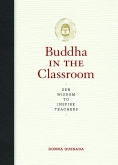
(Excerpted from my book,  Buddha in the Classroom; Zen Wisdom to Inspire Teachers, 2011)

Heal Thyself First

It is February—the month of love, so, in the spirit of the season, I offer a note about the importance of healing your own heart first.

There is a consistent message found throughout the higher wisdom traditions, that of tending to your own healing and transformation first. They say that it is imperative to purify yourself before trying to fix the world. To put it slightly differently, although we do exactly the opposite, in the form of finger-pointing, whistle-blowing and fault-finding, the call is to look to the inside before looking to the outside.

Rather than simply take it for granted, I would like to explore the reasons why this makes sense.

Firstly, because when we are miserable, depressed and despondent, or angry and in great angst, we are less likely to be open to the needs of others. We are more likely to close ourselves off and tuck ourselves away into a cocoon where we are both unavailable and unable to be of service to anybody else.

Secondly, because while we’re on this planet, the very least we can do—even if we don’t do much good—is refrain from causing harm. And when we’re suffering, we’re likely to lash out on others in myriad ways, from the little things, like general rudeness, to the big things, like the Columbine massacres.

Finally, in a more etheric sense, an open and balanced heart center—what the Yogis call the anahata chakra—can have a natural healing effect on others. When we start to heal and our hearts start to open, we tend to radiate warmth, and that creates joy all around.

Find the Lesson


On action alone be thy interest… Never on its fruits. Let not the fruits of action be thy motive, nor be thy attachment to inaction. ~Bhagavad Gita

After being told that “memoirs are a hard sell,” I am still writing. I would be lying if I said I didn’t feel discouraged for a few days, but I rallied. My turnaround was so complete, I felt liberated by the new perspectives that the supposed bad news afforded.

The most important of these was the way I came to see the event and the role it played in bringing me back to the whole point of writing, which is…the writing. And this realization brought me back into sync with one of the main tenets of the Gita—the spirit of service. If I continue to write, for the sake of the writing, and from the need to share my wisdom and experience with whomever shall benefit, rather than for the promise of publication, then I am truly serving. This realization made me ever more grateful for the experience.

Another perspective that shone forth came in the form of one of my teacher’s words—words I had heard many times, but which beamed brightly now, as if from a burned-out lamp whose bulb had just been replaced:

If you can be deflected from your path, you will be. ~ Guru Singh

It is inevitable that we will meet with opposition, of some sort and at some point—will you hold to your commitment? Will you be like the water in the Tao, able to find your way around all the stones and rocks so gracefully?

Finally, in any situation that seems, at first, to be displeasing, can you find the good? In this case, it was the lesson it delivered. I never saw this project as a memoir, but that wasn’t really the point. The lesson strengthened my commitment, not only to the writing, but to the art of living in grace, generally—and that requires trust. Trust that my offering will find the right home when it’s ready. After all…it is the only story I can tell, and it is a story only I can tell!

I share this story, as well, with the hope that someone may take encouragement from its lessons. What is your commitment?

Please, Call Them “Yoga-Inspired Exercises”


This morning, on my usual walking route with my dog, I noticed a new sign on the neighborhood gym that said “Yoga.” The word “Yoga” is everywhere, especially here in L.A., where, according to recent statistics, there are more people doing it than in its native India. The problem is, the activity that is actually being practiced is not exactly Yoga. More often than not, it is a simulation of the ancient spiritual technology, at best, thereby rendering the statistics irrelevant.

As Stated Elsewhere

Like many arts and sciences that are profound, beautiful, and powerful, yoga has suffered from the spiritual poverty of the modern world–it has been trivialized, watered down, or reduced to cliches. The deep and eternal essence of yoga has been misrepresented and packaged for personal profit by clever people. At the hands of some, yoga has been reduced to the status of just another exercise program available on videotape. In other contexts, yoga has been presented as a cult religion, aimed at attracting “devotees.” Such a haze of confusion has been created around the clear and pure concept of yoga that it is now necessary to redefine yoga and clarify its meaning and purpose.
~ Bhole Prabhu

While there are many holistic classes to be found, too often, all you’ll find in “Yoga classes,” are the postures, which are merely a preparatory part of the discipline as a whole. But this is the part that is most eagerly consumed here, due to our emphasis, or rather, obsession, on the body.

My Proposition

For the sake of maintaining the integrity of this ancient, and unbelievably rich tradition, here’s what I’d like to see hanging on the doors of these kinds of classes: a sign that says, “Yoga-inspired Exercises” in place of the sign that says, “Yoga.” After all, as Swami Bharati says, “we would not call a brick a ‘house’ even though it is part of the construction. Yet, this is what is often done with Yoga.” The postures are but a small part of the complete eight-part system known as Raj Yoga. So, the change would be done for the sake of clarity, dignity and truthfulness.

So, What Is Yoga?

It is not within the scope of this article to explain those eight rungs of Raj Yoga, nor the other ancient Yogic paths, such as Bhakti Yoga and Karma Yoga, since this information can so easily be found elsewhere (including via my own Youtube lectures). But, here is an overview of the inherent point and purpose of all the Yogas.

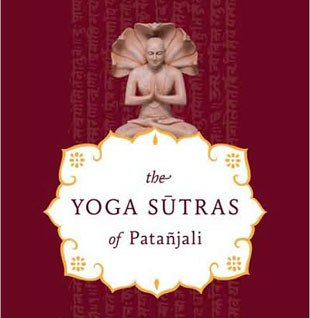
Yoga is about union. You could say that the goal of Yoga is…Yoga, since  that’s what the word means. It is the union of the self and the True Self, of the ego identity and the Supreme consciousness. It is a process of awakening to the divine reality that we were never separate from in the first place. It is the evaporation of maya, or, the delusion of separateness. It is the direct experience of the preexisting union between Atman and Brahman, or if you will, Shiva and Shakti. It is, as Paramahansa Yogananda describes it, Self-Realization. It is the awakened consciousness. It is God-consciousness. It is, as Sivananda has described it, Supreme Harmony. It is Samadhi—the final limb and crown of Patanjali’s eight rungs of classical Raj Yoga.

The many therapeutic effects of Yoga have been touted so frequently, that many people now realize that the purpose of Yoga is not to workout. But to think of Yoga as a form of relaxation is to still miss the point. It is to replace one misunderstanding with another!

Yoga Is Spiritual

On their website, YogaDayUSA.org listed the “Top 10 Reasons to Try Yoga” as, stress relief, pain relief, better breathing, flexibility, increased strength, weight management, improved circulation, cardiovascular conditioning, better body alignment, and focus on the present for health reasons. The authentic reasons for Yoga seem to be not even worthy of mention in their Top 10 Reasons for Yoga.

Yoga Alliance, the sponsor of Yoga Day, described itself as “the leader in setting educational standards for yoga schools and teachers.” However, while they claim this authority, they did not see fit to acknowledge or include in their Yoga Day promotions the fact that the roots of Yoga come from the ancient tradition of Sanatana Dharma, out of which has grown Hinduism, Buddhism, Jainism, Sikhism and other traditions.
Swamij 

The therapeutic effects of Yoga are many, but they are not the central intention of any of Yoga’s many paths, which are like the many rivers that all find their way to the sea. The different paths, or Yogas, intersect one another and often run in parallel. They accommodate the various inclinations and karmic propensities of the individual student who would find himself on a spiritual journey. Yet they all have the same goal of Self-Realization.

* In this article, as elsewhere, I have followed the tradition, as pioneered by the renown authority on Yoga, Georg Feuerstein, of capitalizing the word Yoga, just as we would capitalize Zen, or, Christianity.

Emotions Don’t Make a Man

Sometimes I receive notes from people I don’t know. Sometimes they ask me for advice, and sometimes I’m able to give it. Here is an (edited) version of a recent one.

Question from an unknown friend:

I have always read about “letting go…” and specifically about letting go of the ego. Isn’t this the purpose of Yoga and Buddhist practice? I think it sounds good but I wonder if it is healthy overall to let go of so much in life. Isn’t part of life just feeling good and acting upon emotions? Isn’t that part of a fulfilled life to accept those feelings? How do I know when I should allow feelings and emotions to exhibit themselves or not? I struggle with this immensely. I almost feel like ego is me and therefore only death would detach me from any thread of ego attachment. When I have an opinion – am I just supposed to suppress it? Thank you for your time.

————

My response:

Friend:

You said: ” Is not part of life just feeling and acting upon emotions? Isn’t that part of a fulfilled life to accept those feelings?”

Wouldn’t it be wonderful if someone could tell you, “Yes, you’re right, I guess that’s what life is for.” But I can’t be the one. You see, this very idea is what Yoga (and Buddhist practice) is there to correct.

The whole purpose of “having a practice” is to steady the mind. Yoga is about the mind, not the body. It is about managing your energy, your emotions and your thoughts, so that those emotions don’t manage and overwhelm you. It’s therefore about you managing you.

Imagine if we took your question (in quotes, above) and made it universal, which is to say, allowed for society at large to act on it as a sort of “rule.” The result would be exactly like the fourth grade school yard, where anytime anyone gets angry, they just stomp and scream and throw their toys at others. After all, they would simply be “acting on their emotions.”

But, here’s the thing. Society is actually like that. Most people have not learned to manage their emotions, have not evolved to where life is about anything other than their passing feelings, nor have they come to identify with any higher purpose of existence.

It’s all about “how I feel.”

And so, we have road rage, prozac, addictions, dysfunctional relationships, war, hatred, envy, eating disorders, sleeping disorders, emotional disorders, a never-before-seen number of learning disabilities, stress, tension, and political elections that resemble an afternoon at the local kindergarten.

When body, spirit and mind are in a state of balance, which is to say, at the very least, that the “negative mind” doesn’t govern, those emotions don’t seem so overwhelming and living becomes more peaceful. What does this have to do with “letting go?” We stop getting so caught up with those habitual thoughts that only keep us limited—judgment thoughts, self-deprecating thoughts, doubtful thoughts and resentful thoughts—the kinds of thoughts we don’t want to characterize our ideas of ourselves and others. Because our thoughts weave the fabric of who we are.

It’s as Yogi Bhajan once said, in his characteristically straightforward and slightly mischievous way, “it’s not emotions that prove you’re alive. The way to find that out is to check your nose. If the breath goes in and out, then you are still alive.”

You see, once we begin to quiet the spinning mind, once we begin to relate to that which is infinitely greater than our passing trifles, once we begin to become truly conscious beings, then we relate to those emotions differently. We learn not to define ourselves by them and they begin to lose their hold and power over us. We become more stable and more able!

Kind Wishes,
~Donna

On Meaning

I am in the process of phasing out my old blog. But before removing it completely, I backed it up and pulled a few to the side that I thought should be made over and brought out for another curtain call.

Why not leave them exactly as they were? Because I’m not exactly as I was. Here’s a short and sweet one.

What is the meaning of life, philosophers ask.

It is rather like asking, what is the meaning of the sound of the violin.

The very question of meaning seems so very meaningless unless we understand that it is only according to our individual perspectives, shaped from the changing position of our conscious minds, that anything has meaning—even our very own lives.

There are 87 different meanings found in every breath we take, in every second of every day, in every one of our thoughts and in every action we take.

We shape the world with our thoughts—and our thoughts, in their turn, shape who we are.

The sound of the violin means one thing to the conductor, another to the lovers in the restaurant, and another to the feisty old grouch who doesn’t like anything. To many others, it has no meaning, at all.

There is meaning in every-thing, and meaning in no-thing. There is a profusion of meaning in every little thing, and no single meaning in any one thing.