Tag Archives: thinking

Relationship between Presence, Prana & Wisdom

Prana_chi_intuitionYou’ve probably heard by now, that being present stills the mind and all its turbulence.

But…the greatest block to this state of presence is our mental turbulence.

This is like being told you need experience to get the job, but how are you supposed to get experience if they won’t give you the job!

This is a fine predicament.

The answer to this pickle comes in the form of a question:

Have you ever been so engrossed in a task that presence was inevitable?

Tasks of a physical nature are especially adept in bringing us here, since the mind, left to its own devices, soon falls into its customary habits. And we all know, the mind likes to swing.

The physical Yoga postures known as asana do this for us.

Just about all activities that require our active engagement do this for us (watching TV generally doesn’t do it).

Sometimes Yoga instructors will even tell you to find your edge. This is because when we are at our edge, we receive instantaneous feedback that enables us to make corrections as needed.

As it happens, this is where transformation happens.

As with the concept of flow, this is because when we are at our edge, we are at a point where the challenge slightly supersedes our skill level (clearly, if the challenges are too high, this will cause stress and if too low, boredom may result—but this is a slight digression).

When the balance between challenge and skill is just right, presence is obligatory, often at the risk of personal harm; for example, in a balancing pose, or more dramatically, while hanging from a rope on the edge of a cliff (Some of us, myself included, would rather hang out in a balancing pose rather than on the side of a mountain, even though we like mountains very much).

So, it follows that being comfortable is not the best condition for improvement and growth.

Why does transformation happen here?

Because loss of self-consciousness happens in this state of total engrossment.

Self-consciousness is, not surprisingly, what all the spiritual traditions speak of as enlightenment, albeit in myriad ways, e.g., as the loss of the small self, or, as the merging of finite with the infinite, etc.

Now, as it happens, these same conditions also entrain intuition, something we talk about often, in Kundalini Yoga. Intuitive awareness is a form of knowing that goes beyond the ordinary ways of picking up information, in other words, beyond the words and ideas, concepts and data that are the usual ways of exchanging and receiving knowledge.

One of the reasons why this vivid state of undivided presence cultivates intuition is because in this way, the whole body is alive with awareness. In this state, the energetic flow within us is flowing and unobstructed. In fact, as my own teacher used to remind us, when we are aware that we are breathing, we actually take in more prana. Same amount of oxygen, but more prana (or as the Chinese would say, more ch’i). This means our whole body becomes a receiver and transmission instrument (our mind is not localized in the head).

Prana is energy and if everything is energy, as Einstein said, then we merge into everything as just another aspect of this flowing energetic awareness, when we enter this state. The Yogis call it…well, the Yogis call it Yoga. Merging with divine awareness. Or, merging in divine awareness.

The only thing that holds us back from this state, is our own mental stuff and our attachments to that stuff. Flexibility moves us back to center, which is to say, back to everything and everywhere, and so, in this way, the best definition of non-attachment is actually…flexibility.

*Image courtesy of www.easternhealingcenter.com

Why Meditation Works

morning meditateWhen I was growing up, it seemed everyone was impressed with those who could fix computers or who were technologically savvy in some way. They’re so intelligent, they’d say. And then there was always that family superstar who could answer the questions on Jeopardy before the contestants. Everyone would ooh and ahh, admiringly.

But, from the point of view of our soul, we are not here to fix computers or recite historical data.

Philosophy was impressive, too. While I wasn’t the one you’d call for a hard drive on the fritz, nor the one yelling out the answers to civil war trivia, I could talk about free will or argue about the existence of God. Of course, I didn’t choose this line of study in order to impress people, but as a girl in my twenties, I could already count on the type of reaction I’d get when asked what I’m majoring in.

That is…until I went to a real Zen monastery.

When I was in my 20s, I was already drawn to the eastern traditions—I knew about Zen and emptiness. I had read Alan Watts and even knew about koans. And for the first time, no one cared.

The bald man in robes, who they referred to as “Roshi” spoke that day. He said we were all there because we were “neurotic.” No words were ever truer! None of the brilliant papers I’d written seemed to matter at that moment. I still had my hang ups, just like everyone else. Because I still had that head of mine. All the studying in the world doesn’t seem to do much when it comes to true transformation.

That was when it dawned on me: Even the geniuses are screwed up! It’s like this passage:

Have you seen all these people who drink, who search for a partner, and who look for drugs? They start the search in earnest, or have the urge to do it, after 4 p.m. Why do they need drink? Why do people feel they need to take drugs?  They do all that out of an instinct to seek stimulation. At those times their biorhythm has gone down, and they feel irritated. They cannot exist like that and have to have a change…The root cause is that your basic biorhythm of energy, your mental projection and strategy are not reflected in a unisonness of character. Those zones are natural times that shift your energy level, your mental projection, and your performance. That is the time you must direct the mind, refine it, and create a consolidated unisonness of character and projection. ~Yogi Bhajan

The point is, what we are really here to do is guide the mind rather than let it be guided. Guided by what? By our own emotions, by other people’s expectations, by traffic, by disappointments, by the media…by endless, daily provocations (the worst of these being our own thoughts). Neither techie skills, nor historical data, nor a big bank roll can do this for us.

To me, it all boils down to this question: Are you a sanctuary for yourself?

Can you be still in your own solitude? We become a refuge for ourselves only when our mind is at peace. And only then is it remotely possible to be a source of peace for others — because our mind is the wellspring of every word we speak, every decision we make and every action we take.

How do we become our own sanctuary? When we discover our neutral center—the crowned sovereign over all the noise, the judgments, the neurotic outbursts and the incessant tug of war between positive and negative. The neutral channel is the balm that quells the drama that turns people’s lives upside down.

That neutral eye sees right though the drama. Thus, this quality creates vastness of character. This is true greatness. And this is what we’re here for.

If you have not established some vastness in your attitude, then your habits and facets, your fears and pettiness will betray you. ~Yogi Bhajan 

What is meant by “vastness?” No matter what spiritual tradition we’re speaking of, it all comes down to union, or, said the opposite way, letting go of the illusion of separateness. Where is that illusion kept? In the mind. Zen calls it the small self. Yoga calls it the finite self. No matter what we call it, this ego-based identity is what drives the pettiness in our lives, which in turn, makes spiritual union impossible. This is why governing the mind is the first task in any spiritual practice.

How do we refine the mind, in this way? It’s too bad you can’t just take a 6-week course, or a workshop, or an intensive. The old masters weren’t lying when they said you have to sit. There’s no way around it. It’s not as easy, of course, as taking a course and sticking some degree on your wall, but that’s also why there are so few truly enlightened beings in the world.

So how does it work?

Consider this car analogy: Before driving off to work in the morning, you warm up your car for a few minutes. As the engine warms up, a distinct alteration takes place within the engine that affects the oil pressure and viscosity, which prevents wear and tear on your car and gives you a smoother drive. In a similar way, it is through meditation, that we “warm up” our systems by better preparing our minds to handle the stress of daily living, to make the choices that need to be made and to navigate our way through our own doubts and anxieties. Through the refinement process that only meditation affords, we give ourselves a smoother drive.

Not only is there an alchemical process taking place, via the glandular system and the nervous system, but by coming to stillness, we develop a capacity to stay present even when things seem unpleasant. This translates into less reactivity and more patience in the “real world,” as we interface with difficult people and everyday dilemmas.

Through meditation, instead of simply reacting at once, we create space around every stimulus, whether pleasant or unpleasant and whether internal or external.  Our minds challenge us at every turn, like a toddler pulling at our pants for an ice cream, but as we persist, we become solid. We become a witness to the ways of our own minds, which is what Buddha meant when he urged us to study the Self.

To be sure, being a witness does not mean being passive. Nor does it mean being narcissistic. Not passive because we retain our intention to cultivate our awareness even when we get up off the cushion. Not narcissistic because as spiritual warriors, we know all too well the effect of one mind on the world at large.

We know that even a few minutes of warming up our engine daily, will shape every decision we make, in every area of our lives, from relationships to work. This is why it is the highest form of self betterment—because we are getting to the root of our being.

True Freedom Is More than Free Will

“It might sound funny coming from a guy in prison, but never before have I felt so free.” ~Denzel Washington in Flight

The kind of freedom the philosophers talk about in the west is quite different than the freedom of the saints and mystics and Yogis.

The philosophers speak of defining our own purpose and identity through the choices we make, of carving out our own paths and therefore, living an authentic life. In philosophical terms, it means rejecting the traditional notion of destiny and the corresponding idea that things are inevitably the way they are, set and fixed, in a pre-planned, determined universe.

Existentialists like Sartre—so called, because our very existence is ours to shape—would famously ask, where is this plan? The very idea left too much room for excuses, he said, since it would then be all too easy to pawn off our actions on circumstances, falling back on such clichés like It must have been in the cards, or That’s just the way I was made. And so, the urging was to use our free will, the natural byproduct of being born as a conscious human being.

Is this the same as the injunction, in the eastern mystic traditions to wake up? To actively shape our own Karma by making conscious choices and to reshape our plethora of long-established, unconscious habits through mindful awareness? Insofar as we are to create our own lives, with all the responsibility that goes along with this freedom, there is a parallel.

But existential freedom has more to do with conscious choosing than one’s state of consciousness.

For thinkers like Sartre, consciousness is the source and spring of free will. But, this unyielding and often rigidified consciousness is exactly the source of trouble from the point of view of Buddhist and Yogic teachings. Existential freedom (free will) is an ability to choose from among genuine alternatives that exist in the world, whereas the freedom the Yogis speak of refers to an awakened state of mind that shapes what we see as choices in the first place.

* For more on this topic, see my book, Buddha in the Classroom (Chapter 19. Sartre and Buddha—True Freedom is a Settled Mind)
* The next post will expand on this theme, exploring the differences between spiritual development and traditional methods of self help.

On Meaning

I am in the process of phasing out my old blog. But before removing it completely, I backed it up and pulled a few to the side that I thought should be made over and brought out for another curtain call.

Why not leave them exactly as they were? Because I’m not exactly as I was. Here’s a short and sweet one.

What is the meaning of life, philosophers ask.

It is rather like asking, what is the meaning of the sound of the violin.

The very question of meaning seems so very meaningless unless we understand that it is only according to our individual perspectives, shaped from the changing position of our conscious minds, that anything has meaning—even our very own lives.

There are 87 different meanings found in every breath we take, in every second of every day, in every one of our thoughts and in every action we take.

We shape the world with our thoughts—and our thoughts, in their turn, shape who we are.

The sound of the violin means one thing to the conductor, another to the lovers in the restaurant, and another to the feisty old grouch who doesn’t like anything. To many others, it has no meaning, at all.

There is meaning in every-thing, and meaning in no-thing. There is a profusion of meaning in every little thing, and no single meaning in any one thing.

Mindfulness vs Distraction

Mindfulness vs Distraction

Seventh on Buddha’s eightfold path, Zen buzzword, and greatest hit of Buddhism in general, is mindfulness–which is simply the practice of being here. It at least sounds simple, and it is, but simple is not always easy. Which is why it takes practice. With slightly more elaboration, it is the deliberate, but nonjudgmental, attention we place on the present moment.

A student asked me one day about it, and why it was preferable to distraction, especially in the face of something unpleasant. For example, if you have a headache, what’s wrong with watching TV just to zone out? In brief, distraction immediately separates us from the situation, which might sound desirable, but the problem is, the discomfort remains, and worse, we rob ourselves of the opportunity to surrender, and worse still, of the opportunity to recondition ourselves out of old patterns. And as life is full of discomfort, we’ll simply continue to suffer as a result, as we try in vain to run, time after time, and find, time after time, that wherever we go, there we are.

The question is a bit like the one I was considering the other day.

Presence vs The Big Picture

During the first few days following my book’s release, I found myself checking sales statistics obsessively, looking for sales info and any other sign of excitement that would signify, what was to me, an important event. But, this kind of narrow focus only sets us up for disappointment. I reminded myself how fortunate I was just to be published and how wonderful it is that my book is finally available. Moreover, I reminded myself of the real purpose, which is to inspire other teachers. I marveled at how strange it is that being published—every author’s dream—suddenly wasn’t enough. We are funny creatures that way, endlessly grasping for the next thing while missing everything. This reminder to myself, of what is essentially at the heart of Buddha’s Noble Truths, engendered a swelling of gratitude that left no more room for frustrations.

Funny enough, the very next day, one of my Yoga masters told a story about pain. He described a midwife he knew, who had the habit of telling her screaming clients, while in the grips of agony, to remember that they are having a baby! It might sound like a silly reminder of the obvious, but it indicates importance of putting the pain into perspective.

But, isn’t this a departure from presence? You might ask. After all, the pain is as present as it gets!

But in neither case—my obsessive checking nor the laboring woman—does the reminder to see the big picture negate the importance, or, if I may, the presence of presence. It’s not obvious at first, but the fact is that seeing bigger means seeing more, and seeing more means nothing other than more presence!

You’re looking at everything, you’re in tune with all that is, rather than merely your own hang-up. And by getting in tune, you’re dropping your resistance to the current situation, and since resistance is what magnifies all discomfort and suffering, by dropping the resistance, you’re lessening, at once, your suffering.

As the Taoists would say, don’t push the river.

By coming back into reality, as it is, you’re losing the AVERSION to the discomfort, you’re with what is, rather than fighting what is…and you’re in peace.

Thoughts; Do They Define Us or Not?

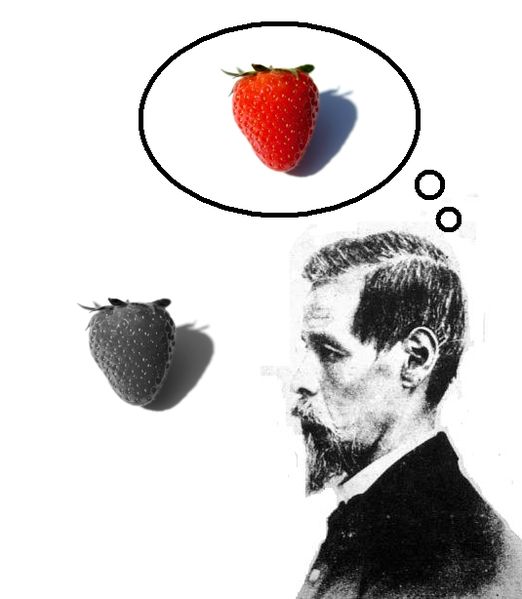
We are what we think, The Dhammapada begins. All that we are arises with our thoughts.

Yet, at the same time, a thought is nothing other than a passing wave of the mind, Suzuki Roshi says, in the classic, Zen Mind, Beginner’s Mind. I remember another Zen master likening thoughts to bodily secretions. He was reminding us not to take them seriously. A thought is nothing other than an inconsequential emission, like sweat, which evaporates on its own, or a burp, which is gone as quickly as it arises, without a single trace. It is why, in Zen meditation, we don’t try and stop our thoughts. Like a revolving door, they will come and they will go, of their own accord. Those incessant emissions don’t define us any more than the steam from a boiling cup of tea defines the quality of the tea leaf.

Or do they?

Perhaps thoughts are more like the emissions from an old Chevy…black and heavy, betraying our old, outdated, carburetor engine, and the total lack of smog control. The smoke and soot sullies up everything, and we breathe in all the black pollution. As The Dhammapada suggests, our thoughts give us away, and we can hide our identity no more than a ’57 Chevy can hide its smoke. We think ugly thoughts and we wear them.

The Resolution:

Thoughts are passing waves, but there’s a catch…if we let them pass. They come and they go…if we avoid getting attached to them. And this is where mindfulness starts. With this realization, we can avoid the karma that clings to us, like gum getting stuck to our shoes, every time we fixate on those thoughts.

So both ideas are true. They can live together, side by side, without conflict. Like a light wave, there’s no necessary contradiction with regard the different viewpoints: it’s a wave or a particle, depending on which way you look at it. Our thoughts are only secretions when we recognize them as such and then let them go—a useful trick, when it comes to what Buddhists would call unskillful thoughts, and what the Yogis would refer to as negative thoughts. The problem surfaces when we habituate. Then we get stuck; then we get in our own way; we prevent ourselves from moving along;  we wear it on our faces; we exude it in our demeanor, and it affects every aspect of our relationships, our lives and our worlds.

Seen in this way, our thoughts have tremendous power and define us, if we let them. So we can let them, in a skillful way, or in an unskillful way. That’s where spiritual training comes in. As one of my favorite yogis, Swami Sivananda reminds us, in Thought Power, by raising only thoughts of mercy, love and kindness, we bring happiness upon ourselves and others. Conversely, when we are stewing in hatred, pain is sure to follow. In this way, we use thoughts conscientiously, with deliberate aim.

Similarly, in Kundalini Yoga, we are taught to convert negative thought forms and tendencies, rather than fight against them or wait for them to go away on their own; we use them skillfully to good purpose. For example, we may put the tendency toward anger to good use, by directing that anger toward ourselves for not being more patient, or we may turn our greed into the noble desire to become enlightened.

So, it seems we have two choices, we can let negative thoughts settle on their own, without the validation of judging them, or even naming them. Or, we can convert them. In both cases, we are willfully using our mind rather than the other way around. We are the master and are working with our thoughts in a decisive way.

Whatever you give attention to, thrives—especially habit patterns. Water the grass and it grows. Water the weeds and they grow. Water the thoughts and we become those thoughts.