Tag Archives: Yoga

True Freedom Is More than Free Will

“It might sound funny coming from a guy in prison, but never before have I felt so free.” ~Denzel Washington in Flight

The kind of freedom the philosophers talk about in the west is quite different than the freedom of the saints and mystics and Yogis.

The philosophers speak of defining our own purpose and identity through the choices we make, of carving out our own paths and therefore, living an authentic life. In philosophical terms, it means rejecting the traditional notion of destiny and the corresponding idea that things are inevitably the way they are, set and fixed, in a pre-planned, determined universe.

Existentialists like Sartre—so called, because our very existence is ours to shape—would famously ask, where is this plan? The very idea left too much room for excuses, he said, since it would then be all too easy to pawn off our actions on circumstances, falling back on such clichés like It must have been in the cards, or That’s just the way I was made. And so, the urging was to use our free will, the natural byproduct of being born as a conscious human being.

Is this the same as the injunction, in the eastern mystic traditions to wake up? To actively shape our own Karma by making conscious choices and to reshape our plethora of long-established, unconscious habits through mindful awareness? Insofar as we are to create our own lives, with all the responsibility that goes along with this freedom, there is a parallel.

But existential freedom has more to do with conscious choosing than one’s state of consciousness.

For thinkers like Sartre, consciousness is the source and spring of free will. But, this unyielding and often rigidified consciousness is exactly the source of trouble from the point of view of Buddhist and Yogic teachings. Existential freedom (free will) is an ability to choose from among genuine alternatives that exist in the world, whereas the freedom the Yogis speak of refers to an awakened state of mind that shapes what we see as choices in the first place.

* For more on this topic, see my book, Buddha in the Classroom (Chapter 19. Sartre and Buddha—True Freedom is a Settled Mind)
* The next post will expand on this theme, exploring the differences between spiritual development and traditional methods of self help.

The Morning, the Mosque and the Glandular System

What do the early morning, the pituitary gland and the mosque have in common?

I had done my early morning meditation the other day before taking my dogs out for their walk. I live on the street with the beautiful Mosque, so I always see activity there during the pre-Dawn hours. On this occasion, I saw my mechanic, who is a Muslim. The sun, not yet reflecting off the minaret, was just beginning to lighten the sky as I waved hello and turned the corner.

If I were to walk a little further, I’d see the Orthodox Jews making their way to temple for their early morning prayers. And in the many Buddhist temples across town, the monks are chanting their first sutras while the smoky aroma of sandalwood incense fills the dimly lit room.

The pre-Dawn hours have always been the favored time to engage in spiritual practices, among all traditions, since the time before those practices were subsumed and consumed by religion as we know it today…since the time when all who practiced were Yogis—since, true to the spirit of the word, they were merely seeking divine union. They were mystics, seeking nothing but the experience of God.

Although the façades have changed, the inner motivations are varied and the reasons why are largely unknown, the custom of rising early remains.

In Sikh scriptures, it is known as the Amrit Vela—that special and tranquil time we may call the ambrosial hours. The ancients may not have known that this is the time when our glandular system undergoes a natural shift, but they knew there was something very magical about it. They may not have known about the pituitary gland, whose proper function regulates all other endocrine functions and brings us into that state Yogis called Shuniya, but they experienced this state of neutrality and they knew that this was the gateway to higher consciousness…to that realm that transcends time-space boundaries.

These are the hours when the world sits still. It is when the earth’s magnetic field and its angle in relation to the sun make it the perfect time to sit still with it. It is when we are given refuge from the tug-of-war between those forces known in the Bhagavad Gita as Rajasic and Tamasic. Between fire and sloth. But between them, there is balance. It is therefore, the most Sattvic time to enter into that divine stillness that lies within. It is when ego’s protective wrapping is most easily peeled away, along with those habits that go along with it.

It is as such that in these ambrosial hours, the pituitary gland—master at the helm—secretes optimally and when all those who pull themselves out of bed to practice, can melt into the stillness that was there all along.

Uniqueness vs Ego

The Art Student

One of my international students knocked on my office door one day. She was a 21 year-old Korean girl that I would learn was here to study engineering. Although, as I also quickly learned, she didn’t like engineering. When I welcomed her into my office, she lifted her eyes briefly to say hello before quickly looking down again. When she began to tell me about her situation she could barely hold back the tears. She was clearly under a lot of stress. As it turned out, the decision to study engineering was not her own. It was a decision made by her father as the condition of going abroad. What she really wanted to pursue was art. This was the first time she had confessed her true feelings about the issue, she said, as the tears, held back for too long, flowed with relief down her cheeks, dripping on her notebook. Her father didn’t feel that art would prepare her for any kind of career and refused to pay for a useless major, she explained.

This story (from my upcoming book) shows why it is so disastrous to compel others to fit into a pre-carved mold, to fashion them by the we-know-what’s-right-for-you pattern.

I began reflecting on what it means to truly live authentically. It means living by the light of our own uniqueness, embracing it and more importantly, sharing it, for, our uniqueness endows us with gifts that are multiplied when offered back out to the world. How may this girl help shape the world through her art? Who can know the future of her life on either path?

But isn’t this ego? Isn’t it more spiritual to not press and push and assert ourselves? What is the difference between personal empowerment and ego? Or, between uniqueness and ego?

Ego just wants to stand out.

Individuality without YOU is just difference. ~Catalyst Yogi

Standing out, or, being different for the sake of being different, is not true uniqueness.

True uniqueness is the acceptance of your own gifts, talents and capabilities. It is the willingness and courage to live from your own authority, shape your own beliefs, forge your path and create your own destiny. It is the right to be yourSELF.

Ego is not yourSELF. It is an impostor shaped from images, roles, expectations and ideas—your own outdated ideas, as well as other peoples’.

We affirm our own existence. There is no one exactly like me. My attributes are singularly my own. My uniqueness is to be respected, cherished, honored, trusted. ~Guru Rattana

While ego, in its search for approval, fame, pleasure and glory, leads us inevitably into disaster, embracing our uniqueness—our true Self—allows  us to better serve in this existence. After all, only you can offer what you have to give.

The Brahmin and the Cobbler (A Story of Enlightenment)

Here is an old story from Indian lore. It takes for granted the spiritual expectation, in Vedic philosophy, that with good karma and spiritual advancement, we may gratefully escape samsara, the seemingly endless cycle of birth and death that keeps us trapped in the torment of our own karma and misery. It also takes for granted the assumption that the Brahmins—the high-caste priests—would have earned the privilege of liberation first. But watch for the twist! Here, The God of time, Narayan—another name for Lord Vishnu—offers a surprising decree. I am retelling the story as I remember it.

—   —   —   —

Once on a sunny day near the Ganges, a Brahmin priest, who had just finished his oblations, came across Narada, the messenger of the Gods. After bowing deeply in respect, the Brahmin took the liberty of asking the divine sage for a favor:

Brahmin priest: “Could you be so kind as to ask the supreme Lord, Narayan, when I’m going to be liberated from this world and joined with him in holy bliss? I know it will be soon because of my station, and all, but I would just like to know, all the same.”

Narada: “No problem, my sir. I’ll ask when I see him.”

Further along down the river, a lowly cobbler, fixing shoes by the wayside, also stopped Narada, as he was passing through, and chanced to approach the great emissary:

Cobbler: “Could I appeal to your kindness by asking you to speak to the great God on my behalf?”

Narada: “I’d be happy to.”

Cobbler: “You see, I’m growing more weary each year, and I’d just like to know how many more lifetimes I am doomed to suffer in this material world?”

Narada: “I’ll be sure to pass on your message.”

And Narada continued on, passing seamlessly through to the spiritual world. When he saw the great Lord Narayan, he bowed to his feet, as is the custom in approaching great spiritual masters. The Lord then asked if there was anything he could do for Narada, who proceeded to put forth the concerns of both the priest and the cobbler.

As Lord Narayan can see through the barriers of time, and into eternity, he thus knows all. With a brief pause, he informed Narada of the destiny of his supplicants:

Lord Narayan: “The cobbler will come to me at the end of this present lifetime. But the Brahmin will live through at least 100 more lifetimes.”

Seeing the confused look on Narada’s face, the Lord only smiled and gave these instructions:

Lord Narayan: “Next time you see the cobbler and the priest, they will ask you what I was doing when you saw me. Tell them I was threading an elephant through the eye of a needle. When you see their reactions to this, you will then understand everything.”

So, Narada went on his way. The first man he saw was the Brahmin, who was shocked and insulted by the news:

Brahmin priest: “A hundred rebirths in this hell! I don’t believe it! You probably didn’t even see the Lord! Tell me, what he doing when you saw him?”

Narada: “Threading an elephant through the eye of a needle.”

Brahmin Priest: “Threading an elephant through the eye of a needle? That’s totally absurd! You must be lying about everything!”

So, Narada excused himself and pressed on until he found the cobbler. He gave him the news that he would soon be liberated and would be joining the realm of the Lord at the end of this lifetime, at which point the peasant exclaimed in joy:

Cobbler: “Oh, what blessed and glorious news! But, alas, tell me my good sir, what was the Lord doing when you saw him?”

Narada: “He was threading an elephant through the eye of a needle.”

Cobbler: “Lovely. Absolutely lovely.”

Narada: “You mean, you believe that?”

Cobbler: “Why, sure! You see that huge old oak tree up the hill? It grew from a tiny acorn. So, if the Lord can squeeze a gigantic oak tree into a little seed like that, He can just as easily thread an elephant through the eye of a needle.”

And with that, Narada understood the difference between the priest and the cobbler, as well as why the priest was not yet ready for liberation.

Five Tricks to Get your Mojo Back

Mojo, as popularized in the Austin Powers movies, is defined in the Urban Dictionary, as The ability to bounce back from a debilitating trauma and negative attitude. This is how I think of it, as well.

One of my students recently found herself in a funk (depressed mood). She asked me if I ever find myself in this sort of situation. Of course! She then asked me if I have any tricks. Of course! And that is the only difference.

Here I share my top five:

1. Before getting out of bed in the morning, do 1-3 minutes of Breath of Fire. This is a powerful breathing technique used in the form of Yoga that I teach. Among a long list of benefits, it not only balances the nervous system, but very effectively oxygenates the system, which is vital in kick-starting your body’s natural healing mechanism. Your body responds to this boost of vitality both physically and psychologically. Doctors who recognize the interconnectedness of mind and body stress the importance of breathing in the healing process. An example is Dr. Sarno, who cites oxygen deprivation as a prime cause of what he calls mind-body disorders. Whether the roots of your funk are psychological or physical, the Yogis have known about the power of breath for thousands of years. As an aside, film buffs will remember the scene, in Harold and Maude, in which the full-of-life Maude tells Harold to “greet each dawn with a breath of fire.”

*Here’s how to do it: (Remember, do this before getting out of bed!) Begin panting like a dog. Notice how the inhales and exhales are of equal duration. Notice also, how the “pumping action” comes from the belly. These are the proper mechanics of it. Now, close your mouth and continue on through the nose. This is Breath of Fire!

(To make it even more powerful, lift your legs and head six inches off the mattress while you do breath of fire for at least one minute. This gets easier with time!)

2. Super Food! 38.00 for magic-in-a-bottle. I’m lucky to live five minutes from Dr. Schulze’s famous warehouse, but they ship anywhere—and people fighting illnesses of all sorts use this product. (Note: I have no stock in this company!)

If you have a juicer, add a scoop of this green powder to freshly juiced spinach, apple and lemon. The super-trick is to make sure you drink it first thing in the morning, on an empty stomach, so that it goes straight to your bloodstream and to your cells. If you don’t have a juicer, add a scoop to a glass of water with freshly squeezed lemon, or shake it up in a bottle of apple juice or V8. Remember: on an empty stomach! Wait a half hour before eating.

3. Take a half-hour walk, first thing in the morning, before eating. The earlier, the better—preferably at the break of day when the street lamps are still lit. This rejuvenates psychologically, as well as physically. You are drawing on your own prana, or, life-force, free from the weight of digestion. Similar to the mechanism of homeopathy, this has the effect of stimulating your own inner power. On a subconscious level, you understand that you are capable of waking up your own inner vitality.

4. Switch to the heart-perspective. This has been an enormously important element in my own journey. What does this mean to you? If the funk has come about because of physical illness, how might the heart-perspective facilitate healing? This is subtle, but unspeakably powerful. It may be a simple matter of letting go of the inner fight against your physical body. And letting go of the fight allows healing. The inner acceptance of the time needed to heal, allows healing. In the case of mental disturbances, for example, an exchange with an irritating person, it may mean reminding yourself of how trivial the situation is, in comparison to worldly issues, or reminding yourself that the offensive action was done out of ignorance and not out of intent to provoke. Both perspectives engender forgiveness, and ultimately, healing.

5. Pray. This is like supercharging the heart-perspective. It took me a long time to fully appreciate the power of prayer. Especially “nondirected prayer,” which invokes the natural healing ability of surrender, and ultimately brings about an “inner unburdening” (and gives you back your mojo!)  Here’s a little something about this from one of the teachers in my tradition, Dr. Dharma Singh Khalsa:

One of the most potent forms of the mind-power effect is the type of prayer called nondirected prayer. In nondirected prayer, there is no request for a specific outcome. Instead, the person who prays focuses on the feeling that things happen for the best, and focuses upon his or her desire to see events unfold naturally, according to the benign flow of the universe.

Hence, it doesn’t matter to whom you pray. You are attuning yourself to the higher powers that be and to your own higher consciousness, which is the ultimate perspective changer. After all, as the Yogis also say, it’s all maya! Just a dance and none of it is as serious as we make it out to be. This enables a true liberation.

And don’t get stuck on the word desire in the quote above. They’re made out to be terrible things, but it depends on what kind and how we’re able to direct them.

God and Prayer

I remember my beloved grandmother teaching me how to say my bedtime prayers when I was little. I liked saying them. They made me feel secure. And for many years, I felt that something was missing and incomplete if I forgot.

Perhaps a certain spiritual longing was always there. Because I also remember relishing the opportunity to go to church with a very religious friend, during my adolescent years.

But then, as a college student — especially as a philosophy student — I encountered all of the arguments against God and later even lectured on Aquinas’ notoriously flawed five proofs for the existence of God, in my own classes. I pointed out all of the irrefutable logical fallacies in those five proofs, to my own students.

During those years, I wondered about the absurdity of it all. God, that is. And by extension, the whole idea of praying to a God. In my logically trained young mind, I wondered about the idea of a God that would proceed with his plans for annihilation and devastation, only to suddenly cancel them at the request of a petitioner. After all, I reasoned, that’s why people pray, to convince God to alter some undesirable course of events. I wondered about the idea that he might change his mind so whimsically.

But then one day, I realized how differently things can look when you flip them around. One day, I flipped around my own viewpoint about it all. Or, it was flipped around for me.

I came to see that God is within, not without.

Additionally, praying isn’t about loving a God out there, somewhere. And changing the course of events is secondary to the understanding of prayer as connection, rather than petition. It is about connecting with that which may be called, infinity, for there is no adequate way to convey the sense of going beyond the confines of what you thought of as your finite self. (Nor is there any adequate way to convey that which is beyond the confines of reason.)

And it isn’t about fear, as in the idea of fearing God, for, there’s no room for fear where divinity lives.

And about the business of changing some course of events; coming to divine consciousness – becoming conscious of our own divine nature – reveals our role in creating that very shift we seek. And that makes it nonetheless incredible, but all the more awe-inspiring and wonderful.

As Zen says, “you create your own universe.” And as Yoga says, “you control the universal consciousness.”

But alas, it isn’t really about personal pleas, petitions and procurement, at all. It is really just the personal expression of gratitude and completeness. Praying, that is. For no other purpose. Like a flower reaching up toward the light, leaning over permanently to one side with time, devotion expresses this feeling of affection and longing, but with no object of desire.

How to Turn Anger into Forgiveness (Four Tools)

Lists are cute, but…they can only take you so far. The reason is usually because they tell you the “what” at the expense of the “how,” rendering them entertaining, and perhaps inspirational, but simplistic.

For example, I saw this piece of advice, in a list, just last week:

Give up the need to always be right.


A good pointer, for sure. After all, the need to be right is not worth the price of your inner peace. But, alone, it’s a bit like that pair of shoes that looks really good, but won’t help you much when it rains. First, we need to understand where this need comes from. Yes, it’s the ego’s obsession. But for practical purposes, the need to be right arises, all too often, in the midst of conflict, and in the nub of an argument. And it comes with anger (the deeper problem), which is escorted by the inability, or unwillingness, to let go, which, in its turn, comes with the inability, or unwillingness, to forgive.

So, what do you do when your mind is spinning, your composure is slipping and your heart is raging? Here are four tools to use, either alone, or in any order you choose:

1. Affirmations. To diffuse anger.

And you thought a Zen person would only tell you to stop talking to yourself! It all depends on what you say. Talking to yourself can either be a help or a hindrance. We talk ourselves into things and out of things all the time and can skillfully talk ourselves out of being angry if we commit to the task. We can start by reminding ourselves that it is our choice to refuse anger and turmoil and instead choose peace and tranquility. It’s also a choice to be offended and if we’re not offended, there’s nothing left to “prove.”

Anger starts out as a feeling and can quickly turn into words, or even worse, violence. And as both the Yogis and the behavioral therapists say, you are not your feelings. Meaning, that bit of anger that starts out as a nudge can be nipped before escalating into a coercive shove.  It’s a kid, talking out of turn. “Thank you for sharing,” you might say, and move on.

But, what about those television shows that tell us to punch things and get it all out? Anger is not something that needs to be nurtured or “practiced.” Which is why, “venting” doesn’t work. Venting is destructive, rather than constructive. Anger is a habit, like everything else. By venting, you are nurturing the combustible mixture of blame and resentment, clinging to the short-lived illusion of relief due only to the effect of exhaustion.

So, how do we talk to ourselves effectively? A positive affirmation is a bit like a mantra, which, when used properly, results in healing and restoration of the mood and emotions. By repeating a mantra, you are enabling your mind to focus on what you want it to focus on, rather than on the continued negative self-talk that only spins the anger. An affirmation can create a powerful shift in your attitude, resulting in peace of mind. An example would be something simple, such as, “I Am Love,” or, “I Am Forgiveness,” or, “I Am Light.” Notice these are all grounded in presence, as opposed to the past or the future realms, which keep us grounded, in turn.

2. Perspectives. To diffuse anger and enable forgiveness.

The need to be right is a poorly covered power struggle, with you vying to maintain control. The palpable tension it creates is driven on by your belief that there is a price the offender must pay, for their wrongful words or actions.

Remember back, for a moment, to a time when you acted rudely to someone you loved, when you unintentionally hurt someone either because you were distracted by your own troubles or because you let your emotions take you for a ride. Sometimes we don’t even know why we do certain things. We can hardly understand, let alone control, our own moods and behaviors—how much more difficult to fathom someone else’s? It’s seldom even about us, at all. Remembering our own slips and blunders brings us quickly into a state of equanimity and calm compassion. It lets us remember that we too, have been there, done that.

3. Visualizations. To Forgive and let go. 

This is a powerful Buddhist meditation I learned many years ago from one of my teachers. It is both startling and highly effective—if done with concentration. Here is the shortened version:

Imagine the dead body of the person who angered you. Visualize their body as distant, pale and lifeless. See, in your mind’s eye, the lifeless body beginning to rot. Imagine worms crawling in and out of the eye sockets and the mouth, and all of the crevices, eating away at the putrefying flesh. Finally, see nothing left, at all, but a strewn pile of dried-up bones. 

This ancient meditation will remind you of the fleeting nature of existence. It will remind you of how silly it is to get hung up on what usually turns out to be nothing at all. It will remind you, most powerfully, of the precious, short time we have to spend with our loved ones and to cherish that time, rather than waste it on nonsense.

5. Breathe.  To diffuse anger and quickly switch gears.
Truth: Most people breathe unconsciously. Which means, too shallow and too fast. We don’t fill up our lungs, which means, we’re not getting enough oxygen and we’re not expelling carbon dioxide. Aside from the health problems that would likely be ameliorated through deep breathing, what it means for our purposes here, is that we’re irritable. The Yogis have long known that shallow breathing is associated with anger and ill temper. And to make things worse, stress uses up even more oxygen. To turn things around, take three big, long breaths—but really do it! With one hand on your belly to act as a guide, bring that breath down toward your belly, expanding your diaphragm until you look like you’re pregnant! This activates the parasympathetic nervous system and effectively kick-starts the relaxation response, immediately bringing you into a different state of mind.

“The art of deep breathing is also the art of real living.” ~Yogi Bhajan

What’s Wrong with Distractions?

Can you just sit, without the need to go shopping, have a drink, play some slots, meet some girls…or guys,  place a bet, see the game, look at magazines, call people, surf the net or have a smoke?

But what’s wrong with those things? You might ask.

In philosophers’ patter, let’s presuppose three things: (1) That the highest purpose of human existence is to awaken our consciousness (2) That by ethically wrong, we mean the deliberate causing of harm to a sentient being (3) That there is a difference between ethical wrongness and and spiritual wrongness.

With that in mind, we first have to understand what is meant by “wrong.” We can rule out the idea that anything is ethically wrong with those things mentioned (presumption #2)—because in doing them you’re not causing direct harm to yourself or others and you probably have no intention to. But, those kinds of attractions may be considered wrong in the sense that they fail to support us in our longing for true inner contentment. Moreover, they don’t serve in bringing us nearer to the most exquisite goal of spiritual awakening (presumptions #1 and #3).

We’re talking more about what an activity doesn’t do for us than what it does do. And it doesn’t mean that we shouldn’t ever engage in amusements for the sake of amusement. It just means that we shouldn’t expect them to deliver what they are incapable of delivering.

Joy and happiness never derived from the external world. It is only the ego that looks habitually and incessantly for the next new thing—attached as it is, to the illusion of fulfillment by these things, as well as to the illusion that fulfillment happens at some other time. So, we are deceiving ourselves, from the beginning, by looking for happiness from anything, amusements, novelties, fantasies, experiences, in short, from things—things external to ourselves, things whose novelty quickly wears off, whose initial thrill wears away and whose very fabric wears out. All external things have a shadow side. The addict crashes every time and every time goes looking for another fix. The shopper needs the current issue, the gamer needs the latest version.

We even look to other people as potential sources of happiness, thus converting them into possessions and approaching them in the spirit of ownership, with negative emotions, like jealousy, suspicion and resentment the inevitable result of such an arrangement.

Meanwhile, we become prey to our own never-ending search for fulfillment out there. By doing so, we are essentially giving up our power to the world. And when we disempower ourselves, we become further distanced from the ultimate goal of awakening and further entrenched in illusion.

In Zen terminology, true joy comes from waking up to this moment. In Yogic language…from the realization of your own divine, abiding Self.

Nothing is more empowering than our liberation from the chains that bind us to the mistaken belief that joy is external to us. Distractions, by definition, keep us from this realization, thus leading us astray from our spiritual goal, wasting our time and disparaging our sacred purpose as humans.

And this, we may call spiritual wrongness (presumption #3).

The Ego—What Is It?

Ego is a misconstrued phenomenon. I often forget this fact when I say something like, It felt ego-driven to me. And the person with whom I’m speaking will say something like, Really? You think he was arrogant? So, here, I offer a little portraiture of this elusive, oft-misunderstood, conceptual thing.

Ordinarily thought of as arrogance, in its subtler shades, ego is desire, attachments, expectations. It is greed. It is the picking and choosing mind. It is jumping to conclusions, clinging to positions, single-minded stubbornness. It is anger. It is pushing your agenda. And it is all grounded in fear. The ego is the insecure part of us that needs constant recognition, approval, reassurance, and flattery (of which there is never enough). Mostly, ego just needs to be right. It is ignorance. It is the dualistic mind. And because of the fear generated by its exaggerated sense of self, and because of its dogged fixation on meeting its needs, it is in a constant state of alienation, worry, and suspicion of others’ intents. When these pestilent mental states are painstakingly peeled away, layer by layer, the light of compassion shines through, and we find that in this new state of lightness, we are able to harmonize with our surroundings, enabling others to effortlessly harmonize with us.

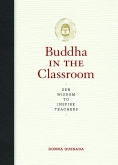
(Excerpted from my book,  Buddha in the Classroom; Zen Wisdom to Inspire Teachers, 2011)

Heal Thyself First

It is February—the month of love, so, in the spirit of the season, I offer a note about the importance of healing your own heart first.

There is a consistent message found throughout the higher wisdom traditions, that of tending to your own healing and transformation first. They say that it is imperative to purify yourself before trying to fix the world. To put it slightly differently, although we do exactly the opposite, in the form of finger-pointing, whistle-blowing and fault-finding, the call is to look to the inside before looking to the outside.

Rather than simply take it for granted, I would like to explore the reasons why this makes sense.

Firstly, because when we are miserable, depressed and despondent, or angry and in great angst, we are less likely to be open to the needs of others. We are more likely to close ourselves off and tuck ourselves away into a cocoon where we are both unavailable and unable to be of service to anybody else.

Secondly, because while we’re on this planet, the very least we can do—even if we don’t do much good—is refrain from causing harm. And when we’re suffering, we’re likely to lash out on others in myriad ways, from the little things, like general rudeness, to the big things, like the Columbine massacres.

Finally, in a more etheric sense, an open and balanced heart center—what the Yogis call the anahata chakra—can have a natural healing effect on others. When we start to heal and our hearts start to open, we tend to radiate warmth, and that creates joy all around.