Tag Archives: spirituality

I Forgive You

ForgivenessI spent the weekend at a meditation workshop. It was the second of three total weekends, that together compose the advanced training, in Kundalini Yoga, called “Mind and Meditation.” It was long, intense and exhausting, but also rich. The lecture-based explanations on all the facets of the mind and how it works, nourished our intellect, while the meditations and group sharing, enriched our hearts and spirits, through direct experience.

There were moments where I was so tired, I just wanted to go home and lie down with my dog. But there were other moments that left me truly transformed.

The sweetest of those was a 31 minute meditation led by my teacher, on guitar. He has a way of putting mantras and words to rhythms that are so lovely, they feel like an enchanting love song washing over your soul. (Well, mantras are love songs, after all.)

The words in this particular meditation were simply, I forgive you. It started softly and then it grew, as the intensity naturally and organically progressed, over the 31 minutes. The funny thing is, I don’t remember if he mentioned that it would be that long. I had the idea that it would only be a short, five minute, lightweight, fun chant to start class with. I was wrong. It kept going…and growing. And once we were deep into it, I sensed I wasn’t the only one wiping my eyes.

What is genuine forgiveness and how will it set us free?

1.  Firstly, what it is not. It is not to condone anything. It is not necessarily to do anything, at all, in the conventional sense. Thus, it doesn’t mean taking your abusive ex back, or bringing back into your life people who have harmed you in some way. As Guru Singh put it, it is not saying, “what you did is okay.” It is simply saying, “what you did is what you did.”

2. It also is not mere acceptance. Although it is a fine place to start. One of my favorite writers, Caroline Myss, refers to the inability to forgive (oneself or others), as the strongest poison to the human spirit. It drains our energy more than anything else. Lack of forgiveness cuts into the core of our ability to enjoy life, because as long as we are doggedly holding on to some injustice, we are investing emotional resources into it, to keep it alive, to maintain our status as victims. This attachment, to the past, to the event, to the story in our head about the occurrence, is like an invisible, heavy-duty, elastic band that prevents us from moving forward. And we are the ones who suffer most—not the other. So, although we still need to go deeper, acceptance begins the process of dislodging the story that is holding us hostage. In short, acceptance may be seen as the birth place of letting go, but it is still in the domain of the mind.

3. Genuine forgiveness goes deeper than the mind. It is a matter of the heart. And it’s not even about the other, at all. It is about our own relationship to the past. And in order for the heart to forgive, it has to feel the feelings, in order that they may pass through and evaporate of their own accord…as things always do when we don’t resist them. This means welcoming the hurt and the pain. You have to go there, to go forth. And in that moment, when the tears may flow, you liberate your spirit from those invisible tethers. This is true forgiveness and it is also true healing.

To forgive means to give forward from a memory into the present moment. ~Guru Singh

Image by Nayarts


Relationship between Presence, Prana & Wisdom

Prana_chi_intuitionYou’ve probably heard by now, that being present stills the mind and all its turbulence.

But…the greatest block to this state of presence is our mental turbulence.

This is like being told you need experience to get the job, but how are you supposed to get experience if they won’t give you the job!

This is a fine predicament.

The answer to this pickle comes in the form of a question:

Have you ever been so engrossed in a task that presence was inevitable?

Tasks of a physical nature are especially adept in bringing us here, since the mind, left to its own devices, soon falls into its customary habits. And we all know, the mind likes to swing.

The physical Yoga postures known as asana do this for us.

Just about all activities that require our active engagement do this for us (watching TV generally doesn’t do it).

Sometimes Yoga instructors will even tell you to find your edge. This is because when we are at our edge, we receive instantaneous feedback that enables us to make corrections as needed.

As it happens, this is where transformation happens.

As with the concept of flow, this is because when we are at our edge, we are at a point where the challenge slightly supersedes our skill level (clearly, if the challenges are too high, this will cause stress and if too low, boredom may result—but this is a slight digression).

When the balance between challenge and skill is just right, presence is obligatory, often at the risk of personal harm; for example, in a balancing pose, or more dramatically, while hanging from a rope on the edge of a cliff (Some of us, myself included, would rather hang out in a balancing pose rather than on the side of a mountain, even though we like mountains very much).

So, it follows that being comfortable is not the best condition for improvement and growth.

Why does transformation happen here?

Because loss of self-consciousness happens in this state of total engrossment.

Self-consciousness is, not surprisingly, what all the spiritual traditions speak of as enlightenment, albeit in myriad ways, e.g., as the loss of the small self, or, as the merging of finite with the infinite, etc.

Now, as it happens, these same conditions also entrain intuition, something we talk about often, in Kundalini Yoga. Intuitive awareness is a form of knowing that goes beyond the ordinary ways of picking up information, in other words, beyond the words and ideas, concepts and data that are the usual ways of exchanging and receiving knowledge.

One of the reasons why this vivid state of undivided presence cultivates intuition is because in this way, the whole body is alive with awareness. In this state, the energetic flow within us is flowing and unobstructed. In fact, as my own teacher used to remind us, when we are aware that we are breathing, we actually take in more prana. Same amount of oxygen, but more prana (or as the Chinese would say, more ch’i). This means our whole body becomes a receiver and transmission instrument (our mind is not localized in the head).

Prana is energy and if everything is energy, as Einstein said, then we merge into everything as just another aspect of this flowing energetic awareness, when we enter this state. The Yogis call it…well, the Yogis call it Yoga. Merging with divine awareness. Or, merging in divine awareness.

The only thing that holds us back from this state, is our own mental stuff and our attachments to that stuff. Flexibility moves us back to center, which is to say, back to everything and everywhere, and so, in this way, the best definition of non-attachment is actually…flexibility.

*Image courtesy of www.easternhealingcenter.com

Gratitude

No matter who you are and what your struggles are, there will be 159 people who seem to have it worse than you and 159 more who seem to have it better. And whatever your situation, there will also be 159 things to blame it on—your family, your culture, your ex, or just plain old bad luck.

But, the judgment of better or worse is all fantasy to begin with, since it is based on speculation and on external yardsticks, such as material wealth and physical attributes. The reality is on the inside. This is why oftentimes, the rich seem miserable and the unfortunate seem happy.

All good treasures are always on the inside.

The greatest of these jewels is the joy that springs forth, like a holy well, from the heart. And the quickest route there, is by way of gratitude, for, like a logical contradiction, it is virtually impossible to be resentful and grateful at the same time. They just don’t go together.

Small steps are the most reasonable way to get there. Big steps into the past or the future can be dangerous. Better to start with this little, tiny, infinite moment…

At this moment, I have my health, or this breath, or this warm home, or this one meal in front of me.

The Sycamore that Wanted to be a Cactus

sycamore I created this story and told it for the first time at Yoga West last Sunday. Some of my students encouraged me to publish it, so here it is!

I was inspired by the two sycamores we share a home with, “Don Quijote” and “Sancho Panza.” The picture with this post is actually one of them. I suppose you could say that we are the family in this make-believe story. Only, the message isn’t make-believe. You’ll probably see very quickly, that we all do what the sycamore tree does.

~ ~ ~ ~ ~ ~ ~ ~ ~ ~ ~

This is a story about a sycamore tree who wished he could be more like the cactus. He stood very tall, next to another sycamore tree. Together, they guarded a charming old bungalow house and were much loved by the family who lived there.

He got the idea to imitate the cactus because all the billboard ads say that cactus spikes are in fashion. With all the attention the cactus was garnering, the sycamore began to feel that he wasn’t as handsome or as special as the cactus.

So, the sycamore went online and payed top dollar for the rarest cactus spikes from Mexico. From his elevated position, he was able to watch the street everyday, for his coveted Fed Ex delivery.

Finally, they arrived! And on that day, he pulled off all his fan-shaped leaves and replaced them with the pointy spikes in the box.

While he was online, he had seen more ads for similar imported goods from Mexico. One item, in particular, caught his attention: Genuine El Norteño cowboy boots! The ad said that these boots would make him more masculine. He couldn’t stop thinking about them, so once again, he snuck into the house, went online and ordered them.

And once again, he watched and waited for the unmistakable white truck to come down the street. Finally, when his beautiful boots arrived, he rushed to put them on. But this proved to be a formidable task, as his roots were very long and stringy and he was having a hard time scrunching them into the pointy, leather, boot toe.

At first, he felt proud and pleased with his new look. But after a few days, he wasn’t feeling so well. The Dr. said that without his leaves in tact, he wasn’t getting enough sunlight to facilitate photosynthesis. Tests also showed a deficiency in CO2.

As if this news wasn’t bad enough, he learned that the family members in the old wooden house, weren’t feeling well, either. They were short on oxygen and no longer had any shade to keep them cool on hot summer days.

That did it. The sycamore put his leaves back, at once, and replanted his roots in the earth, which immediately and thirstily began drinking up water, like happy kids sucking up apple juice with straws.

As he fortified his body with sunshine and water, balance was quickly restored and everyone felt better right away. The family once again began to enjoy picnics under the lush, green canopy formed by his fan-shaped leaves, and the giant expanse of shade that this created, kept the air fresh all year round. They even built a beautiful treehouse in his strong, shapely branches!

The sycamore came to realize that there is no other tree quite like him, that each one is beautiful in its own way, and that each fulfills a unique purpose in nature. He now felt very proud to be himself, to serve in a way that only he can, and to be such a tremendous source of delight in the world.

~DDQ

~ ~ ~ ~ ~ ~ ~ ~ ~ ~ ~

Moral of the Story…
We give away our authenticity through our fixation on identity and our need for outside approval. We also succumb to what my teacher calls “OPO,” better known as, “Other People’s Opinions.” There is perhaps only one thing that’s worse—we cripple ourselves with our own stories, such as when we buy into it all, and begin to tell ourselves that we’re not good enough as we are.

Three Things Spiritual People Do Differently

1. They See Themselves as Part of the Cause

I remember the Dalai Lama once speaking about Saddam Hussein…how every body blamed him, alone. The reality is, he explained, that without his army, his warfare, his ready militia and unquestioned support among the populace, his capacity to do harm would have been all but nonexistent. In Buddhism, this willingness to see the interconnected causal web underneath the facade, is called deeply looking.

To bring this home, to the everyday, it would be the moment when you ask, how am I contributing to the situation? How did my action or lack of action play a role in the development of this dispute or occurrence? 

2. They See Themselves as a Witness 

I have heard it said that this one skill is the defining criterion of a spiritual life. Not unlike #1, seeing yourself as a witness develops as you begin to shift your focus from finding solutions on the outside, to finding solutions on the inside.

This is what meditation prepares us for—watching ourselves.

Every time you sit, without reacting, you strengthen your capacity to avoid “taking the bait.” Without analyzing, condemning yourself, or getting involved with the passing parade of emotions, you begin to see the whole thing for what it really is…just neurotic bursts of inner dialogue. And eventually, you find yourself able to bring space around the fear, the anger, the doubt, rather than acting on it.

3. They Take the Lesson 

My teacher, Guru Singh, uses the analogy of the postal person. While we may find ourselves resentful of some irksome situation in our lives, perhaps one involving a partner, neighbor or workmate, the energy we spend trying to make them realize how wrong they are will be totally wasted until we figure out what it is we’re supposed to learn from the whole thing. The mailman won’t go away until we’ve signed for the letter!

This too, is not unlike #1, in that the external blame only serves to keep us blinded to our own role in life’s deep interconnected relationships. We are all karmically linked, which is only to say that we affect one another in myriad countable and uncountable ways. The awareness that develops out of a spiritual practice brings us more in touch with this causal dependency.

Why Meditation Works

morning meditateWhen I was growing up, it seemed everyone was impressed with those who could fix computers or who were technologically savvy in some way. They’re so intelligent, they’d say. And then there was always that family superstar who could answer the questions on Jeopardy before the contestants. Everyone would ooh and ahh, admiringly.

But, from the point of view of our soul, we are not here to fix computers or recite historical data.

Philosophy was impressive, too. While I wasn’t the one you’d call for a hard drive on the fritz, nor the one yelling out the answers to civil war trivia, I could talk about free will or argue about the existence of God. Of course, I didn’t choose this line of study in order to impress people, but as a girl in my twenties, I could already count on the type of reaction I’d get when asked what I’m majoring in.

That is…until I went to a real Zen monastery.

When I was in my 20s, I was already drawn to the eastern traditions—I knew about Zen and emptiness. I had read Alan Watts and even knew about koans. And for the first time, no one cared.

The bald man in robes, who they referred to as “Roshi” spoke that day. He said we were all there because we were “neurotic.” No words were ever truer! None of the brilliant papers I’d written seemed to matter at that moment. I still had my hang ups, just like everyone else. Because I still had that head of mine. All the studying in the world doesn’t seem to do much when it comes to true transformation.

That was when it dawned on me: Even the geniuses are screwed up! It’s like this passage:

Have you seen all these people who drink, who search for a partner, and who look for drugs? They start the search in earnest, or have the urge to do it, after 4 p.m. Why do they need drink? Why do people feel they need to take drugs?  They do all that out of an instinct to seek stimulation. At those times their biorhythm has gone down, and they feel irritated. They cannot exist like that and have to have a change…The root cause is that your basic biorhythm of energy, your mental projection and strategy are not reflected in a unisonness of character. Those zones are natural times that shift your energy level, your mental projection, and your performance. That is the time you must direct the mind, refine it, and create a consolidated unisonness of character and projection. ~Yogi Bhajan

The point is, what we are really here to do is guide the mind rather than let it be guided. Guided by what? By our own emotions, by other people’s expectations, by traffic, by disappointments, by the media…by endless, daily provocations (the worst of these being our own thoughts). Neither techie skills, nor historical data, nor a big bank roll can do this for us.

To me, it all boils down to this question: Are you a sanctuary for yourself?

Can you be still in your own solitude? We become a refuge for ourselves only when our mind is at peace. And only then is it remotely possible to be a source of peace for others — because our mind is the wellspring of every word we speak, every decision we make and every action we take.

How do we become our own sanctuary? When we discover our neutral center—the crowned sovereign over all the noise, the judgments, the neurotic outbursts and the incessant tug of war between positive and negative. The neutral channel is the balm that quells the drama that turns people’s lives upside down.

That neutral eye sees right though the drama. Thus, this quality creates vastness of character. This is true greatness. And this is what we’re here for.

If you have not established some vastness in your attitude, then your habits and facets, your fears and pettiness will betray you. ~Yogi Bhajan 

What is meant by “vastness?” No matter what spiritual tradition we’re speaking of, it all comes down to union, or, said the opposite way, letting go of the illusion of separateness. Where is that illusion kept? In the mind. Zen calls it the small self. Yoga calls it the finite self. No matter what we call it, this ego-based identity is what drives the pettiness in our lives, which in turn, makes spiritual union impossible. This is why governing the mind is the first task in any spiritual practice.

How do we refine the mind, in this way? It’s too bad you can’t just take a 6-week course, or a workshop, or an intensive. The old masters weren’t lying when they said you have to sit. There’s no way around it. It’s not as easy, of course, as taking a course and sticking some degree on your wall, but that’s also why there are so few truly enlightened beings in the world.

So how does it work?

Consider this car analogy: Before driving off to work in the morning, you warm up your car for a few minutes. As the engine warms up, a distinct alteration takes place within the engine that affects the oil pressure and viscosity, which prevents wear and tear on your car and gives you a smoother drive. In a similar way, it is through meditation, that we “warm up” our systems by better preparing our minds to handle the stress of daily living, to make the choices that need to be made and to navigate our way through our own doubts and anxieties. Through the refinement process that only meditation affords, we give ourselves a smoother drive.

Not only is there an alchemical process taking place, via the glandular system and the nervous system, but by coming to stillness, we develop a capacity to stay present even when things seem unpleasant. This translates into less reactivity and more patience in the “real world,” as we interface with difficult people and everyday dilemmas.

Through meditation, instead of simply reacting at once, we create space around every stimulus, whether pleasant or unpleasant and whether internal or external.  Our minds challenge us at every turn, like a toddler pulling at our pants for an ice cream, but as we persist, we become solid. We become a witness to the ways of our own minds, which is what Buddha meant when he urged us to study the Self.

To be sure, being a witness does not mean being passive. Nor does it mean being narcissistic. Not passive because we retain our intention to cultivate our awareness even when we get up off the cushion. Not narcissistic because as spiritual warriors, we know all too well the effect of one mind on the world at large.

We know that even a few minutes of warming up our engine daily, will shape every decision we make, in every area of our lives, from relationships to work. This is why it is the highest form of self betterment—because we are getting to the root of our being.

Three Tricks to Forgiveness (how to stay married)

A man asks his friend what he can do about his wife’s annoying habit of speaking rudely to people. Besides this fault of hers, one that causes him frustration, she’s a good person, he says, and he loves her. He also values his marriage of 25 years.

Should he try to change her? Can he help her fix this bad habit? What can he do?

I would offer him these three steps, the combined effect of which, leads only and inevitably to forgiveness.

1. Look Inward (acknowledge your own stuff). 

You have “stuff,” too, I’d remind him.  We all do. Acknowledging our own stuff takes courage and humility. These are the qualities that make this step an important part of living an enlightened life. Turning the pointer inward rather than outward, brings us in touch with a more profound and interconnected view of reality; we begin to see the world as a reflection of ourselves, shaped by our interpretations, which themselves, are shaped by our frame of mind and limitations. The effort to  “expand our consciousness,” boils down to the increasing ability to see reality this way—as a construct of our minds.

But, we are so busy judging what others are doing that we miss the opportunity to see what we, ourselves, are doing. And we spend a lot of energy doing it; we spend our time trying to fix others’ broken knobs and loose screws, rather than our own. It’s a bit funny, when you think about it, that imperfect people spend time and energy trying to make others perfect!

2. Acknowledge that Your Partner Puts Up with Your Stuff (all these years).

Now that the pointer has been courageously redirected inward, we can take the next step, which is to acknowledge that our wonderful other has been putting up with those loose screws of ours…all these years! This is certainly cause for gratitude—a delightful, grudge-dissolving feeling, that swells forth from the heart, like chocolate from a wedding fountain, which, in its simultaneous sweetness and ridiculousness, enables us to laugh at ourselves and celebrate our perfect imperfections.

(It is only a half-joke to say that successful long-term relationships are proportional to the combined ability of each partner to put up with each others’ stuff.)

3. See the Positive in Your Partner (it actually takes effort).

For every one annoying habit, there are surely 100 good ones. It takes practice to remind ourselves to see them. The positive mind needs flexing, like any muscle.

One of my own teachers once spoke of a beautiful teaching; to see and then unsee a fault. Taking the time to consciously recognize and remember what we have forgotten, through time and familiarity, is one way to unsee what may not be a fault at all, but rather…our own lesson in disguise, waiting to be discovered.

But, What if the New (fill in the blank) Makes Me Happy?

buddhaMy students and I were talking about the aging cover model in the story, how she was willing to go into debt just to get her neck done. In her warped sense of reality, maintaining the appearance of youth and the false promise of hope that she might have a second spin in this harsh industry, it made perfect sense. This story is part of a grouping of short anecdotes, called The 10 Houses of Suffering, that I wrote to give a better idea of what Buddha really meant by Dukha—the root of human suffering.

Then one student asked a reasonable question about our right to spend money on whatever makes us happy:

Student: Isn’t it our right, as mature individuals, to buy things as we like? I mean, what if the new BMW…or the new iPhone…or the new Kobe shoes, makes me happy?

Me: In a practical sense, yes.

But don’t miss the subtle implications of what you’re being asked to consider. If, as the Four Noble Truths go on to explain, our deep-rooted discontent and enduring lack of fulfillment is caused by incessant desires, then those desires must either be inherently wrong or else misguided. And our equally ingrained tendency to cling to stuff, must derive from some confusion on our part, about what it is we’re looking for. Whether it’s the new techie gadget, hairdo, nose job, your college admission letter, or something more intangible, like your idea of what life will be like once you get to UCLA, desires crop up like weeds, with a new one popping up to replace the old one, just as quickly as it’s satisfied.

So we fasten our grip, time after time, around some new fantasy that we think will fix everything. So the pickle we find ourselves in, is about more than the consuming. It’s about the wanting. It’s about what we’re looking for and the ways we go about finding it.

The drug addict (one of the 10 Houses) has the right to dope himself up one more time, for that quick fix, the instantaneous thrill and quick-lived sensation of gratification. But from the outside looking in, we see that he’s sedating himself into a half-dead stupor, an action that he’ll repeat until his death. Unless he wakes up.

This is the shadow-side of all attempts, in fact, to find happiness through external means. They are interminable and our desire for them is insatiable.

The more profound question is whether we are akin to this fellow.

For millions of people, turning on the TV is automatic. But consider the message that is relayed, the minute it lights up: if we wear Chanel No. 5, you’ll find ecstasy; if you lose 10 pounds before the holidays, life will be perfect; if you’re a bald man and you suddenly grow hair, five bikini-clad 20-year-olds will come and sit on your lap; if you win the lottery, you’ll live happily ever after; if you party in Las Vegas for the weekend, and lie to your partner about your whereabouts, your problems will disappear, and it will be your secret.

I would like to clarify a common misperception about spiritual disciplines and desires. We’re not talking about just any desires, but rather, the desires for things that we think will make us happy.

And that’s the crux of it…those things then become conditions of our happiness.

The Importance of Self Love

self-love-KundaliniI decided to repost this short article about Self-Love. I added the third notation, as well as the meditation, that follows. It is a meditation that I just did recently, at a training retreat. I loved doing it—I hope you try it and that you love it, too! The way I see it, the words are for our understanding (for our head) and the meditation is for our realization of Self-Love (for our heart).

For the Head…
We are so often told, in spiritual teachings, as well as in self-help manuals, that in order to love others, we have to love ourselves first.

Is this true?

It is!

Why?

Firstly, because if we are angry and hateful on the inside, we have only those emotions to project. Your body and mind respond to those feelings, consciously and unconsciously, and this negative reverb squeezes the joy out of life. What can you bring the world if there is no joy behind what you are doing?

Secondly, because if we’re angry and hateful on the inside, the object of those emotions is automatically set upon ourselves and this sets in motion, a mechanism of victimization. By directing negative energy onto ourselves, we make ourselves the object of our own discontent. Then, our mind gets to work to find a source of blame in opposition to that object. Simply put, when we make ourselves into victims, the rational mind, in its inherent dualistic structure, will then seek a culprit.

Unable to find one, everyone becomes an offender and those negative emotions are then displaced outward unto the whole world—we become angry at the world.

Thirdly, when we do not find within ourselves, a cozy sanctuary to come home to, we tend to relate to others from a place of neediness—a need for approval, validation and affirmation of self-worth. But, when we begin to nurture a connection to our own divinity, we begin to heal within. This kind of love has nothing to with egoism—it is where compassion begins. We forgive our faults and accept ourselves as whole and complete, as we are, before we can do the same for others. In this wholeness, we feel centered, empowered and no longer need to place blame on others or look to external sources for fulfillment. And when we take our power back, in this way, we begin to truly heal.

We feel love, which when real, needs no object at all—it’s a projection and an opening of the heart space.

For the Heart…
Meditation: Affirmation For Self-Love

Posture: Sit straight in a cross-legged position.

Mudra/Movement: Place your right hand on your heart and say, “My heart, I love you.” Place your right hand on the eyes and say, “My eyes, I love you.” Move to the top of your head and say, “My head, I love you.” At the navel point say, “I love you.” And placing your hands on both your knees say, “I love you.”

*Find your rhythm and continue on, for at least three minutes.

Reconciling Free Will with Destiny (and how about fate?)

free-willIt’s hard to imagine Pavarotti or Maria Callas not ending up as singers. It’s as if they came to uplift, inspire, heal and delight the world with their voices. Each soul is incarnated to fulfill its destiny, according to Yogic philosophy, and when we awaken to that purpose, we are living according to our destiny.

A poetic expression of this idea is found in this passage:

Your mission is to vibrate higher in your vessel so you awaken completely to your sacred purpose. ~Dror B. Ashuah

This awakening is the key to our sense of fulfillment. But it is a huge challenge in a society, which would tempt us, left and right, to seek fulfillment from external sources and all things pinned to appearance—from the allure of a sexy body to the amusement of a new gadget, to the promises of the perfect dream vacation. Profit is made by keeping us trapped in a cycle of codependency and separateness. The tragedy is that we are kept from our own inner power. The result is a never-ending cycle of unrecognized addictions of every sort, in which, fueled by a vague neediness, we go on supporting this infrastructure—a mega-system that thrives on our insecurities.

How can we wake up from this codependency and align ourselves with our destiny? This wisdom, this sense of knowing is already within. It is the little spark of light that shines forth from within. But because the fog of our emotions and obsessions is so thick, we often miss it. But when we pause for a moment to let the fog settle, we find it. And we delight in its warmth. And sometimes we summon the courage to trust that light and let it guide us along our path.

Where does free will fit into this?

The minute we come to center, we find ourselves nourished. Like drinking from the nectar of our own internal fountain of bliss, we feel full. Those things on the outside seem to lose their appeal. We realize that what we tend to call free will, is but a confused mix of desires shaped by others and meant to mask insecurities. We have taken the reins of our life. But this requires the choice to wake up from those things that have held us hostage for too long—the things on the inside, like unhealthy emotions and insecurities, as well as the things that keep us wobbling around on the outside. As soon as we stop believing that there’s a quick fix “out there” in the world of pills and thrills, we begin to take steps on our true path. And we begin to resist those things that take us off our path. This is the beginning of waking up.

So, what is fate?

Fate, according to Yogic wisdom, is the black hole of other people’s opinions and ideas. It is the nowhere land, in which we get lost in the web of expectations and pressures set by others, be it society, parents, or personal delusion. These pressures drown out the voice of the spirit and over-ride our own sense of self-authority and purpose.

Every time we come to center, we have made a choice. We have honored our commitment to align with our sense of purpose. This is free will.

Walking our path, guided by our ever-brightening inner light, we encounter our karma (which doesn’t mean punishment). Think of karma as the residue of our actions, either in the here and now or in the here to fore. It is everything we have inherited, assumed, absorbed and adopted—from our DNA, to our zodiac sign, to our first kiss, to our first break up. It’s the record of all the patterns and habits that are embedded in our mental, physical and psychological selves, right down to our very cells. Why bother about it? Because that which would transform has first to be exposed.

And this process of transformation is strengthened by our moment-to-moment commitment and through the tools of practice—which we may call “spiritual,” since the desire to come back to center and to wholeness is a spiritual one. These tools include, but are not limited to, the uplifting presence of community, meditation, movement, and especially, intention.

Waxing philosophical.

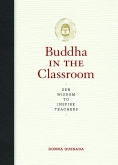
Am I, as the western philosophers would say, pre-supposing the existence of free will? To that, I extend a brief summary of Sartre’s position, that as conscious beings, we are innately free. Where I differ (and where I differ from my earlier position, as expressed in my book, Buddha in the Classroom), is on how this relates to destiny. Diehard existentialists, like Sartre, reject any suggestion of a deterministic universe, one which would open up a world of easy excuses that render us helpless, like puppets on the strings of our inherited tendencies. Typical of the western tendency to polarize beyond repair (and even more typical of an existentialist like Sartre, who was allergic to any species of God-talk), destiny and free will are seen as irreconcilable.

But, what if we instead, look upon destiny as a flexible journey, in which my will and God’s will (or universal will…or divine will) are one and in sync?

To be clear, free will, as it is typically defined, is the ability to choose from among genuine alternatives. In the world of eastern mysticism, we go further here, too; while existential freedom describes our conscious choosing, the Yogis were more interested in our state of consciousness, itself.

The difference is subtle but immense, since it is our state of consciousness that structures what we see as choices, in the first place. What most people think of as freely choosing is nothing more than habit patterns and uncontrollable desires for things that aren’t necessarily good for us. The more conscious we are, the more inclined we will be to investigate those ingrained tendencies (what the Yogis call samskaras), and the more adept we will be to change what we can and reconcile ourselves lovingly with those we can’t. This happens through those Yogic tools and through all meditative practices, which temper our reactive mind while taming the twin dragons; fear and anger.

Ultimately, the more conscious we are, the more freedom we have.